Leaders visit Pacific’s Tuvalu on frontline of climate change
The trip took place on the sidelines of the Pacific 'pre-COP' gathering hosted by Fiji, which aimed to draw the world's attention to life on the frontline of global warming.
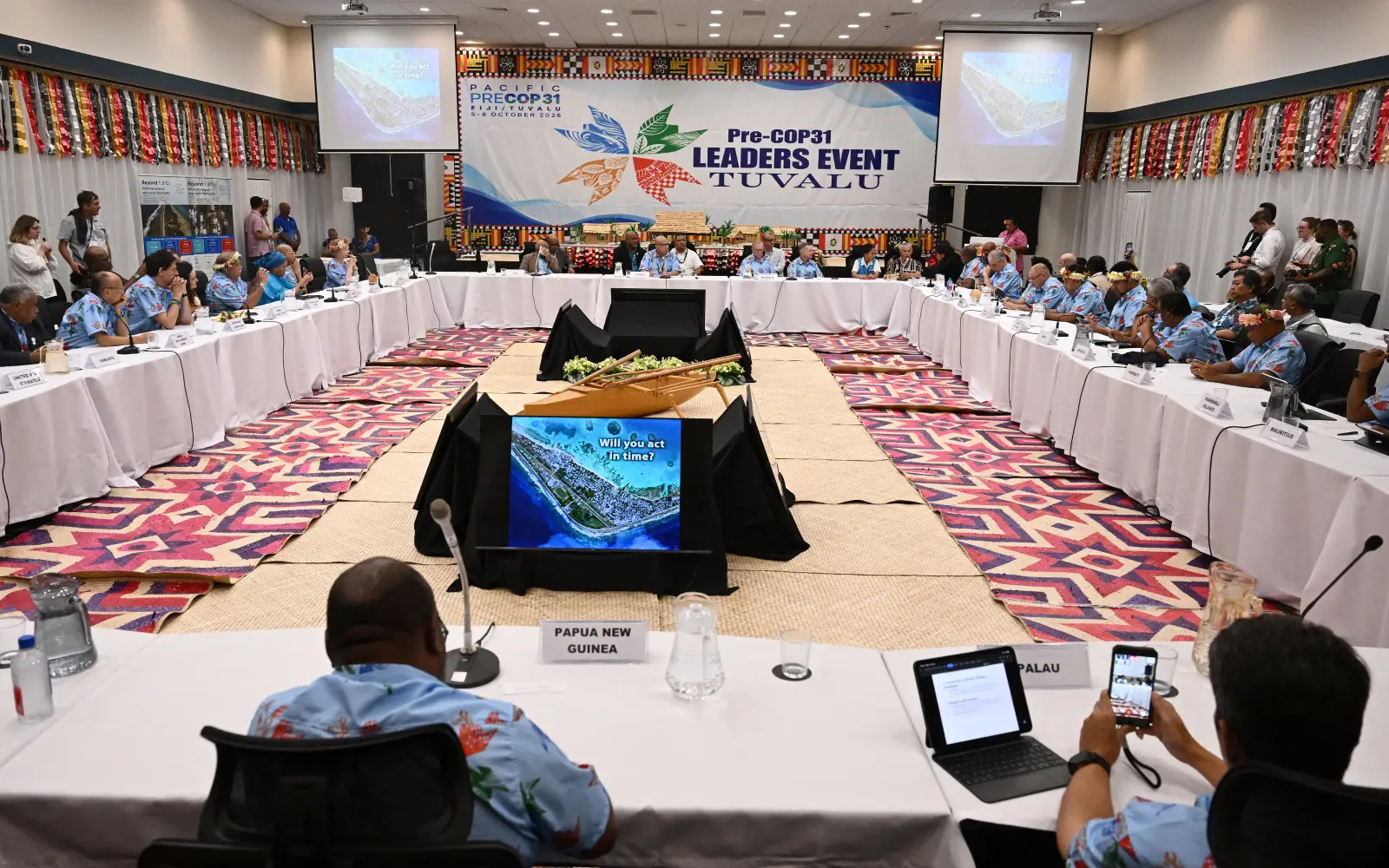
Pacific leaders ventured to Tuvalu, a Pacific island nation, to gain a firsthand glimpse of the devastating effects of climate change on a once-thriving ecosystem. The brief visit, held during the Pacific pre-COP gathering hosted by Fiji, aimed to draw attention to the crisis caused by global warming. This region is particularly vulnerable to rising sea levels and increased temperatures causing coral bleaching.
Tuvalu, with its population of 10,600, is already preparing to relocate its inhabitants should the island nation be swallowed by the ocean. Prime Minister Feleti Teo informed the visiting officials that the purpose of this event was for them to directly witness and feel the impact of climate change.
Only a handful of leaders attended, including Australia's Prime Minister Anthony Albanese, who is currently leading the climate negotiations. However, Albanese faced criticism for his country's role as a major coal exporter and for not adhering to Tuvalu's customs. Tuvalu's prime minister, Sitiveni Rabuka, emphasized that his nation's request is not for charity but for effective climate protection measures.
The Pacific Pre-COP gathering serves as a precursor to the larger UN-sponsored global climate summit, COP31, which will be held in Turkey. Despite the limited number of attendees, the event organizers managed to squeeze in multiple activities, including a visit to the Tuvalu Coastal Adaptation Project, a reclamation effort aimed at countering the rising sea levels. Local marine biologist Austin Bowden-Kerby shared the grim reality of the coral reefs, describing them as a "skeleton after skeleton" due to mass bleaching.
Local scientist Rajneel Singh also highlighted the impact of climate change on traditional food sources, noting the decline in the availability and size of fish catches. This highlights the interconnectedness of climate change and its far-reaching consequences on both the environment and human livelihoods.
Written by urgent.news from Free Malaysia Today's reporting — not their text. Machine-written — may contain errors; check the original before relying on it.
Other reports of this story
- Leaders visit Pacific’s Tuvalu on frontline of climate change freemalaysiatoday.com
- Pacific leaders demand an end to fossil fuel addiction theage.com.au
- Pacific leaders demand an end to fossil fuel addiction smh.com.au