Huawei executive board chairman Richard Yu details tech innovation strategy
Huawei Executive Director Richard Yu hosted an international media roundtable in Shenzhen detailing corporate research investments and technology development strategies across consumer business operations
Shenzhen, China – On October 3, 2026, Huawei held a roundtable discussion with international media, during which Executive Director Richard Yu outlined the company's strategy for technological innovation within the consumer business and its HarmonyOS ecosystem. Forming part of Huawei since 1993, Yu has been instrumental in driving advancements across five key scenarios: Smart Travel, HarmonyOS Office, Smart Home, Fitness & Health, and Entertainment. He emphasized that this vision will guide Huawei's consumer business for the next decade.
Over the past decade, Huawei has allocated over CNY1.8 trillion to research and development (R&D), with annual investments surging from 10% to more than 20% of revenue. This surge in investment has bolstered Huawei's core competencies, intellectual property, and extensive patent portfolio, facilitating numerous breakthroughs in technological innovation.
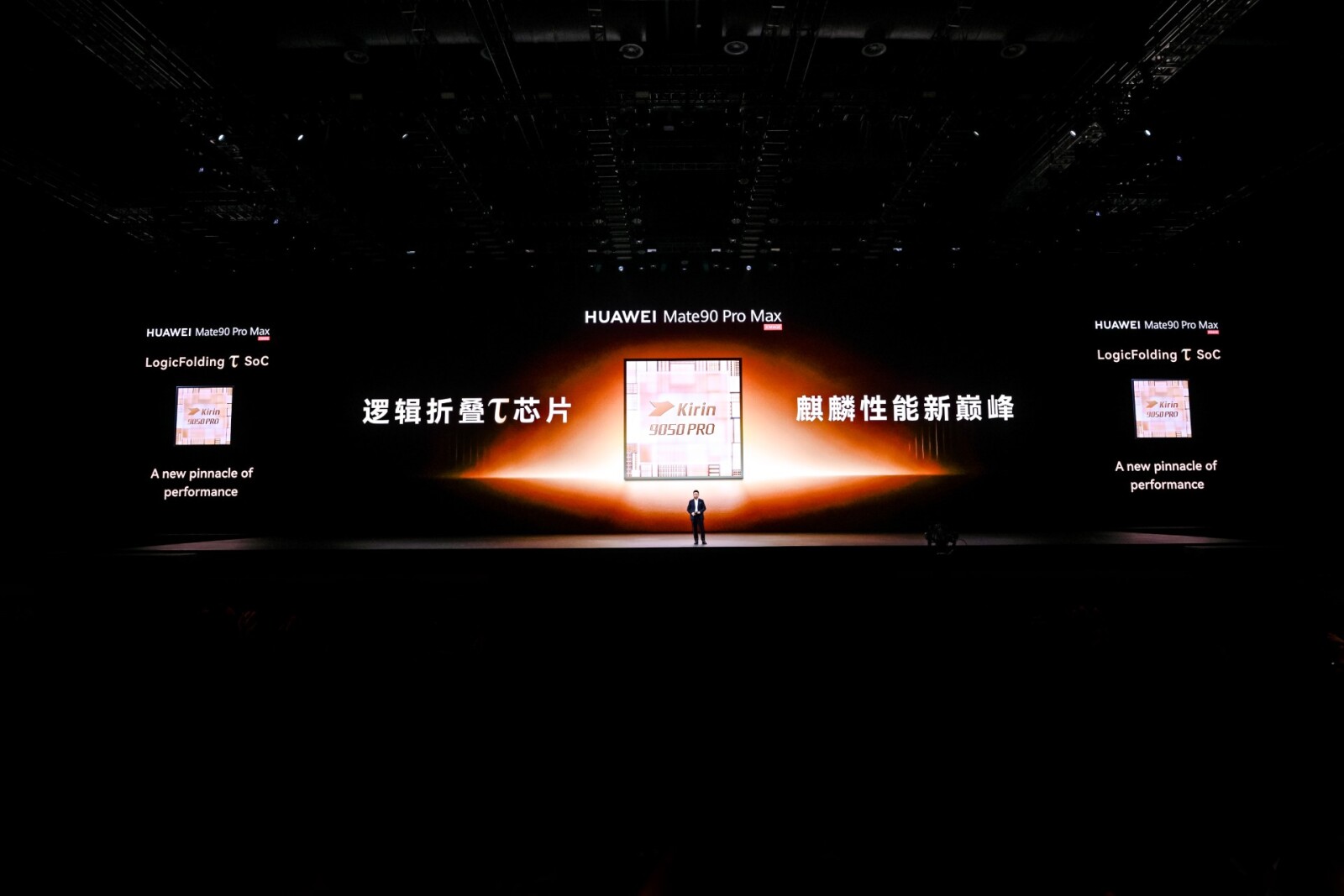
The recently released Mate 90 series smartphones are powered by the Kirin 9050 Pro chip, boasting a 31% performance increase compared to the previous generation. Huawei's Balong modem, image sensor processor (ISP), mobile security processor (MSP), Lingxi CPU, Maleoon GPU, and the NPU, designed using Huawei's Da Vinci architecture, collectively enhance energy efficiency and system-level performance.
Yu acknowledged Huawei's limited access to advanced semiconductor processes. However, the company recently achieved a significant breakthrough in semiconductor technology - LogicFolding under the Tau Scaling Law. This innovative method vertically stacks logic layers and restructures the circuit layout to minimize latency. Applied to the Kirin 9050 Pro chip, this technology powers a 30B model-embedded AI model, enabling on-device AI processing capabilities.
In the AI domain, Yu highlighted Huawei's Ascend compute foundation, which supports large models such as openPangu, AI-driven intelligent driving systems, and HarmonyOS Celia. Similar to Google's Gemini, HarmonyOS Celia aims to enhance the operational management of communications network equipment. By integrating AI computing power with domestic open-source large models, Huawei envisions empowering enterprises and industries worldwide to become more efficient and convenient.
Since its inception in 2019, Huawei has launched a diverse range of products and solutions, including smartphones, PCs, wearables, TWS audio devices, Smart TVs, home routers, smart home control solutions, and intelligent electric vehicles. These offerings are underpinned by Huawei's chip hardware platform and the HarmonyOS ecosystem.
HarmonyOS, launched in 2019, has since been adopted by over 90 million devices worldwide, with developers contributing to a repository of more than 450,000 apps and services. Looking ahead, Huawei aims to expand the global reach of HarmonyOS in the coming years.
Written by urgent.news from Vietnam Investment Review's reporting — not their text. Machine-written — may contain errors; check the original before relying on it.