How to Watch October's Full Moon, Meteor Showers, and Halloween Fireballs Light Up the Night Sky
Learn more about all the night sky activities set to take place in October 2026 and the best ways to view them.
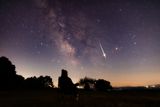
As the Northern Hemisphere transitions into autumn, the lengthening nights provide more opportunities for stargazing. October 2026 has already begun with Saturn reaching opposition on October 4, 2026, making it the brightest planet in the sky that year. Although it may not be visible at its peak on that night, Saturn will remain a noticeable sight throughout the fall.
In addition to the captivating Saturn, three meteor showers will grace the night sky in October. Starting on October 6, the moon will pass directly in front of Jupiter, an event known as occultation. This will take place in the early hours of the morning, with contact between the moon and Jupiter occurring around 4:14 a.m. EDT and lasting for over an hour.
The Draconid meteor shower peaks on October 9, coinciding with a waning crescent moon, offering a perfect stargazing opportunity. Best viewed in the evening after sunset, the Draconids are a relatively short-lived shower.
Mercury will reach its greatest elongation east on October 12, 2026, making it an excellent time to observe the elusive planet. Finally, the Southern Taurids meteor shower and Halloween fireballs will light up the skies on October 14, with the latter being particularly bright.
The Orionid meteor shower, one of the year's most beautiful, will peak on the night of October 21, featuring between 10 and 20 meteors per hour. These fast and bright meteors can leave behind long trains lasting from a few seconds to minutes. Best observed shortly before dawn, the moon will set, providing an ideal viewing experience.
Written by urgent.news from Discover Magazine's reporting — not their text. Machine-written — may contain errors; check the original before relying on it.