How pond algae led to a Nobel prize and a new way to study the brain
Scientists who worked out how to control brain cells with light have won this year's Nobel Prize in physiology or medicine. Karl Deisseroth, Peter Hegemann and Georg Nagel were honored for their research into "light-gated ion channels and optogenetics."

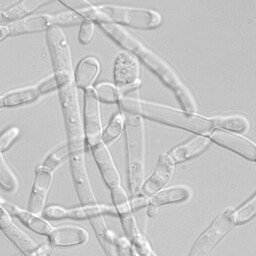
Scientists have won the Nobel Prize in physiology or medicine for their work on light-gated ion channels and a new technique called optogenetics. This groundbreaking research was inspired by an unlikely source: a single-celled alga called Chlamydomonas. Even though Chlamydomonas lacks eyes, it has proteins called channelrhodopsins that allow it to sense and respond to light.
In 2005, German researchers Georg Nagel and Peter Hegemann discovered that Chlamydomonas uses a protein called channelrhodopsin to detect light. This protein contains a molecule that changes shape when it absorbs light, which in turn alters the protein's shape and opens a small passage through the cell membrane. This allows charged particles to flow into the cell, triggering a signal that enables the alga to move.
The researchers realized that if they could introduce channelrhodopsin into nerve cells, they could control those cells by shining light on them. This method of controlling nerve cells with light is called optogenetics. Optogenetics has become a powerful research tool, allowing scientists to switch specific groups of nerve cells on and off with light.
This has led to significant advancements in understanding how the brain works. For instance, researchers can study the role of specific groups of nerve cells in memory, sleep, sensation, or movement by activating or inhibiting those cells with light. One notable example is a 2012 study where mice were given a mild electric shock in a specific cage.
Optogenetics was used to tag the nerve cells in the brain's memory center that were active during the fear-conditioning experiment. Days later, when those cells were switched on with light, the mice froze in fear, demonstrating that the light had reactivated a specific memory. This technique has also shown potential as a treatment for certain conditions.
In early-stage clinical trials, researchers have introduced light-sensitive proteins into nerve cells in people with retinal degeneration, which has allowed surviving cells to respond to light and restore some vision. Additionally, optogenetics is being explored as a potential treatment for neurological conditions such as Parkinson's disease and epilepsy.
The Nobel Prize recognizes the unexpected journey from a question about how Chlamydomonas swims toward light to the revolutionary technique of optogenetics, showcasing the importance of curiosity-driven research in advancing our understanding of the world.
Written by urgent.news from Medical Xpress's reporting — not their text. Machine-written — may contain errors; check the original before relying on it.