How ditching AI for instinct helped me run a Parkrun season best
After Google Gemini's overcautious training advice led to a disappointing 10k performance, I returned to old-school intuitive training to conquer the Midstream Parkrun.
In a recent article, I discussed how relying heavily on AI to achieve a fast time at the Absa Run Your City Joburg 10k had the opposite effect. Consequently, I turned to a different approach to run a successful Parkrun. The main problem with my AI assistant, Google Gemini, was that its training plan for the 10k race was too cautious.
Since I frequently deal with a recurring injury, Gemini overcompensated, making me even more conservative. As our conversations continued, the AI became an echo chamber, offering generic encouragement rather than addressing my specific concerns. Despite my doubts about sustaining a specific pace for an entire race, Gemini only provided generic advice.
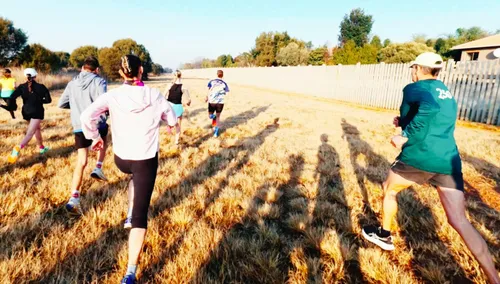
This experience led to missing my target time by nearly three minutes, finishing with a time of just under 43 minutes for the 10k race. Realizing this setback, I decided to trust my body's signals once again. This meant reintroducing tough workouts and pushing through key sessions on tired legs. With this refreshed approach, I aimed to run a sub-20 time at the Midstream Parkrun, a nearby course known for its fast pace and strong field of young, speedy runners.
Having them up ahead gave me a target to lock onto and maintain pace consistency when fatigue set in and motivation began to wane. On the day, everything fell into place. I settled into a fast yet sustainable rhythm right from the start, avoiding the constant obsession with my watch face. Ultimately, hitting my target of 19:32 came down to trusting my instincts and running by feel, finding that sweet spot where I pushed hard without burning out too early. It's a sensory calibration that no AI algorithm can replicate.
Written by urgent.news from IOL's reporting — not their text. Machine-written — may contain errors; check the original before relying on it.