Guiding Light: Why Mahalaya Is A Sacred Time To Honour Our Ancestors
Mahalaya is the great abode of our Pitrus and they are our ancestors. Pitrus belonged to an earlier era. These are the closest to our realm and when invoked, are the first to come and help in times of distress. We hear of the accounts when mysteriously a great trouble or accident is escaped; it is the hand of pitrus which subtly helps their descendants. For the amanta month of Bhadrapada,…
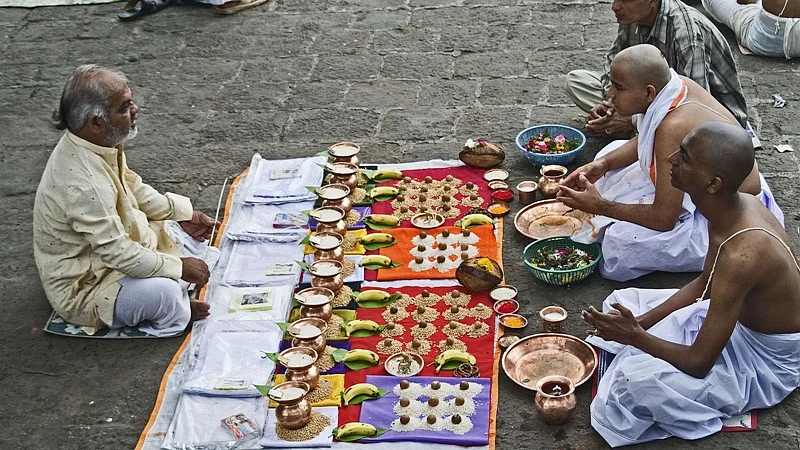
Mahalaya holds significance as the sacred time to pay homage to our ancestors. These ancestors, known as Pitrus, originated from a different era and are most closely connected to our own. When invoked, they are the first to lend assistance during times of crisis. There are accounts of mysterious escapes from great troubles, believed to be the work of Pitrus subtly aiding their descendants.
Starting from the day after the full moon, the Pitru Paksha or Ancestral Fortnight commences. Following the tithi of a parent's transition from the physical world, children express gratitude to their ancestors on that specific day. For example, if the tenth day is Dashami, the offering is made on that day. However, if the exact tithi of a parent's departure is unknown, the offering is performed on Mahalaya Amavasya, also known as Sarva Pitru Amavasya.
On this day, grateful descendants gather together, often at the eldest son's residence, recalling memories and expressing gratitude to parents and grandparents. The names of parental, grand-parental, and great-grand-parental ancestors, along with their spouses, are called upon, as are the names of close relatives and gurus, all during the ritual of tila-tarpanam.
Using the right thumb, black sesame is taken and water is offered to the ancestors. After this, the Pitru prasadam is consumed by the entire family, bringing grace and blessings.
Written by urgent.news from Free Press Journal's reporting — not their text. Machine-written — may contain errors; check the original before relying on it.