Google, SpaceX plan space data centres; Japan, Germany have another solution
Google has launched AI chips into orbit to explore solar-powered computing infrastructure, which could reduce data center demand. Researchers in Japan and Germany are developing elastocaloric cooling systems to address cooling needs in computing facilities. This technology uses shape memory alloys to manage heat without conventional motors. The current prototype generates limited cooling power…
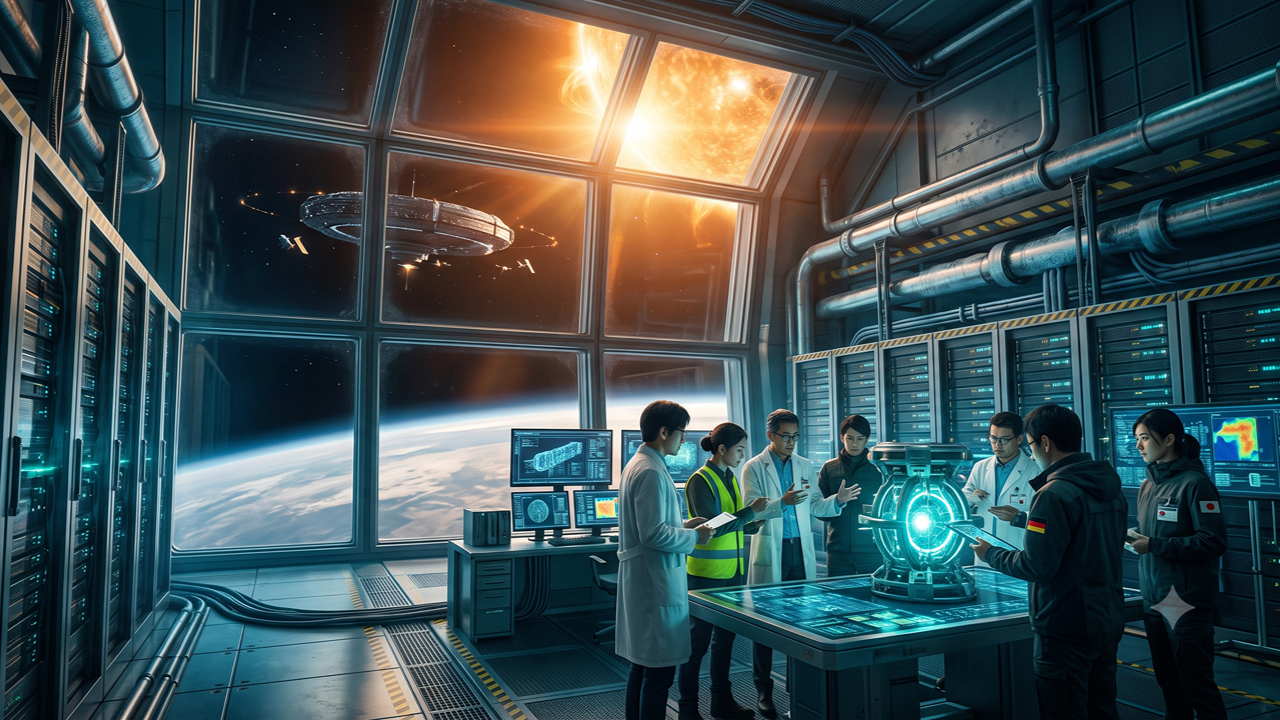
Data centers are facing increasing strain on power grids as computing demands continue to rise. To address this issue, some companies are exploring alternatives to traditional ground-based facilities. Tech giants like Google and SpaceX are even considering moving data centers away from Earth. Google recently launched its homegrown AI chips into orbit aboard a SpaceX Falcon 9 rocket as part of Project Suncatcher, aiming to develop solar-powered AI computing infrastructure in space.
This marks the project's first in-orbit test, utilizing constantly available solar power and the "infinite real estate" of space for AI computing.
Meanwhile, researchers in Japan and Germany are working on an innovative cooling solution for data centers that avoids the need to leave Earth. Their technology, called "elastocaloric cooling," employs shape memory alloy films in a system that could potentially revolutionize data center cooling. The prototype consists of a thermal actuator and a cooling unit, with the thermal actuator utilizing a titanium-nickel shape memory alloy film that stretches and generates force when heated.
This force elongates a separate refrigerant film, which then contacts a heat sink to remove heat. As the actuator and refrigerant films cool, they return to their original shapes, restarting the cycle.
The cooling process, involving heating, deformation, cooling, and recovery of the films, could potentially address the energy and water requirements of large computing facilities. While the technology is still at the proof-of-concept stage, with a prototype generating only 2.09 milliwatts of cooling power and facing challenges in actuation speed and heat exchanger size, the research demonstrates the viability of shape-changing films for cooling.
If researchers can scale the cooling output and improve the system's efficiency, elastocaloric cooling could eventually offer an alternative method for managing heat in computing hardware, including AI data centers.
Written by urgent.news from Times of India's reporting — not their text. Machine-written — may contain errors; check the original before relying on it.
This story
This is one outlet's version. Read the fullest account.
- Japan hands over ‘Qilin’ hacker group member to Germany japantimes.co.jp