Commentary: Keep medicine out of the US-China tech war
Novel medicines can’t be treated in the same zero-sum way as semiconductors or electric vehicles, where one competitor’s win comes at the expense of the other, says Juliana Liu for Bloomberg Opinion.
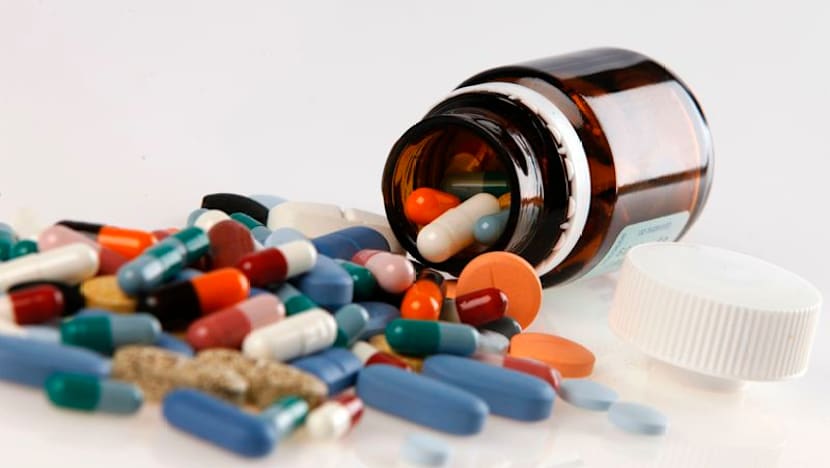
Novel medicines cannot be treated as zero-sum commodities like semiconductors or electric vehicles, where one competitor's victory entails another's loss, asserts Juliana Liu for Bloomberg Opinion. Amidst the ongoing competition between Washington and Beijing over leading frontier technologies, collaboration in innovative medicines should not be hindered by competition.
Beijing's five-year plan for the biotechnology sector outlines its ambition to become a global leader. This plan is unique in its numerical targets for the industry. By 2030, Chinese drugmakers are expected to achieve significant competitiveness, with annual sales of new medications growing by 20 percent. Pharmaceutical companies aim to develop at least 25 percent of the world's first-in-class medicines—drugs that function in a completely new way to treat a condition.
They also aim to originate at least five blockbuster therapies, which generate over US$1 billion in annual sales.
These ambitions may seem ambitious, yet they reflect decades of policy support and increased investment in education, transforming China into an increasingly fertile source of innovation, particularly in drug development. Large pharmaceutical companies have taken note of this potential. To replenish their pipelines before patent expirations bring lucrative revenue, global companies have engaged in a surge of overseas drug-licensing deals, with the value surging more than 10-fold to a record US$134 billion over the past five years.
A recent deal illustrates the growing international demand for Chinese innovation. Novo Nordisk recently agreed to pay Jiangsu Hengrui Pharmaceuticals up to US$2.6 billion for the rights to an experimental obesity pill, which can be taken once a week. The financial commitment to a therapy lacking human trial data highlights how Western drugmakers value Chinese research.
However, this collaboration creates a dilemma for Washington. Critics argue that if pharma giants can license cheaper Chinese molecules instead of funding American startups, it may drain capital and expertise from the US biotech ecosystem. This logic parallels the US government's export controls on advanced semiconductors, intended to prevent US-designed chips from aiding China's AI development or limiting Chinese carmakers' access to the US market.
The US has also sought to reduce its reliance on Chinese biotechnology companies through the Biosecure Act, which restricts federal agencies from working with designated companies. A bipartisan proposal introduced this year would further limit licensing deals now attracting Western drugmakers. However, such an approach would be a mistake.
Novel medicines cannot be viewed in the same zero-sum manner as semiconductors, electric vehicles, or large language models, where one competitor's gain results in another's loss. The industry is inherently collaborative, especially in life sciences. The origin of a lifesaving treatment is far less significant than whether patients can access it.
The US Treasury Department is considering rules that would preserve American drugmakers' ability to license innovative treatments from Chinese companies while restricting investments involving potentially weaponized pathogens or technologies. This approach strikes a sensible balance. While Washington has a strong incentive to keep dangerous technologies out of an adversary's hands, not every discovery from Shanghai poses a national security threat.
Although the US should strive to outperform China in the biotech race with its greater access to capital and a larger international scientific community, it should not ignore China's innovations.
Written by urgent.news from Channel News Asia's reporting — not their text. Machine-written — may contain errors; check the original before relying on it.