Cartagena’s Door Knockers: The Symbols That Tell the Story Behind Its Colonial Doors
Visitors walking through Cartagena’s Historic Center often stop to admire its wooden balconies, colorful facades, churches and walls. However, smaller details are also part of the city’s architectural identity, including the door knockers that remain installed on the doors of some historic homes. These metal pieces, also known as knockers, initially served a practical purpose: […]
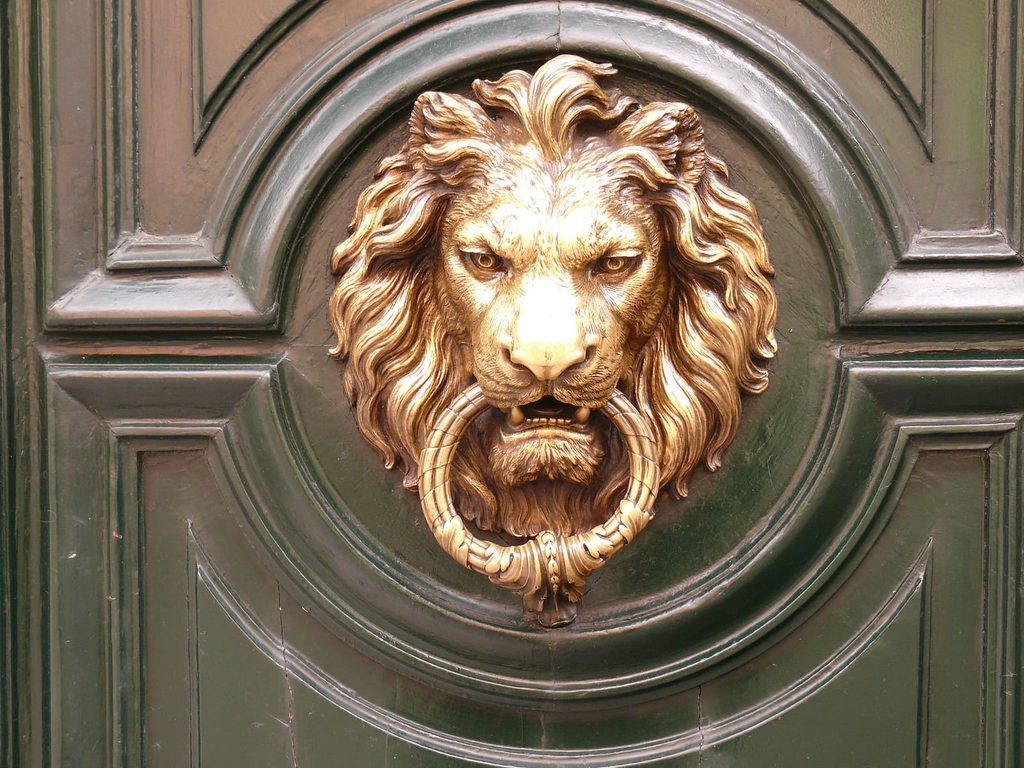
Door knockers in Cartagena’s Historic Center are more than mere decorations. They serve as symbols that reveal the status, profession, or lineage of the people who lived behind the homes. These metal pieces, also known as knockers, were initially functional, allowing residents to announce their arrival by striking the door. However, their presence in colonial Cartagena held deeper significance.
The design, size, and motifs of the knockers could indicate social status, occupation, beliefs, or the image a family wanted to project.
Door knockers have a long history, originating from traditions in ancient Rome and the Islamic world. During the European Middle Ages, they became common features in churches, castles, and homes. As the Spanish arrived in the Americas, they brought their architectural and decorative customs to Cartagena, adopting the tradition of door knockers during the 16th, 17th, and 18th centuries.
The city’s importance as a port of the Spanish Empire led to the development of distinctive characteristics, such as maritime motifs on the knockers.
Maritime figures like fish, mermaids, and seahorses are particularly prominent on Cartagena’s door knockers, reflecting the city’s role as an important colonial port. Other notable motifs include the lion, associated with strength, authority, and power, often found on houses belonging to military figures or prominent families. The iguana or lizard also holds significance, linked to families of Spanish origin or connections to the Spanish Crown, symbolizing vigilance and protection.
The hand, sometimes associated with the Hand of Fatima, represents protection, spirituality, and hospitality.
The language of animals on colonial doors is a striking feature of Cartagena’s architectural identity. These symbols, combined with the materials used (wrought iron, bronze, and other metals) and various casting and forging techniques, create a visual language that communicates something about the people who lived behind the doors. Thus, observing a door knocker while walking through the Walled City offers a glimpse into the society that inhabited Cartagena centuries ago.
Written by urgent.news from Colombia One's reporting — not their text. Machine-written — may contain errors; check the original before relying on it.