‘AI Snake Oil’ author sees chatbots evolving into a ‘truth oracle’—and journalism heading somewhere it hasn’t been in 200 years
Princeton's Arvind Narayanan asked the Computation + Journalism conference to prepare for AI "not as it is today, but as it will be" in five to 10 years.
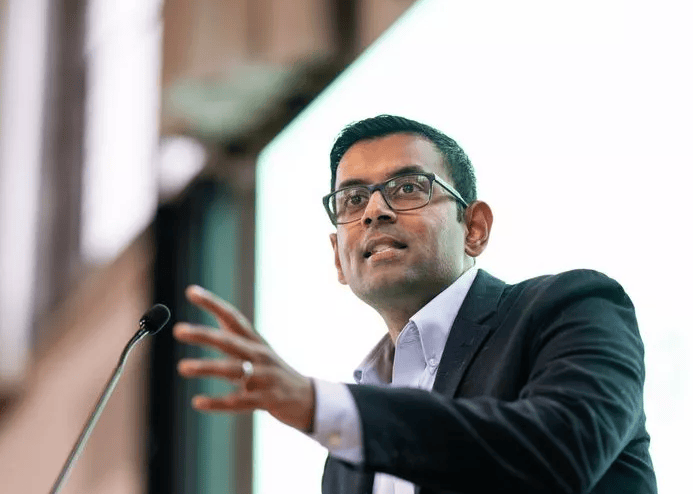
Arvind Narayanan, a Princeton computer scientist and director of the Center for Information Technology Policy, believes artificial intelligence will become increasingly trustworthy and eventually function as a "truth oracle." He predicts that as AI chatbots become more accurate, they will eventually become the go-to source for settling factual questions, which he believes would significantly reduce the workload of traditional journalism.
Narayanan argued that the newsroom's current model, which includes reporting, analysis, fact-checking, and distribution, has always been a "bundled" system. However, he argues that this model may become obsolete as specialists take on individual components, making AI a more efficient and economically viable option. He cites examples of trade reporting moving to outlets like Politico and Stat News, and civic and local journalism shifting towards philanthropy-funded models.
Narayanan also addressed the issue of AI-generated errors, explaining that while early chatbots had issues like miscounting letters or suggesting incorrect pizza toppings, these problems have largely been resolved. He noted that the remaining issues are "gradually getting solved."
In response to concerns that chatbots could perpetuate the "view from nowhere," Narayanan agreed that this is a challenge for journalism to navigate. He emphasized that the media industry must continue defining its role as it adapts to the evolving landscape shaped by AI.
Written by urgent.news from Fortune's reporting — not their text. Machine-written — may contain errors; check the original before relying on it.