AI glasses used as harassment tool - Digital Rights Chair
The Chair of Digital Rights Ireland and Associate Professor at UCD's Sutherland School of Law, Professor TJ McIntyre, has said the main risks associated with AI glasses so far involve "quasi-sexual abuse" and their use as a "harassment tool".
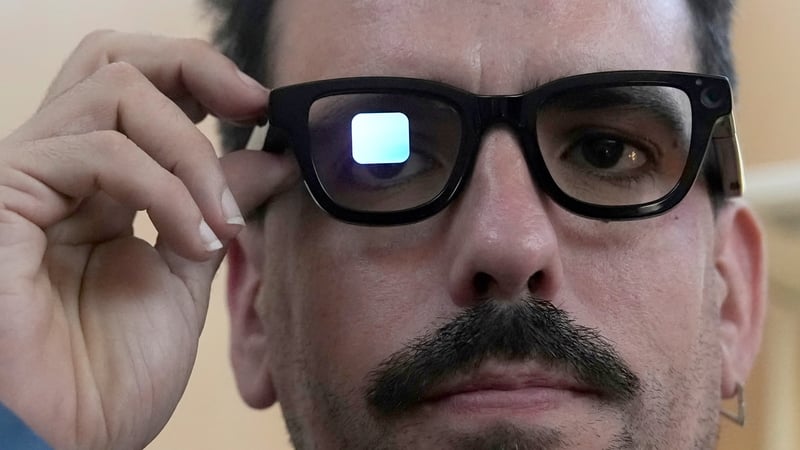
Professor TJ McIntyre, Chair of Digital Rights Ireland and Associate Professor at UCD's Sutherland School of Law, has warned of the risks associated with AI glasses, particularly their use as a harassment tool. Speaking on RTÉ's Morning Ireland, he expressed concern that these devices, which combine traditional eyewear with digital features like cameras and speakers, are being used covertly to secretly record people without their consent.
McIntyre highlighted instances where these glasses were used to film people in public places such as beaches, swimming pools, and gyms, often targeting individuals, particularly girls, in a harassment manner. He noted that children in American schools with these glasses were using them to target girls by asking for personal information and posting the footage online when the girls declined their advances.
Despite the lack of a blinking LED light to indicate recording, these devices are often disabled by users to avoid detection. McIntyre emphasized that the Norwegian government's plan to temporarily ban smart glasses in certain places is a necessary step, as the issue is becoming pervasive and normalized. He also pointed out that bans are already in place in various settings, including leisure centers and Irish courts.
McIntyre called for broader regulations around the technology, suggesting that the Data Protection Commission should investigate the broader issues, such as the data streaming practices of companies like Meta.
Written by urgent.news from RTE News's reporting — not their text. Machine-written — may contain errors; check the original before relying on it.
This story
This is one outlet's version. Read the fullest account.