After cordial Xi-Trump summit, could China’s US dollar pivot cause tremors?
As President Xi Jinping and US President Donald Trump talked tariffs, agricultural quotas and critical minerals at last month’s closely watched summit in Washington, an “elephant in the room” loomed over the discussion: China’s efforts to gradually diversify away from US dollar assets. Beijing has gradually been cutting its holdings of US Treasuries while pushing to expand the yuan’s global use…
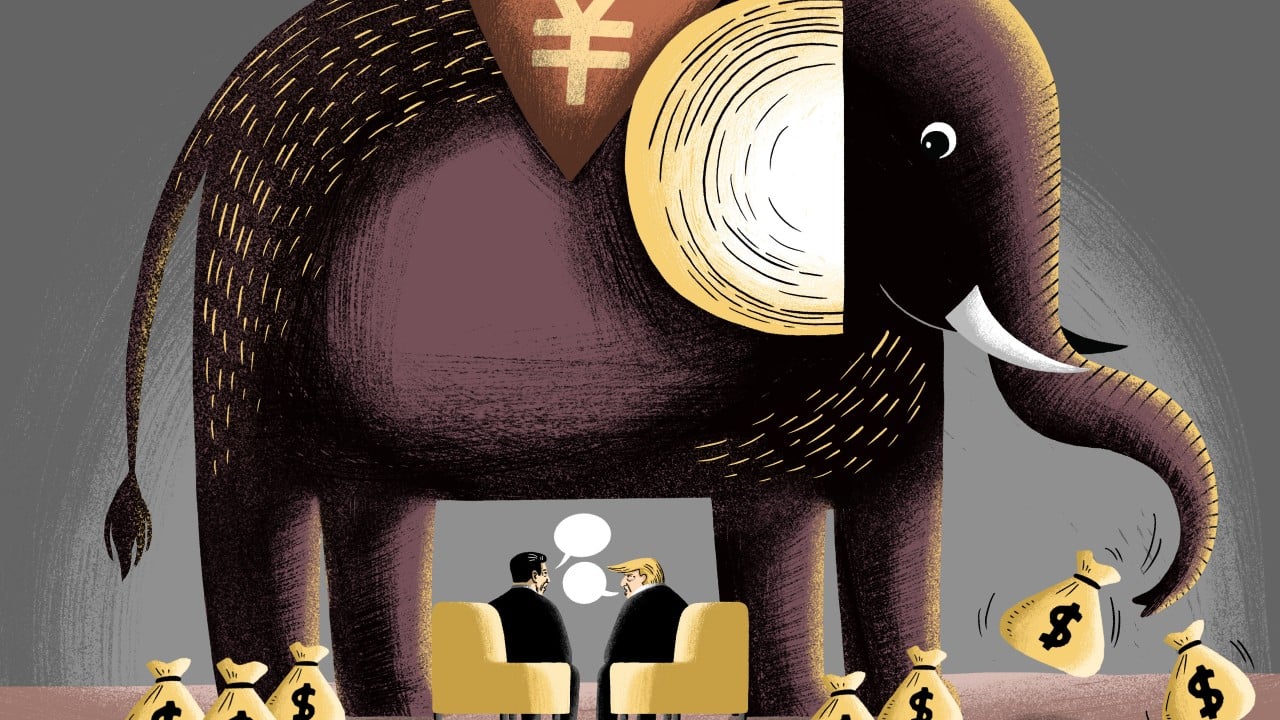
Following a cordial summit between Chinese President Xi Jinping and US President Donald Trump, concerns have arisen regarding China's efforts to diversify away from US dollar assets. At the summit, the pair discussed tariffs, agricultural quotas, and critical minerals, but the elephant in the room continued to loom: China's gradual reduction in US Treasury holdings and expansion of the yuan's global use.
While these issues may not have been included in the summit's official communique, they have garnered attention from economists, investors, and policymakers on both sides of the Pacific. Finance professor Charles Chang from Fudan University stated that the topics of China's holdings of US debt likely came up during the talks, though it is unlikely they would result in a formal agreement similar to those covering trade.
He noted that sovereign debt management involves actual capital allocation, making it highly sensitive and unlikely to be formally addressed in official statements. Nevertheless, Beijing's ongoing reserve diversification serves as an important piece of leverage in high-stakes bilateral negotiations, according to Chang. China's moves to internationalise its currency and develop alternative payment infrastructure are viewed as defensive measures, but analysts warn that efforts to protect China against potential US financial pressure could lead to long-term friction between the two countries.
China still has significant dollar exposure, so a sharp Treasury sell-off would hurt China as well, noted Matteo Giovannini from the Centre for China and Globalisation. The Treasury retreat has been long-standing, as US Treasuries are considered one of the safest assets in global markets. However, investors are grappling with the US$40 trillion federal debt burden and the prospect of high interest rates amid stubborn inflation.
This has led to a global sell-off in government bonds, pushing long-term Treasury yields to multi-decade highs. The latest unease about American government debt has also fueled a broader debate over "de-dollarisation." Japan, once Washington's largest foreign creditor, reduced its US Treasury holdings for three consecutive months to US$1.1 trillion in July.
China continues to diversify its foreign reserves away from US Treasuries as uncertainties persist in the bilateral relationship. Some have argued that while China's massive US Treasury holdings might give Beijing some potential leverage, a deliberate sell-off could destabilise markets. Beijing remains sensitive to supply-demand pressures in the market, and a sharp Treasury sell-off would hurt China as well.
Written by urgent.news from South China Morning Post's reporting — not their text. Machine-written — may contain errors; check the original before relying on it.