AfD: SPD-Minister setzt bei AfD-Verbot auf Russlandnähe der Partei
Georg Maier drängt auf die Prüfung eines AfD‑Verbotsverfahrens. Der SPD-Innenminister nennt mehrere Gründe, die dafür sprechen, dass der Bundesrat bald zu einer Entscheidung kommt.
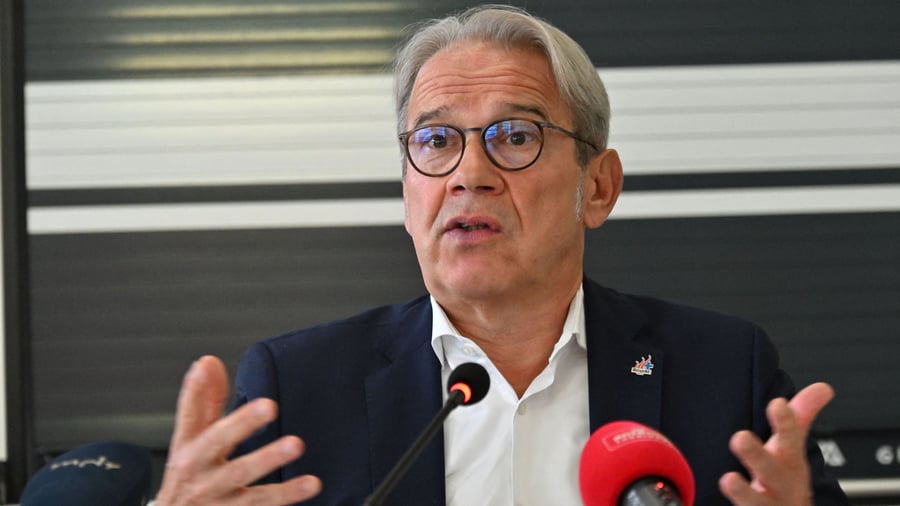
Thuringian Interior Minister Georg Maier (SPD) believes potential evidence for an AfD ban may also lie in the party's connections to Russia. "A noticeable increase in the party's proximity to Russia could play a decisive role in the ban procedure," Maier said to the Handelsblatt. Regarding the legal assessment, he pointed to a possible threat to the state, stating that not only the impairment of human dignity or democratic and constitutional principles are possible grounds for a ban, but also activities that jeopardize the existence of the Federal Republic.
Maier expressed confidence that the conditions for a ban could be proven. "I am very confident that the proof process will succeed because the radicalization of the AfD has accelerated in recent months. Its key representatives are increasingly making anti-constitutional statements," Maier told the Handelsblatt. The debate surrounding the Thuringian state election recently gained momentum once again with North Rhine-Westphalia's Prime Minister Hendrik Wüst advocating for a federal-state working group to examine the possibility of a ban.
Several constitutional law experts endorsed the proposal. Defence Minister Boris Pistorius (SPD) and Baden-Württemberg's Prime Minister Cem Özdemir (Green) called for an amendment "with a focus on the clearly xenophobic state associations of the AfD in Thuringia, Saxony, Saxony-Anhalt and Brandenburg". Chancellor Friedrich Merz (CDU) expressed skepticism about the chances of a successful AfD ban procedure.
The SPD demands the establishment of a federal-state working group for preparing an AfD ban procedure in the Bundestag by the end of the year, requiring at least 35 votes. According to a "Focus" magazine survey, Baden-Württemberg, Schleswig-Holstein, Hamburg, Bremen, North Rhine-Westphalia, Lower Saxony and Saarland are all open to such a working group, which together possess 31 Bundestag votes.
Maier expects further support. "The states of Mecklenburg-Western Pomerania, Brandenburg and possibly Berlin could also become potential supporters in this regard." Thuringia has not yet decided on the matter, but Maier is optimistic. "I am firmly convinced that a decision by the federal council to establish a federal-state working group will be reached this year."
The working group will first examine the prerequisites for a ban procedure. "If the evidence is sufficient, an application must be submitted to the Federal Constitutional Court," said the deputy SPD faction leader Sonja Eichwede. Eichwede warned of authoritarian forces that could misuse democratic procedures to seize institutions, weaken controls, and disregard court decisions.
She cited experiences with the Nazi dictatorship and developments in Poland and Hungary. "That's why we need to prepare now, before our constitutional safeguards are put under pressure," Eichwede said. Maier acknowledged that setting up a working group might seem hesitant to some supporters of an AfD ban. "However, it is the concrete entry point into the procedure.
The Innenministerkonferenz will then take action. This is something we have never done before." The SPD parliamentary group also calls for the protection of courts and security agencies. Details can be found in the SPD faction's position paper "Wehrhafte Demokratie – unseren Rechtsstaat gegen autoritäre Angriffe wappnen", which the group adopted on Tuesday.
SPD legal expert Carmen Wegge stated: "Authoritarian forces first attack the institutions that limit their power. Therefore, we want to permanently secure the independence and ability of our judiciary." Innenpolitik spokeswoman Sebastian Fiedler emphasized that a resilient constitutional state must recognize and effectively counteract power abuse, and must also remain capable of action even in the worst-case scenario.
"This protects sensitive information, our security agencies and their employees from political abuse."
Written by urgent.news from Handelsblatt's reporting — not their text. Machine-written — may contain errors; check the original before relying on it.