A schoolchild crowns the tower Tarragona had never finished before
Somewhere near the top of a nine-storey human tower in Tarragona on Sunday night, the person who mattered most was […]
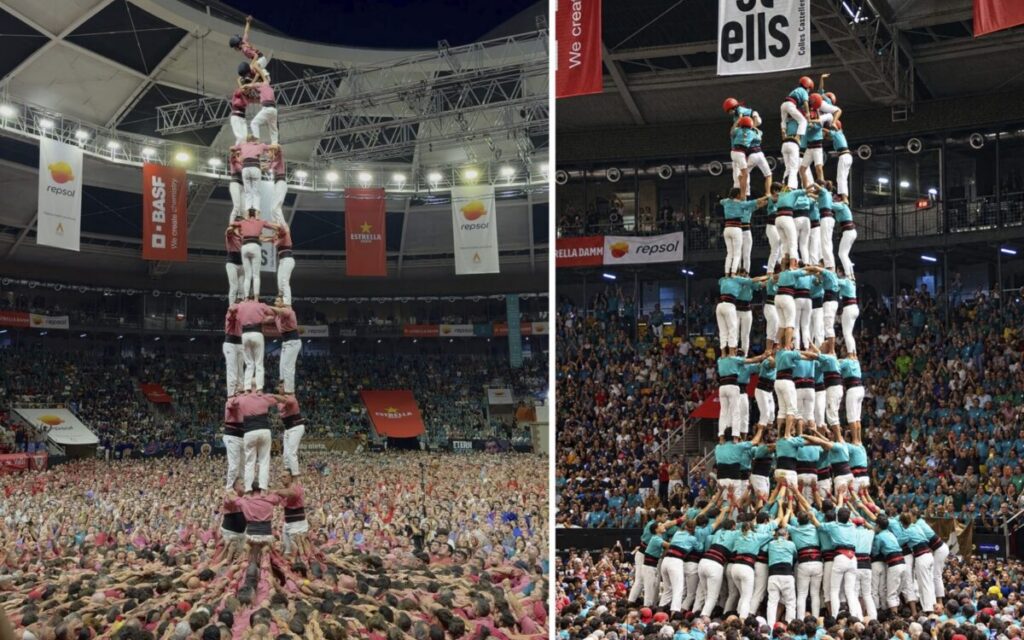
In a dramatic climax to the Concurs de Castells, a human-tower contest held in Tarragona, a schoolchild crowned the tallest tower Tarragona had ever seen. The enxaneta, the youngest member of the team Castellers de Vilafranca, reached the top and raised a single arm, signaling the completion of a nine-level tower that nobody had ever finished before.
The child, perched atop the tower, was the most crucial part of the structure, as adults built the base and trunk, while the lightweight enxaneta took the final few levels to avoid collapsing the entire tower. The climber at the very top is often a primary-school-aged child, wearing a helmet for safety.
As the team celebrated their victory, they acknowledged the immense responsibility of entrusting such a crucial task to a child. Angel Grau, the leader of Vilafranca's team, confidently declared that "we are the best colla in the world, never doubt it."
The event, which took place every two years in the old bullring, attracted forty-two teams from across Catalonia. The winning team, Castellers de Vilafranca, took home up to €16,000 in prize money. However, there are still teams, like one from Terrassa, who refuse to participate, arguing that the custom should not be reduced to points.
The child on top of the tower represents not only the pinnacle of human achievement in the contest but also the trust placed in them by their family and teammates. A poorly executed step could bring down the entire tower, and a clean descent is what turns a dare into a result. After the win, the child is carefully lowered to the ground, where they are met by cheers from the crowd.
This tradition, rooted in the 18th-century Ball de Valencians dance, has evolved into a regional contest, with each participating town displaying its unique colors and style. The next Concurs de Castells is scheduled for 2028, but for now, the image of the helmeted child, the raised arm, and the crowded arena remains a testament to the enduring heritage and skill passed down through generations.
Written by urgent.news from Euro Weekly News's reporting — not their text. Machine-written — may contain errors; check the original before relying on it.