X-Rays and AI Reveal How Spacecraft Heat Shields Burn in Real Time
Heat shields are undeniably one of the most important parts of any spacecraft that intends to enter an atmosphere. And the material they are made out of is absolutely critical. Improving them has been a bit of a challenge though, as typically researchers only get “before” and “after” pictures of when the heat shield completes its job of helping a spacecraft land safely back on Earth. That changed…
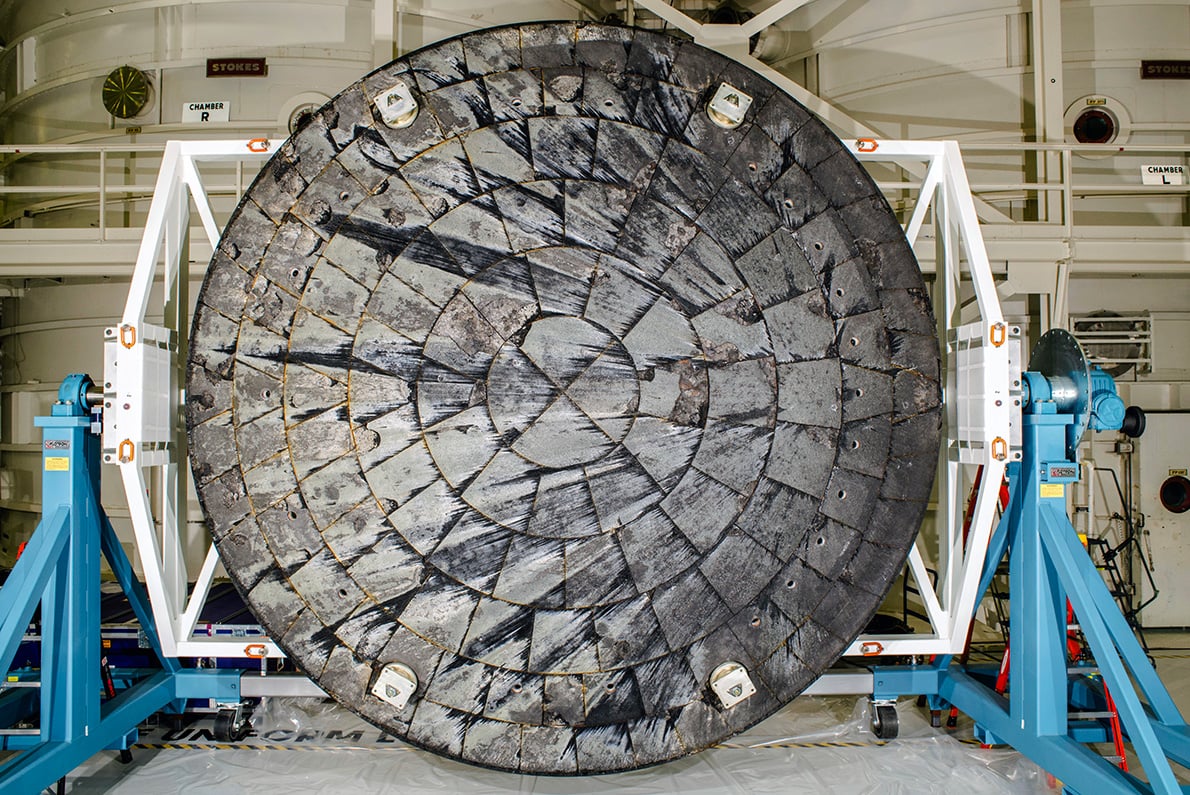
Researchers at Lawrence Berkeley National Laboratory (LBNL) have developed a groundbreaking method to observe spacecraft heat shields ablating in real-time using X-ray imaging. This innovative technique, which combines heat shield material samples with X-ray micro-computed tomography (micro-CT), has allowed scientists to capture detailed 3D structural images of the ablative process as it unfolds.
The technique, led by researchers including Vishnu Oruganti, has been instrumental in studying the degradation properties of various ablative heat shield materials used in NASA missions, such as Artemis and Mars entry missions. One key finding was the difference in degradation processes between ground cork filler and silicone-elastomer matrix materials, which impacts how spacecraft perform during reentry.
To overcome the challenge of balancing image detail and speed, researchers employed a Generative Adversarial Network (GAN) algorithm to rapidly generate high-resolution images of the material's changes. While the researchers have not yet updated simulations based on these findings or analyzed commercial heat shields like those used in Dragon or Starship, the potential for improving real-time spacecraft heat shield analysis is immense.
Written by urgent.news from Universe Today's reporting — not their text. Machine-written — may contain errors; check the original before relying on it.