Why French high schoolers are protesting, and why their movement is already historic
What began as a spontaneous protest in the Paris suburbs has grown to a scale unseen in decades, as students denounce learning conditions and uncertain prospects. The government's essentially repressive response risks fuelling further anger.
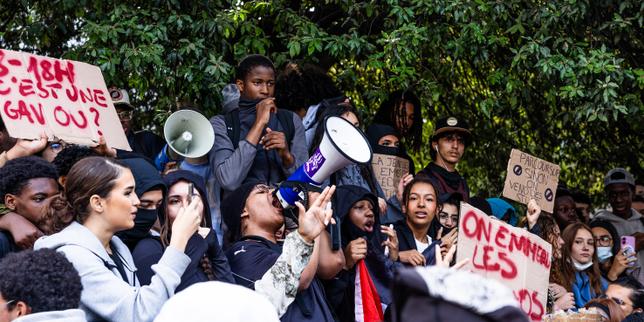
On Monday, a significant number of French high schools, or lycees, closed their doors as students continued to protest subpar learning conditions. Despite ongoing protests outside their gates, some students managed to enter the buildings. This wave of student demonstrations, which began in late September, has persisted for months, with complaints ranging from teacher absences and overcrowded timetables to dilapidated classrooms and buildings ill-suited to rising temperatures.
Since its inception, up to 500 out of the nation's 3,700 lycees were expected to be partially or completely shut down on Monday. Education Minister Edouard Geffray announced that a third of the 468 lycees for teenagers aged 15 to 17 in the Paris region would be closed. In the heart of Paris, students chanted slogans and made their way into classrooms, with one sign reading "No means, no silence."
In Rennes, downtown, over 20 students gathered outside a high school, holding signs like "Not enough teachers." However, staff permitted other students to enter. In Lille, masked protesters destroyed bus shelters and set fire to dustbins, leading to the use of tear gas by police. The movement originated at a high school in the Paris suburb of Creteil, sparked by teacher strikes over staffing shortages and resource inadequacies.
By September 17, the protest had gained momentum, spreading throughout France and, at times, turning violent with vandalism and clashes between protesters and security forces. Since the movement's start, 24 schools have been burned or ransacked, and over 5,000 people, the majority minors, have been arrested. Prime Minister Sebastien Lecornu proposed a plan urging local authorities to address the gaps left by teacher absences and unfilled positions.
He also scheduled a meeting with regional presidents on Tuesday to discuss revamping the country's aging school buildings. The government aims to pass legislation through parliament that would hold those responsible for damaging public property accountable, potentially through the collection of family allowances and housing benefits, ensuring a minimum income is preserved.
The head of the main CGT labor union, Sophie Binet, criticized a recently proposed bill, stating it would target the most vulnerable families.
Written by urgent.news from Dawn's reporting — not their text. Machine-written — may contain errors; check the original before relying on it.
This story
This is one outlet's version. Read the fullest account.
- Hundreds of French high schools shut as protests persist dawn.com
- Hundreds of French high schools close as student protests continue channelnewsasia.com
- Hundreds of French high schools shut as protests persist torontosun.com