What to expect during the AI Cybersecurity and Resilience Summit
AI trust increasingly determines whether enterprise AI scales. As organizations move beyond pilots and put models and agents into operational systems, the question is no longer whether AI performs well in isolation. Enterprises also have to determine whether the infrastructure, data and applications underneath it can withstand cyberattacks, data integrity failures and operational disruption. That…
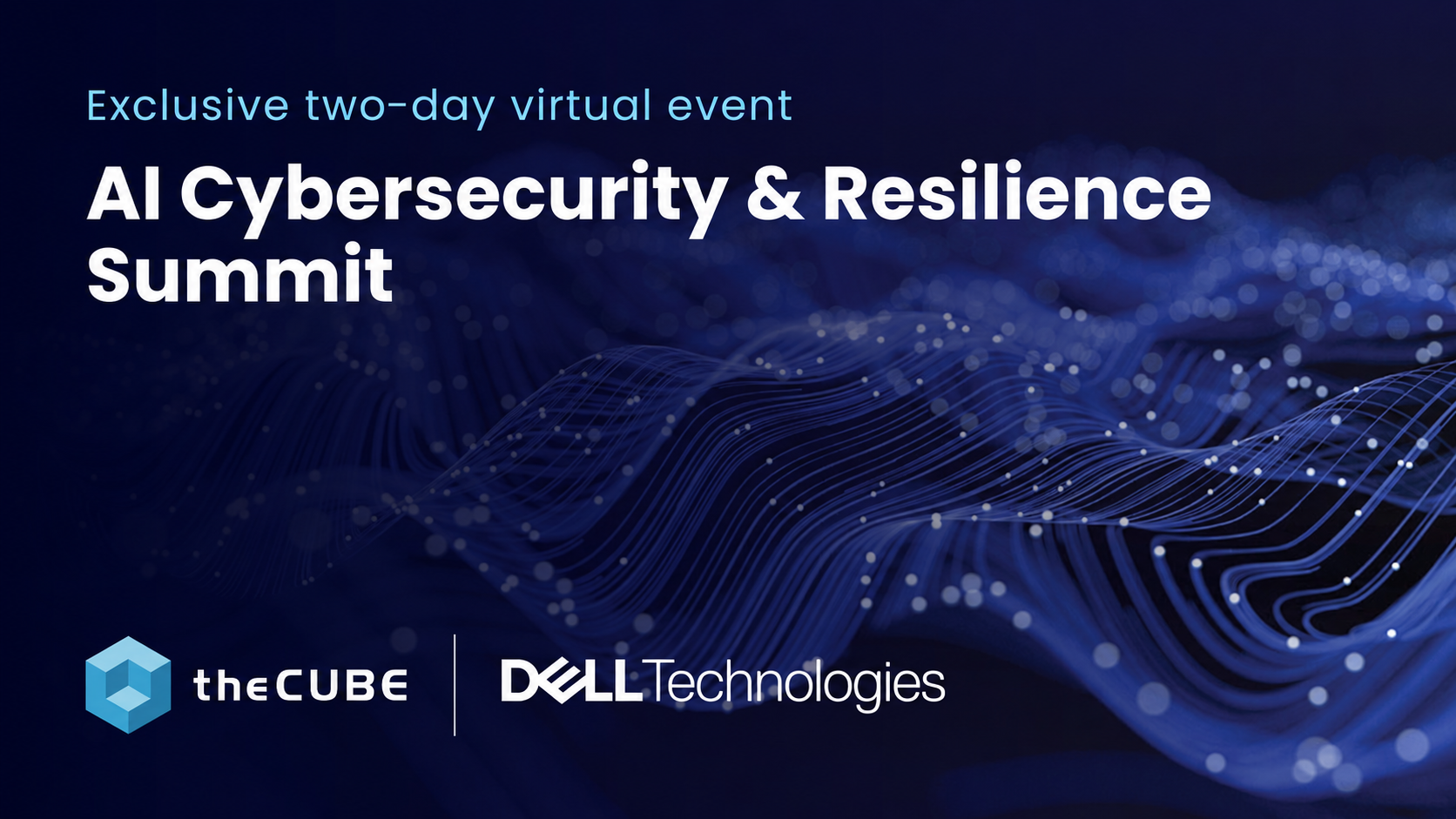
The AI Cybersecurity and Resilience Summit will explore how enterprises are adapting their architecture, security measures, and operating models as AI systems become more integrated into operational environments. The summit, led by Dell Technologies, will take place on October 27 and feature additional industry perspectives on October 28.
Key speakers include TheCUBE Research analysts Dave Vellante, Krista Case, Christophe Bertrand, and Scott Hebner, who will discuss the importance of trust in AI systems and the need for cyber resilience.
Hebner emphasized that AI projects often fail due to a lack of trust, and without verifying and defending outcomes, AI autonomy remains limited to low-stakes use cases. Bertrand argued that cyber resiliency should not be treated as a separate layer but as the foundational backbone of enterprise AI, encompassing data governance, protection, and infrastructure.
Dell's involvement in the summit reflects the growing importance of AI infrastructure and cyber resilience. As AI systems introduce new attack surfaces across model inference, training data, identity management, applications, and underlying infrastructure, Dell has been pushing security deeper into the infrastructure itself. This includes supply chain protections, infrastructure controls, identity management, and data protection.
Steve Kenniston, Dell's senior cybersecurity evangelist, highlighted the need for a security-by-design approach throughout the AI stack, including protection at the supply chain level and identity management.
Dell is also expanding its PowerProtect portfolio to include cyber resilience management features such as AI-assisted recovery guidance, enhanced anomaly detection, and managed detection and response for storage systems. Rob Emsley, director of cyber resilience product marketing at Dell, emphasized that the data layer remains the most critical asset in both traditional computing and the agentic era, with recovery becoming increasingly essential in the AI security equation.
The summit will focus on three principles: secure, detect, and recover. Dell's strategy emphasizes isolated cyber recovery environments to preserve clean copies of essential data and applications outside potentially compromised production systems. Hebner stressed that scaling AI requires rethinking the architecture itself, not just tooling, to ensure that AI decisions are audit-ready and have trust built into their design. As Hebner concluded, trust is the true architecture of AI systems.
Written by urgent.news from SiliconANGLE's reporting — not their text. Machine-written — may contain errors; check the original before relying on it.