What African startups returned to investors in a decade
The Class of 2016 raised about $1.89 billion, around 8.6% of the roughly $22 billion that flowed into African startups since 2016, but they produced almost no liquidity.
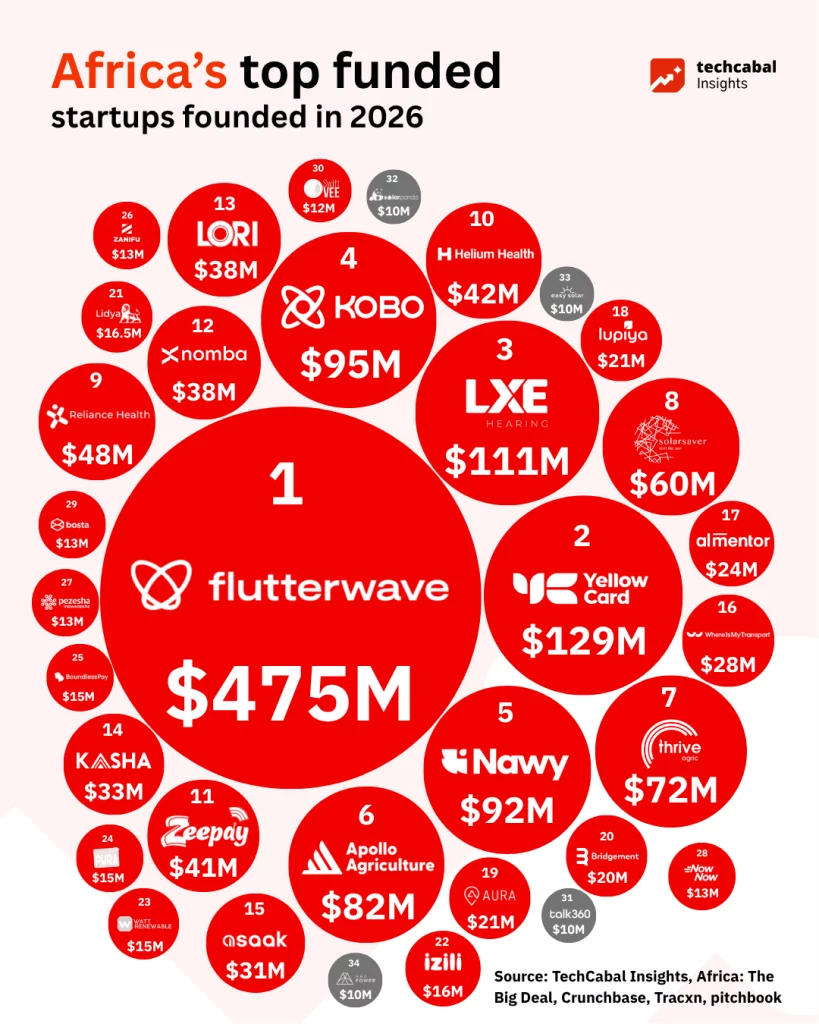
Over a decade, 200-plus African startups collectively raised $1.89 billion in venture capital, but they produced almost no liquidity. The disparity is stark; Flutterwave, a Lagos-based payments company, raised $475 million, more than twice what the 166 smallest companies raised combined. This imbalance reflects the current state of Africa's venture capital industry.
In the mid-2010s, the environment was ripe for startups, with mobile money adoption, falling smartphone prices, and global funds starting to view Africa as an asset class. TechCabal Insights tracked 166 startups across Nigeria, Kenya, South Africa, Egypt, Morocco, Uganda, and Ghana, spanning sectors like fintech, agritech, e-commerce, cleantech, and health.
However, despite the capital raised, there was minimal liquidity. Thirty-four companies accounted for $1.68 billion, or 89% of the capital, while 21 deals had undisclosed prices. The top 34 companies received 89% of the cohort's capital, leaving 166 companies with an average raise of $1.25 million over ten years. The concentration of capital in a few companies raises questions about the prospects for the majority.
In a functioning market, winners would exit, capital would be returned to funds, and funds would recycle it into new cohorts. However, the Class of 2016 did not produce many exits. The money also had a clear focus on fintech, with the majority of startups raising capital in this sector. Only a few companies, like DocFox and Syft Analytics, achieved notable exits by being acquired by foreign strategic buyers.
These successes were rare, and most startups struggled to achieve liquidity. Six companies announced shutdowns, and the reasons were varied, from lack of investors to market failure and operational issues. Overall, the decade's outcomes highlight the challenges faced by African startups in achieving liquidity and demonstrate the concentration of capital in a few companies.
Written by urgent.news from TechCabal's reporting — not their text. Machine-written — may contain errors; check the original before relying on it.