US search for missing airmen in China gains new attention after Xi-Trump summit
For more than eight decades, the remains of US fighter pilot Morton Sher lay unrecovered in China. A photograph of a memorial to him in a Hunan village eventually helped investigators find where his plane crashed in 1943. Sher was buried in his hometown of Greenville, South Carolina, in December 2025, a homecoming that offers a rare example of what US-China cooperation can achieve for families of…
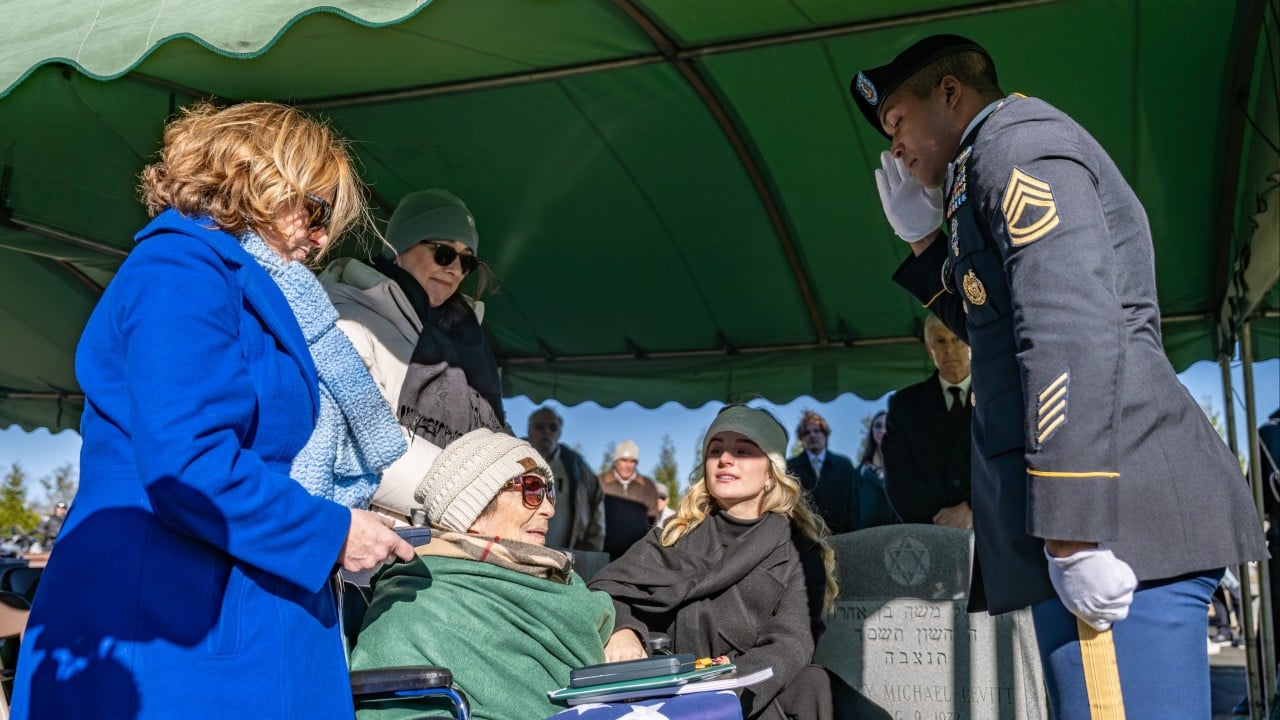
After a century, the remains of US fighter pilot Morton Sher have finally been recovered in China. A memorial photograph from a Hunan village aided investigators in locating the crash site where Sher's plane went down in 1943. Sher, buried in Greenville, South Carolina, in December 2025, represents the rare outcome of US-China collaboration for missing servicemen's families.
Recently, Beijing highlighted this cooperation, announcing that China and the US militaries agreed to continue searching for missing US servicemen's remains in China. They also aim to finalize a memorandum on military crisis communication and prevention soon, though no new recovery missions or site access arrangements were specified.
American investigators require permission to search crash sites and access to wartime records to pinpoint potential crash locations. John Figuerres, a senior operations officer at the Defense POW/MIA Accounting Agency (DPAA), emphasized that both site access and information sharing are crucial for their operations. China is the sole country where DPAA has missing Americans linked to four historical conflicts—World War II, the Korean War, the Vietnam War, and the Cold War.
The agency has already been actively searching in China since 2024, conducting site surveys, investigations, and recoveries. In August and September of this year, a US recovery team excavated what is believed to be a World War II crash site, recovering possible human remains. A nine-member investigative team surveyed multiple locations in Hunan and interviewed witnesses to prepare case proposals for potential future recoveries.
Both US and Chinese scientists will review the recovered evidence jointly in the coming month. Periodic communication between the US and Chinese militaries' archives on these unresolved cases continues. The search for missing servicemen exemplifies the "warrior ethos," highlighting the US military's commitment to never leaving a fallen comrade behind.
Morton Sher, a 23rd Fighter Group pilot, had previously crashed in China in 1942 and was welcomed by villagers upon landing. In 1943, while intercepting a Japanese aircraft, Sher was killed, and his remains remained unrecovered until a photograph of a village memorial led to their discovery in 2012. DPAA scientists then identified his remains in June 2025 using anthropological analysis, military files, dental records, and DNA testing.
Such identifications are painstaking, as DPAA's laboratory in Hawaii, the world's largest skeletal identification facility, often begins with fragmentary evidence that requires careful examination to rule out animal bones or debris. Anthropologists initially analyze remains without case details to avoid bias, with DNA results narrowing down possibilities but not definitively identifying individuals.
Figuerres noted that teams have met local residents in China who remember the US presence during World War II, maintaining tributes to fallen airmen. These human connections continue to aid the search efforts. Historians from both nations are increasingly collaborating, fostering an essential foundation for gaining valuable insights into the missing servicemen's stories.
Written by urgent.news from Reuters Business via SCMP's reporting — not their text. Machine-written — may contain errors; check the original before relying on it.
This story
This is one outlet's version. Read the fullest account.