UNAL Laboratory Will Trace the Ancient Past of the Colombia-Peru-Brazil Border
Archaeological findings in the Amazon, particularly in the triple-border region between Colombia, Peru and Brazil, show evidence of human presence dating back 13,000 years. Now, for the first time, researchers and students at the National University of Colombia (UNAL) Amazonia Campus will be able to analyze archaeological evidence in the region where it was found […]
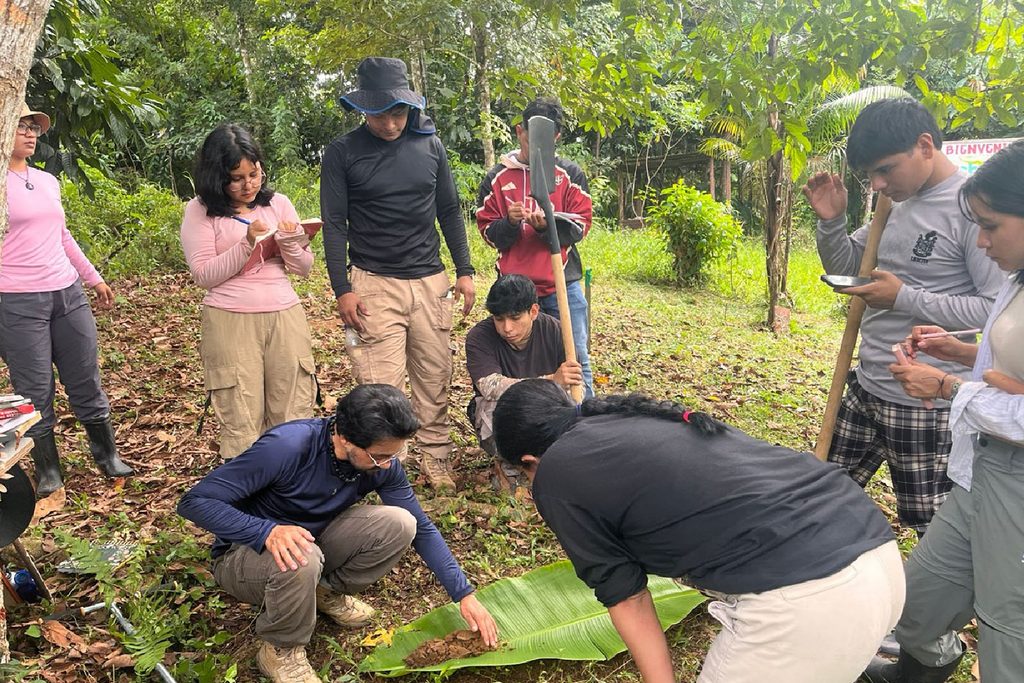
In the heart of the Amazon, the National University of Colombia’s (UNAL) Amazonia Campus has inaugurated the region’s first Archaeology Laboratory in Leticia. This groundbreaking facility will enable researchers and students to analyze archaeological evidence directly from the site where it was discovered, alongside communities that have preserved the knowledge and memories of these ancient sites.
Led by anthropologist and archaeologist Jeison Lenis Chaparro Cardenas, the lab will focus on studying human settlement, mobility, and exchange processes that have occurred over the past 13,000 years in the triple-border region between Colombia, Peru, and Brazil. By conducting research from Leticia, scientists will gain a broader perspective on the historical and cultural connections across these nations, transcending their current geographical boundaries.
The laboratory adopts a social archaeology approach, incorporating indigenous communities' memories and knowledge, which Chaparro emphasizes as crucial to the project. He explains that social archaeology acknowledges the significance of indigenous peoples and aims to support local initiatives such as preserving memory processes and recognizing sacred sites.
In addition to academic pursuits, the laboratory will contribute to training a new generation of archaeologists. Anthropology students from the Amazonia Campus will gain practical experience in laboratory and fieldwork, utilizing specialized tools and equipment to analyze and document archaeological materials and evidence. This hands-on training will bridge the gap between academic research and practical fieldwork in the Amazon.
The university is already expanding its influence by initiating a collaborative archaeological intervention project with the Mocagua community, in partnership with Professor Abel Santos, an Indigenous leader at UNAL Amazonia Campus. Furthermore, UNAL is working with the Colombian Institute of Anthropology and History (ICANH) to ensure the proper custody of reference pieces and fostering research networks with international institutions.
Ultimately, the goal is to establish Leticia as a regional research center that connects archaeological materials, university training, local communities, and scientific research into the rich human past of the Amazon.
Written by urgent.news from Colombia One's reporting — not their text. Machine-written — may contain errors; check the original before relying on it.