Turning Turner’s Legacy
“Turner and the Slave Trade” recasts Romanticism’s relationship to nature and landscape painting as a vehicle for colonial propaganda.
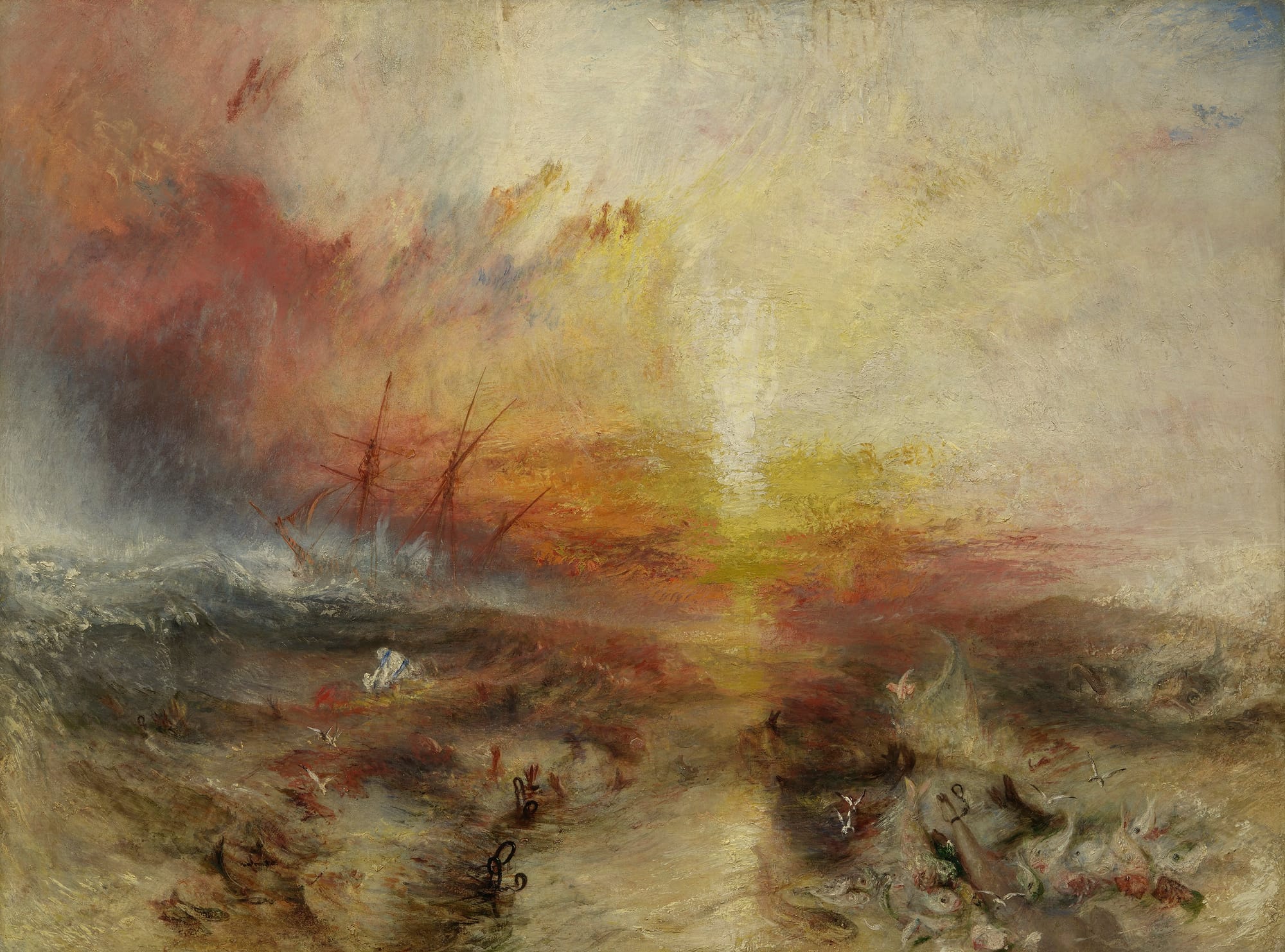
My grandfather was born near Black River, Jamaica, near the port where the Zong ship docked in 1781 after slaughtering 133 enslaved Africans to collect insurance. I still picture J. M. W. Turner's painting "The Slave Ship" (1840) when recalling the scene, but art historian Sam Smiles argues this connection is mistaken. Turner's "The Slave Ship" may not depict the Zong Massacre, but it does reflect the artist's evolving ethical journey.
Born near the Thames, I am familiar with the Royal Academy where the painting debuted in 1840, with its original title "Slavers Throwing overboard the Dead and the Dying–Typhoon Coming On." The painting's depiction of Black people as footnotes in British art history has become synonymous with the Zong massacre, but Smiles argues this is a recent reinterpretation.
Turner, a British icon, is now being reconsidered in a new light. While the painting was considered absurd at its time, it condemned chattel slavery. The artist's investment in a Jamaican cattle farm run by enslaved African workers in 1805 challenges the notion of him as a slaveowner. Smiles concludes that Turner's actions reflect the time's sublimation of chattel slavery, which financed England through absentee colonialism.
The Black Lives Matter movement and the ongoing epistemic violence in museums are also addressed by Smiles, who carefully avoids offensive terms and images in his analysis.
Written by urgent.news from Hyperallergic's reporting — not their text. Machine-written — may contain errors; check the original before relying on it.