The leading theory of how life began just hit a snag
How and where life first emerged on Earth is one of the great unsolved puzzles for scientists exploring the possibility of life on other worlds. For the past decade or so, the prevailing theory has been that the first primitive organisms originated at alkaline hydrothermal vents in the deep ocean. Now, a new paper by Benjamin Tutolo from the University of Calgary in Canada, published in the…
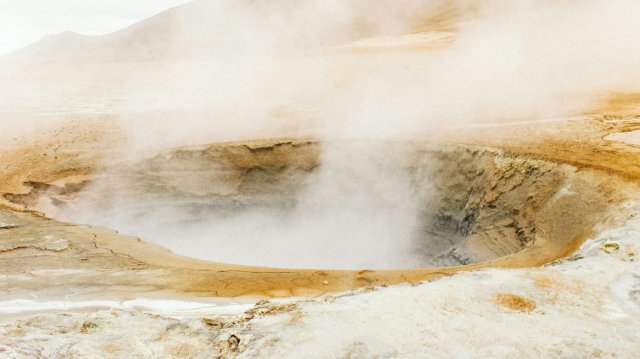
Scientists have long pondered the mystery of how life first took hold on Earth. The prevailing theory suggests that primitive organisms arose near alkaline hydrothermal vents deep beneath the ocean's surface. However, a new study challenges this long-held belief, suggesting it may not be the ideal setting for life to emerge.
Ben Tutolo, a researcher from the University of Calgary, argues that the high temperatures at hydrothermal vents, similar to the Lost City Hydrothermal Field, are essential for organic molecules to bond and form vital biomolecules. But Tutolo claims that the vents would only become alkaline after cooling down, which would inhibit the formation of the necessary conditions for life.
He also suggests that reduced sulfur, crucial for building cell membranes, would likely be scarce in ancient ocean vents. The synthesized chemicals would have little time to form before breaking down. While the hydrothermal vent theory isn't entirely dismissed, the study reveals that there might be serious issues with the original scenario.
Researchers are now exploring alternative hypotheses, such as Darwin's "little warm pond" theory. This idea proposes that life might have originated in surface hydrothermal pools, like hot springs in Yellowstone National Park. Ultraviolet radiation from Earth's surface would play a role in synthesizing organic molecules, and occasional drying could concentrate these molecules, promoting interactions.
Other possibilities include tidal flats, cold-water environments, and even tectonic fault zones rich in supercritical carbon dioxide. These alternate locations could provide the right conditions for life to arise. However, all these theories assume that life originated on Earth.
The study also raises the possibility of life originating elsewhere in the universe. The panspermia hypothesis suggests that life may have arrived on Earth from another celestial body, such as Mars. Evidence suggests that rocks from Mars could have traveled to Earth without being heated excessively during their journey. This could mean that life on Earth could have started on Mars and then made its way to our planet.
Some theories even propose that advanced extraterrestrial beings intentionally seeded life on Earth, a concept known as directed panspermia. However, this idea doesn't explain how life emerged, only that it might not have originated here.
Regardless of the origin, life persists on Earth, and understanding its beginnings could provide valuable insights into the possibility of life elsewhere in the universe.
Written by urgent.news from Big Think's reporting — not their text. Machine-written — may contain errors; check the original before relying on it.