Styringsrenten er en slegge
Den treffer inflasjonen, men belastningen fordeles skjevt.
"Styringsrenten er en slegge" is a harsh truth for many households and businesses in Norway. The Norges Bank has raised the key rate 16 times since September 2021, and it is now back at 4.5 percent after two cuts. The reason is clear: underlying price increases are expected to fall from around 3 percent to the target of 2 percent.
However, it doesn't come cheap. The remaining percentage point will be paid through weaker demand, squeezed margins, fewer investments, and higher unemployment. While it's not certain if the rate works, it's brutal. Many households and businesses are feeling the pinch. A family with a three million kroner mortgage paid around 1.8 percent interest on their outstanding home loan in the autumn of 2021.
By August 2026, the same rate was 5.3 percent, a difference of roughly 105,000 kroner in increased annual mortgage payments before tax. At the same time, prices have surged. While food price inflation is now lower, the rapid rise in food and non-alcoholic beverages is still a concern. Prices have not leveled out, they have simply slowed down.
Wages have helped fuel some of the price increase. An industrial worker has earned around 140,000 kroner more in annual wages since 2021, if the year's wage growth ends around 4.4 percent. But wage growth must also finance the rate hike. For the well-endowed family, it's little consolation that inflation has fallen from 5 percent to 3 percent.
Food, transport, and housing costs have already risen sharply. Now, the same wage must also bear a mortgage that is much higher than in 2021. For the production sector, we have another dilemma. Profitable industry sets the standard for much of the workforce. It makes sense in a small, open economy like Norway's, but wage levels are not uniform.
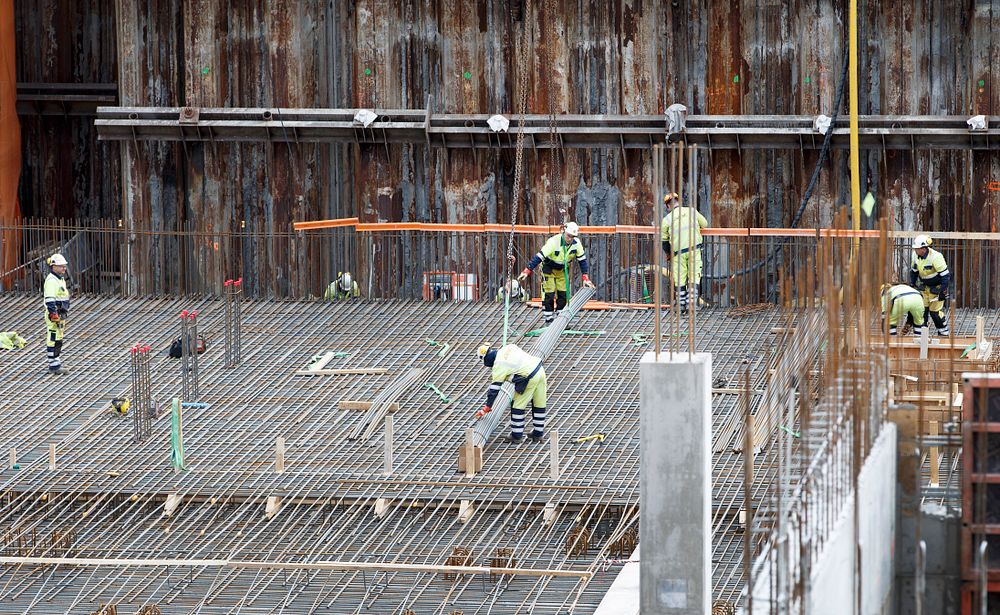
Norges Bank's regional networks still describe weak wages and tough competition in construction and engineering. Businesses in these sectors say they have partially met wage growth through higher prices, but struggle to keep up without losing talent. Construction and engineering now face a double blow: wages follow the norm set by a much more profitable sector, while interest rates are simultaneously choking off the markets they need to generate revenue.
This is not just an economy coming to a boil. It's one where costs have bitten deep. In 2016, underlying inflation was also 3 percent. Norges Bank kept the key rate around 0.5 percent because price growth was largely seen as temporary and imported. That year, wage growth was 1.7 percent. Today, the picture is different. Wage growth is higher, productivity growth is slow, and labor-intensive services continue to see high price increases.
The bank itself points out that high wage growth relative to productivity helps keep costs and prices up. The bank also estimates that the economy will cool off a bit further and unemployment will rise somewhat. The paradox is that higher rates create costs that work against them. Higher financing costs can be passed on to consumers, and higher capital costs can pressure landlords.
At the same time, other cost shocks - such as energy, fuel, and transport - can be passed on, adding new costs on top. Higher interest rates also attack these costs, making it harder for businesses to keep up with price increases and weakening the labor market enough to let wage growth fall. Those with the most debt bear the brunt.
In the latest available distribution data (2023), 29 percent of households had debt more than three times their income after tax. They accounted for 67 percent of total household debt. In 2024, 84.8 percent of households had debt. A debt-free household with investment income can earn higher interest rates. A first-time homebuyer or family with high debt is hit much harder.
For capital-intensive and already pressured businesses, higher financing costs sit atop high wage and operating costs. The key rate is biting. That's the problem. It presses the last percentage point of inflation by squeezing consumer purchasing power, margins, and activity out of the economy. The question is what social cost we are willing to accept on the way - and who will foot the bill.
Politicians cannot remove the rate's impact without simultaneously counteracting inflation targets. But they can try to cushion the uneven distribution effects without further increasing overall demand. Regardless, it will be painful for many.
Written by urgent.news from E24 Norway's reporting — not their text. Machine-written — may contain errors; check the original before relying on it.