Skills, experience and AI literacy key to graduate success
A degree may open the door to a career, but what candidates can do with their knowledge can determine whether they stand out, highlighted experts during a panel at Gulf News Edufair. Speakers said employers increasingly value adaptability, communication, problem-solving, digital and AI literacy, resilience and the ability to keep learning. They also stressed that these capabilities cannot be…
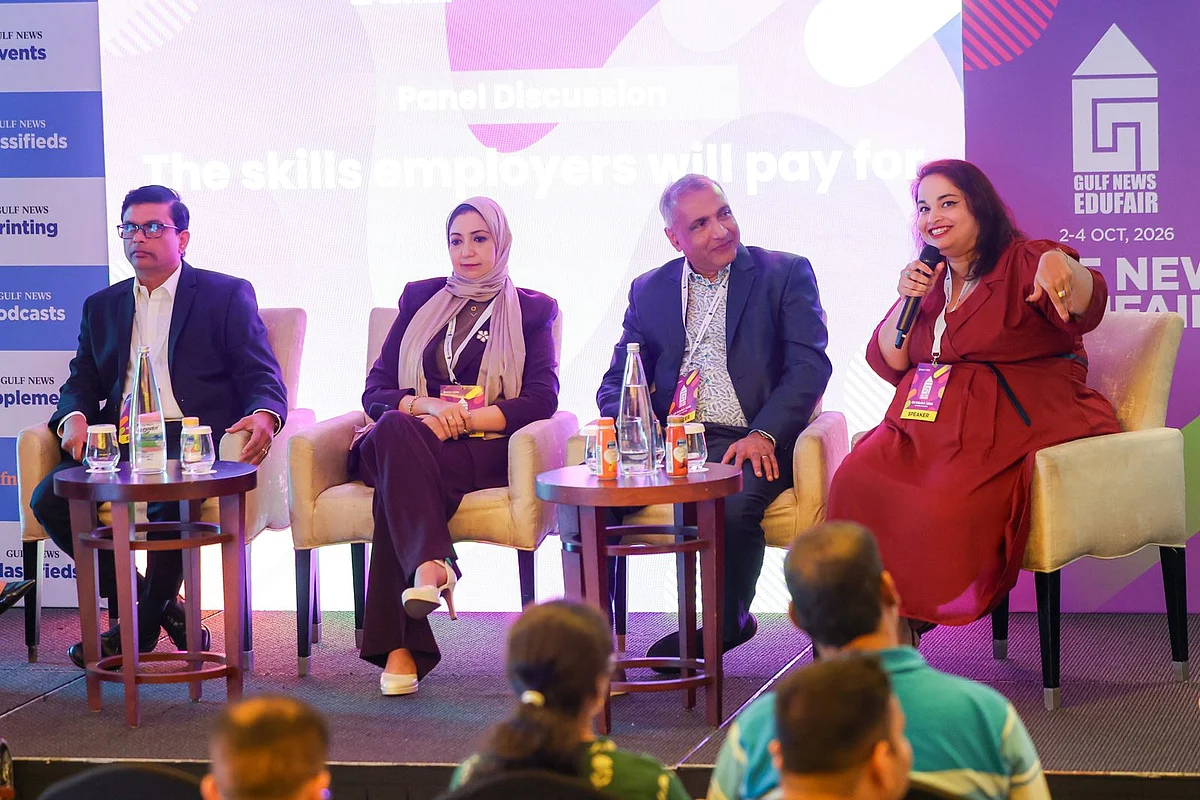
Graduate success increasingly hinges on a candidate's ability to apply their knowledge, according to experts speaking at the Gulf News Edufair. Employers now prioritize adaptability, communication, problem-solving, digital and AI literacy, resilience, and a lifelong learning mindset. Developing these capabilities requires starting early and continuing throughout one's education and career, emphasized panelists.
Prof. Sathish Kannan, Dean of Engineering, Architecture, and Interior Design at Amity University Dubai, stressed that skill development should begin in elementary school. Teachers must engage students, provide feedback, and encourage critical thinking and self-reflection. This process should continue through middle and senior school, helping students identify their strengths and make informed decisions about their future.
At Amity University Dubai, students receive a skills matrix and aspiration form to help them understand their capabilities.
Dr. Riham Ahmed Ibrahim, from RAK Medical and Health Sciences University (RAKMHSU), emphasized that students should adopt an employment mindset from the start of their university journey. Universities can support this through advising, workshops, and practical learning, alongside developing communication, leadership, teamwork, and presentation skills alongside technical knowledge.
Dr. Kulangara Jacob Johnson, Director of the Center for Design & Innovation for Public Purpose at the American School of Dubai, highlighted the challenge of changing students' mindset towards learning and skills development. With AI's rapid advancement, defining a fixed set of skills is no longer valid. Instead, students must learn how to learn and adapt agilely.
Dr. Johnson stressed that AI should be viewed as a thought partner, not a solution provider, encouraging students to develop judgment, creativity, and confidence to act independently.
Observation skills are crucial, according to Prof. Kannan. By closely observing problems and understanding the underlying needs, students can innovate and find solutions. However, AI literacy must extend beyond tool proficiency, with students learning to evaluate AI-generated information responsibly and critically. This approach ensures that AI is used as a professional tool rather than a source of passive information.
Written by urgent.news from Gulf News's reporting — not their text. Machine-written — may contain errors; check the original before relying on it.