Securing the Open Source AI Ecosystem with Pranshu Raghav
Open-source AI frameworks are becoming part of enterprise infrastructure. Learn how supply chain flaws, SSRF, IDOR, & weak access controls expand the AI attack.
Pranshu Raghav is a cybersecurity engineer with expertise in Application Security, DevSecOps, and Cloud Security. He has secured large enterprise systems for prominent organizations such as Southwest Airlines, T-Mobile, Delta Air Lines, and Verizon. Raghav contributes to the OWASP Foundation, promoting secure development practices in distributed environments.
The rapid deployment of artificial intelligence frameworks creates significant supply chain vulnerabilities in modern software architectures. Organizations are incorporating open-source models into critical enterprise infrastructure without thorough architectural reviews, allowing severe structural weaknesses to spread throughout interconnected platforms. This necessitates immediate intervention from technical experts to prevent widespread data compromise.
As autonomous artificial agents increasingly handle enterprise coding, testing, and deployment activities, strict governance is required to manage artificial intelligence model weights, training data, and processing servers. Raghav observes numerous vulnerabilities when securing large-scale enterprise infrastructure, such as agent goal hijacking. This occurs when malicious prompts hidden in document metadata silently extract sensitive enterprise data without user interaction.
One critical risk in AI ecosystems is the compressed maturity curve of artificial intelligence development, which outpaces traditional security implementation. Rapid scaling of these tools creates unprecedented structural gaps. The centralized nature of these applications, which handle tasks like user authentication, multi-tenant workspace management, and access control to internal and external systems, amplifies the underlying risk factor.
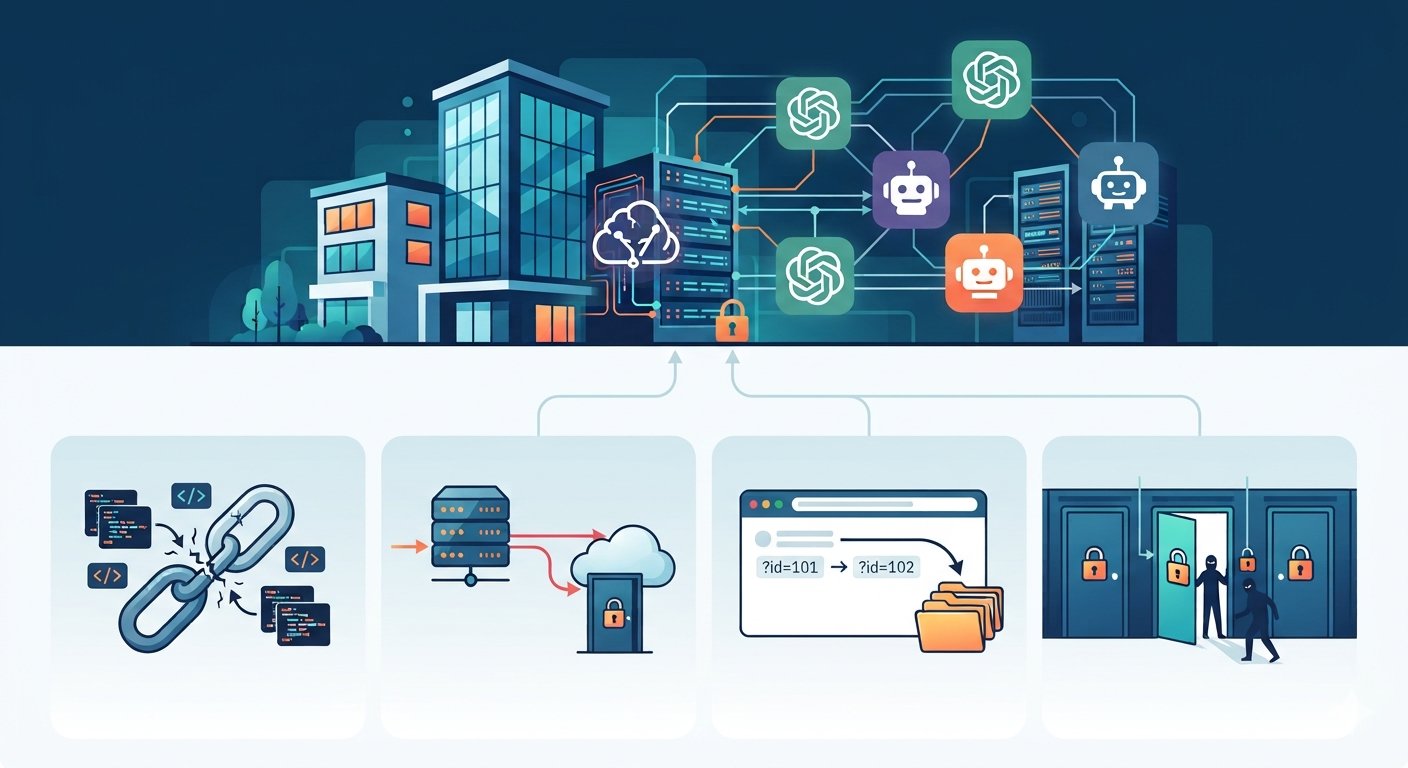
Server-side request forgery vulnerabilities are still prevalent in modern web architectures. Recent exploits against open-source interfaces demonstrate how HTTP clients following redirects without validating target URLs can lead to unauthorized access to cloud metadata services. By analyzing how servers execute unverified user inputs, Raghav has identified similar vulnerabilities.
He discovered these issues while testing how the platform handled external resource references, specifically functionality that allows the server to fetch a resource from a URL supplied by the user.
The widespread use of unauthenticated contextual processing servers across cloud environments exacerbates the impact of these request forgery flaws. Once manipulated, these servers serve as direct pathways to internal corporate assets. In a cloud deployment, this poses a significant danger, as it can serve as a stepping stone to retrieve cloud credentials from metadata services, allowing further pivoting into the broader environment.
This amplifies risks for downstream users relying on foundational developer platforms that process extensive proprietary data.
Tenant isolation is critical in multi-tenant environments, relying on internal object reference protocols. Missing tenant scope validations enable unprivileged users to manipulate bindings and execute retrieval-augmented generation denial of service attacks. Access controls that are absent or improperly implemented compromise the fundamental architecture of multi-tenant environments.
A single access-control flaw can cascade into every downstream AI application, resulting in substantial financial risk and regulatory penalties. Malicious actors exploit schema parsers to force servers into executing arbitrary internal HTTP requests, leading to widespread cascading vulnerabilities.
Written by urgent.news from HackerNoon's reporting — not their text. Machine-written — may contain errors; check the original before relying on it.