Revisiting an Unsung 100-Year-Old Novel From an Intellectual New York Family
I recently visited a house on Manhattan’s Upper East Side. Despite its hospitable interiors, I wasn’t invited inside. I wandered around in the dark, peering through the windows like a voyeur. I couldn’t believe what I saw. I dreamed of
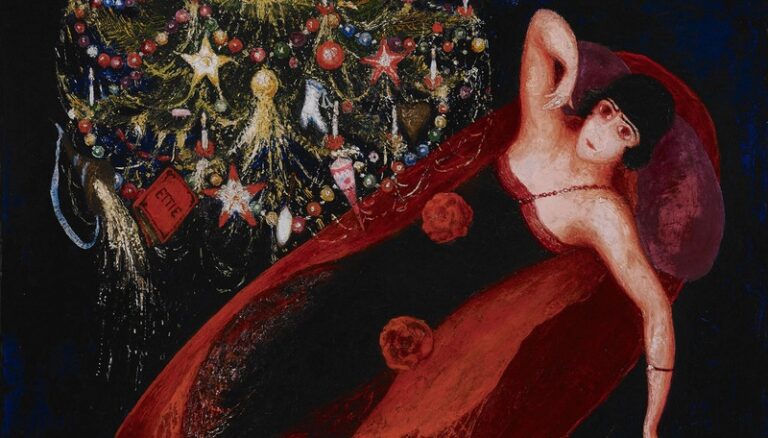
On a recent visit to an Upper East Side Manhattan home, an extraordinary dollhouse captured my attention. Built in 1916 and continuously redecorated until 1935, the dollhouse belonged to the Stettheimer sisters - Carrie, Florine, and Ettie. The Stettheimer sisters were influential artists and intellectuals, whose salon attracted notable avant-garde artists and thinkers of the late 19th and early 20th centuries.
Carrie's dollhouse miniature captures the lavish world of her family, filled with plush beds, gilded headboards, silk sheets, and a private elevator. The art collection, featuring cubist paintings, works by Gaston Lachaise, Marguerite Zorach, and Marcel Duchamp's iconic "Nude Descending a Staircase !" displayed salon-style on a striped floor, highlights Carrie's status as an avant-garde doyenne.
Less known than her sisters, Ettie (1875-1955) published a rare book under the pseudonym "Henrie Waste" - "Love Days" (1923). The novel guides readers through the Stettheimer sisters' fabulous world and the interior spaces of a troubled woman's mind. Ettie's alter ego, Henrie Waste, first appeared in 1917 with the publication of "Philosophy: An Autobiographical Fragment," a young woman's account of pursuing a Ph.D. in Germany at the turn of the century.
Written by urgent.news from Literary Hub's reporting — not their text. Machine-written — may contain errors; check the original before relying on it.