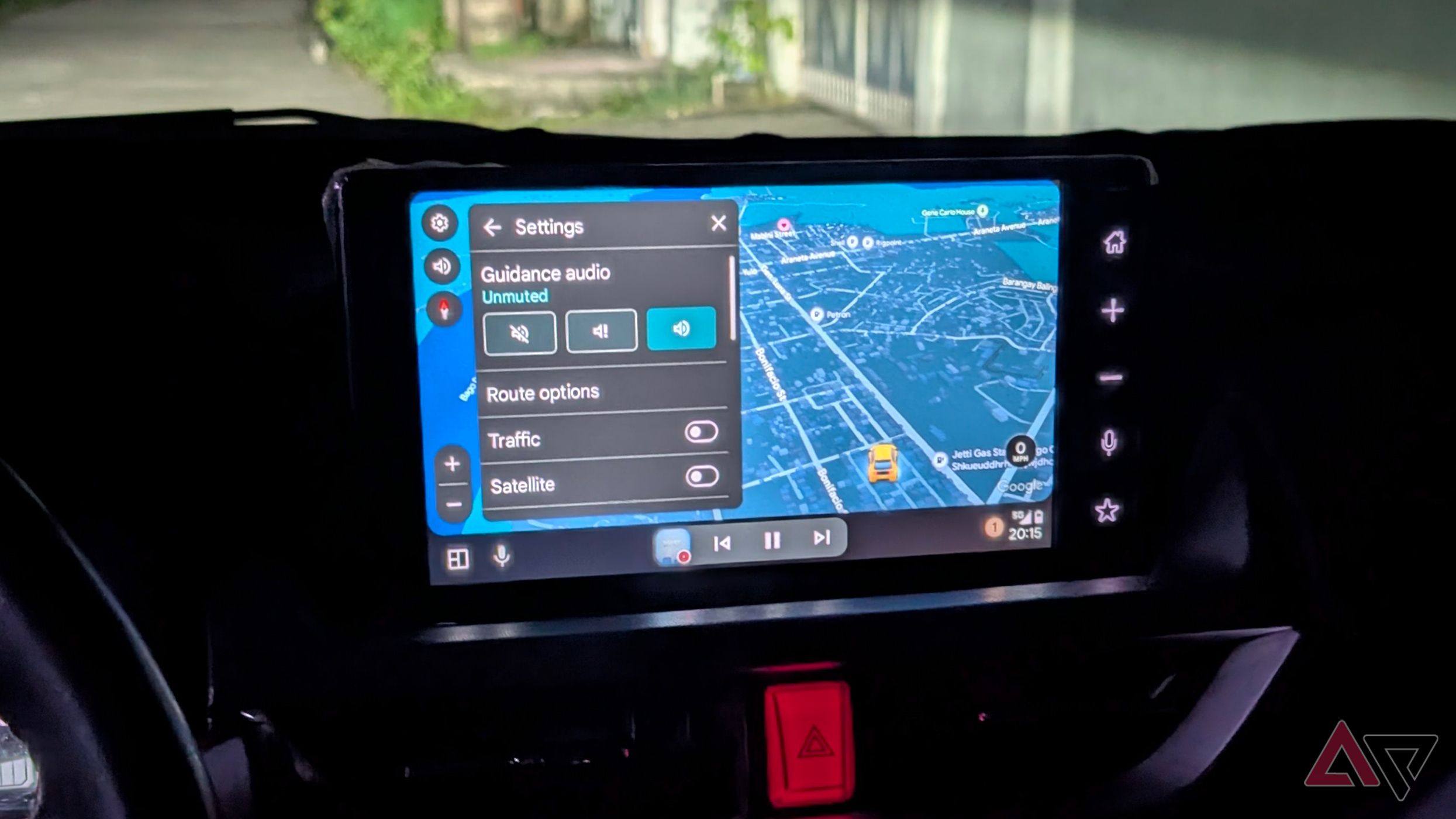
Pixel 11 users are getting some nasty Google Maps bugs in Android Auto
It might be worth switching to another app for the time being
The Google Pixel 11 Pro is one of the best Android smartphones the company has ever produced in its 11-year history. It boasts excellent hardware, an exceptional camera system, and a seamless software experience. Nevertheless, the Pixel 11 Pro does not escape a few lingering issues that Google has yet to resolve. These problems have been consistently highlighted in complaints about Pixel phones and have become even more apparent on the Pixel 11 Pro.
If Google hopes to improve upon the Pixel 11 Pro with the upcoming Pixel 12 Pro, it must address these key areas. One major issue that has plagued Pixel phones is the perception that they are associated with Google's Tensor chipsets. This sentiment has been present since the Tensor G1 chipset was introduced in the Pixel 6 series and is likely to persist as long as Tensor chips are utilized.
While the author acknowledges that Tensor chips provide reliable performance for most users, they argue that spending upwards of $1,099 on a flagship device should guarantee a smooth gaming experience. However, this is not always the case with the Pixel 11 Pro. My colleague, Rob, found that the GPU's inability to natively support OpenGL ES results in significant microstutters and performance issues, particularly when running popular games like Genshin Impact.
This is due to the Pixel 11 Pro using ANGLE to translate OpenGL ES games to the Vulkan rendering system. While Google may not need to set new gaming performance records, the Pixel 12 Pro must offer more reliable performance to avoid these issues. Another concern is the battery capacity in the Pixel 11 Pro. The phone's 4,850mAh battery delivers solid endurance, but the author believes that Google is wasting the excellent efficiency of the Tensor G6 on such a modest battery size.
The author suggests that a more efficient Tensor G7 chipset paired with a larger 6,000mAh or larger silicon-carbon battery could provide even better multi-day usage. Lastly, the Pixel 11 Pro's wired charging speeds have remained stagnant since the Pixel 6 Pro launched with 23W charging speeds. The author criticizes Google for not keeping up with other manufacturers, such as Motorola, OnePlus, and Samsung, which have achieved much faster charging speeds.
Although Google attempted to address this issue with the "Extreme Charging Mode," it did not provide significant benefits in testing. The author expects the Pixel 12 Pro to at least match Samsung's 60W charging speeds on both the standard Pixel 12 Pro and the XL model, ideally with broader charger support as well. These improvements may seem ambitious, but they are not out of the realm of possibility for a company like Google, which has the resources to tackle such problems.
Written by urgent.news from Android Authority's reporting — not their text. Machine-written — may contain errors; check the original before relying on it.
This story
This is one outlet's version. Read the fullest account.