Only two leaders from outside the Pacific attending crucial climate summit in Fiji
The Albanese government faces intense pressure at the talks to justify the cost, estimated at over $20 million, and to live up to promises to champion the Pacific’s climate concerns.
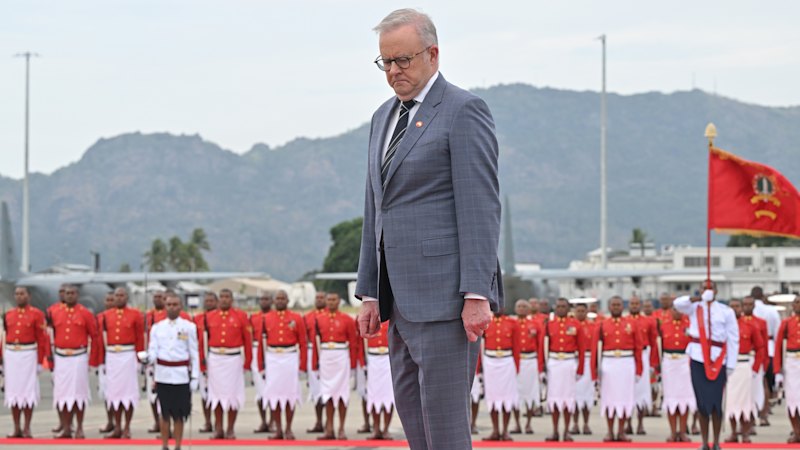
The UN-pre-COP climate summit has commenced in Nadi, Fiji, with Pacific leaders targeting global focus on the effects of climate change. The South Pacific faces significant threats from rising sea levels, coral bleaching, and increased temperatures. The summit serves as a precursor to the upcoming UN climate summit in Turkey. Pacific nations are advocating for adherence to a 1.5°C warming limit, enhanced climate finance, and greater emphasis on ocean protection.
Fiji's Climate Minister Lynda Tabuya announced three key messages to leaders: maintaining the 1.5-degree target, ensuring climate finance reaches those in need, and acknowledging the ocean's role in climate change. A UN report revealed that sea levels are rising at an unprecedented rate, driven by warming oceans and glacier melt.
Up to 1.2 billion people could be displaced by 2050, with Pacific Island countries experiencing sea level rise at twice the global average. Developing countries require $310-$365 billion for adaptation, yet only $26 billion was available in adaptation finance in 2023.
Fiji's pre-COP summit aims to bring the world to the Pacific, yet attendance by world leaders remains modest, with fewer than a dozen confirmed attendees. Australia's Climate Minister Chris Bowen, who also presides over COP31 negotiations, highlighted the urgency for action to match ambition. Tuvalu Prime Minister Feleti Teo emphasized the urgency of climate action, stating that sea-level rise is not a future threat, but a present reality, as two of Tuvalu's nine coral atolls are already submerged.
Internationally, the World Health Organization reported that extreme heat poses significant risks to pregnant women and their newborns, associating it with premature birth, stillbirth, low birth weight, and maternal complications. A survey of midwives and doctors from the UK, Australia, India, Brazil, and Zimbabwe found that extreme heat is increasingly linked to pregnancy and birth complications.
The World Health Organization's chairwoman, Julia Gillard, stressed that mothers and babies are increasingly at risk due to climate change, highlighting the need for urgent action.
Written by urgent.news from RTE News's reporting — not their text. Machine-written — may contain errors; check the original before relying on it.
This story
This is one outlet's version. Read the fullest account.