Nordafrika-Exklave: Spanische Polizei räumt Migrantenlager in Ceuta
Seit Ende Juli leben die Menschen in einem improvisierten Lager am Strand. Nun sollen sie ausreisen oder sich registrieren lassen. Was die Menschen erwartet und warum Hilfsorganisationen Kritik üben.
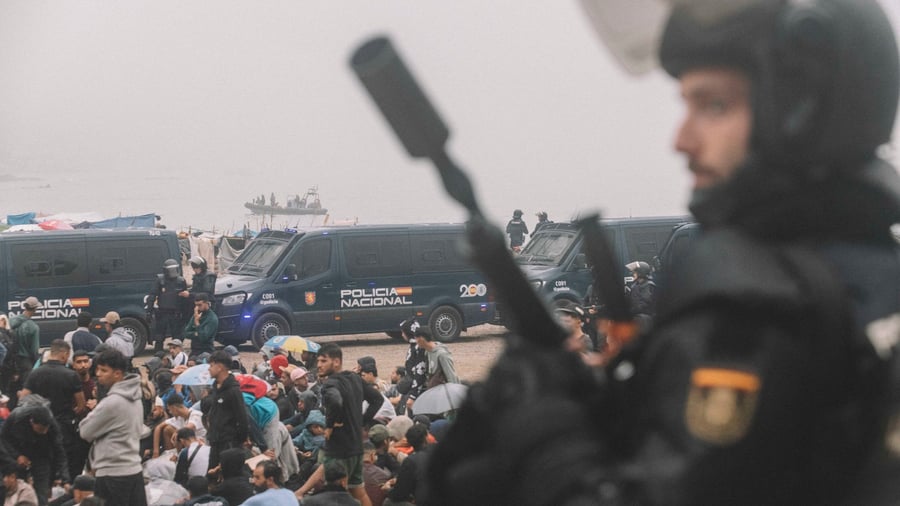
A week before Spanish royalty's planned visit to Ceuta, a Spanish North Africa enclave, the police and military completed the clearance of a migrant camp. All the original approximately 3,000 migrants who had lived since late July at the Trampolin beach in makeshift dwellings had been moved away, local newspaper "El Faro" reported.
On the 30th and 31st of July, government estimates stated up to 80,000 migrants arrived from Morocco. Most returned to Morocco soon after. However, thousands continue to reside in the enclave. The migrants were transported in buses to the Tarajal border crossing where they faced a choice: to return to Morocco voluntarily or register to be housed in a tent camp.
Many migrants feared deportation to Morocco, believing they could more easily be expelled from the territory if they registered. Some 600 Maroccans voluntarily left Ceuta on the first day of the recent clearance action, according to RTVE. On the second day, many of the original 3,500 migrants who had been living in plastic tarpaulin huts at the beach fled to surrounding forests.
The German private aid organization Mission Lifeline strongly criticized the Spanish authorities' actions. "Under pressure and surrounded by police officers in armor with armored vehicles, no talk of voluntariness and a rule of law procedure," said Mission Lifeline's director Nolte Bauer, speaking to Deutsche Presse-Agentur. The Spanish authorities must stop these expulsions and guarantee an individual assessment for each person.
Written by urgent.news from Handelsblatt's reporting — not their text. Machine-written — may contain errors; check the original before relying on it.