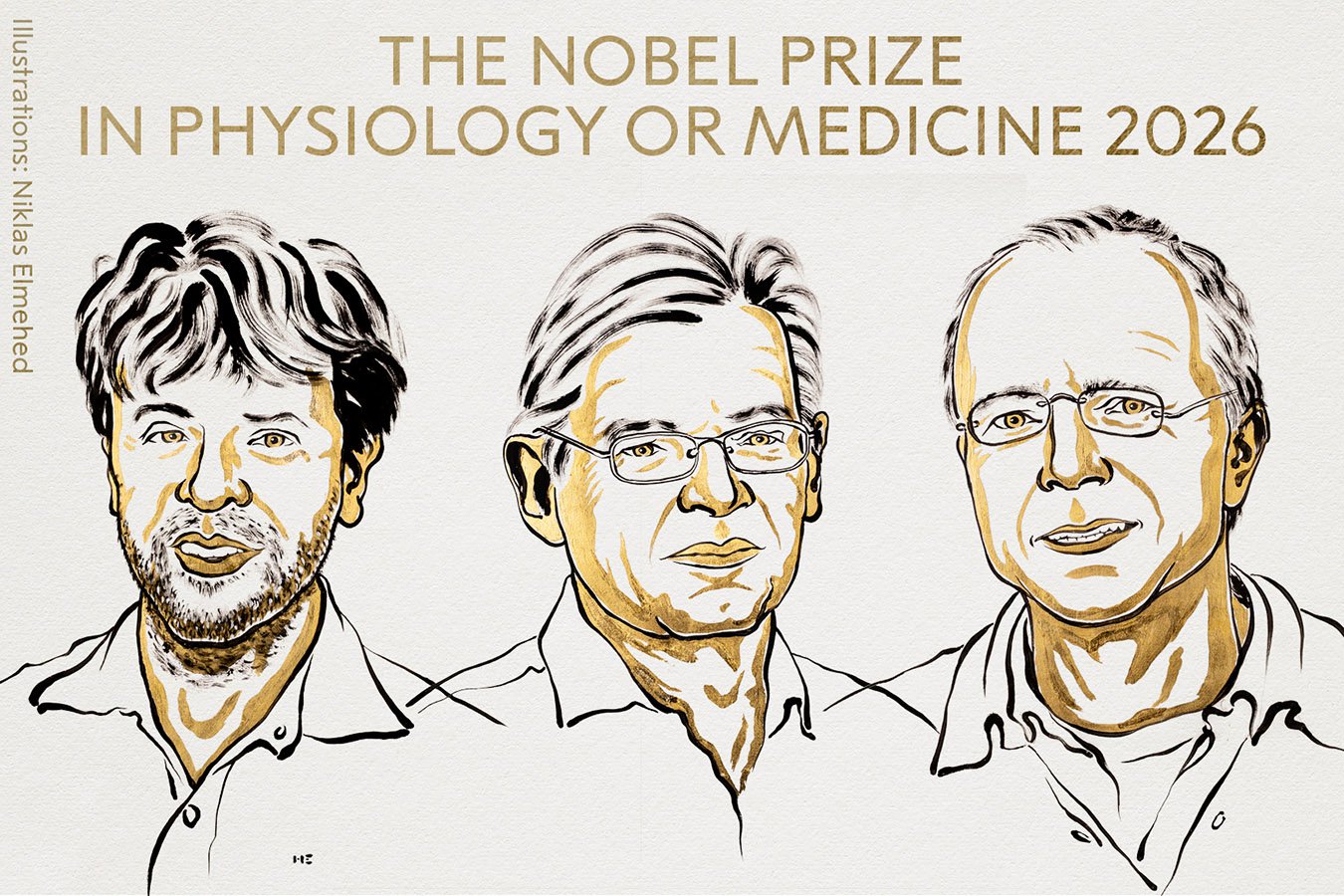
Nobel Prize in Medicine 2026 awarded to 3 scientists for work on optogenetics
The three scientists were recognised for pioneering work that enabled researchers to control the activity of specific cells using light.

This year's Nobel Prize in Physiology or Medicine was awarded to US psychiatrist and neurologist Karl Deisseroth, along with his German colleagues Peter Hegemann and Georg Nagel, for their groundbreaking work in the field of optogenetics. Their research has significantly advanced our understanding of the human brain and its intricate workings, ultimately contributing to a deeper comprehension of feelings, behaviors, and various bodily functions.
The Nobel Committee commended the trio for establishing the foundation of a new era in neuroscience, uncovering the neural circuits responsible for specific memories, emotions, and behaviors associated with neurological and psychiatric disorders. Clinical medicine now employs optogenetics as a tool to potentially restore sight in individuals suffering from visual impairments.
The Nobel Assembly described optogenetics as having fundamentally reshaped our understanding of the brain. According to the committee, each day brings new discoveries that bring us closer to solving one of humanity's greatest mysteries: the workings of our incredible brain.
Deisseroth, Hegemann, and Nagel expressed their delight at receiving the prestigious award, acknowledging it as an honor to share the recognition with their esteemed colleagues. The prize money of £900,000 (12 million Swedish kronor) will be divided equally among the three winners.
Per Svenningsson, chair of the Nobel Committee for Physiology or Medicine, explained that optogenetics offers a unique opportunity to map the brain in ways once thought impossible. Before its inception, the inner workings behind feelings, behaviors, and bodily functions remained largely a mystery to scientists. Optogenetics works by introducing a specific protein derived from algae into nerve cells, enabling researchers to control cell electrical activity using light, thereby illuminating brain pathways and revealing the functions of individual nerve cells and pathways.
Written by urgent.news from BBC News's reporting — not their text. Machine-written — may contain errors; check the original before relying on it.
This story
This is one outlet's version. Read the fullest account.