New quantum chip taps into weird quasiparticles to get qubits to communicate over long distances
Scientists have developed a new type of architecture for quantum computing chips, and it could pave the way for machines capable of large-scale processing.
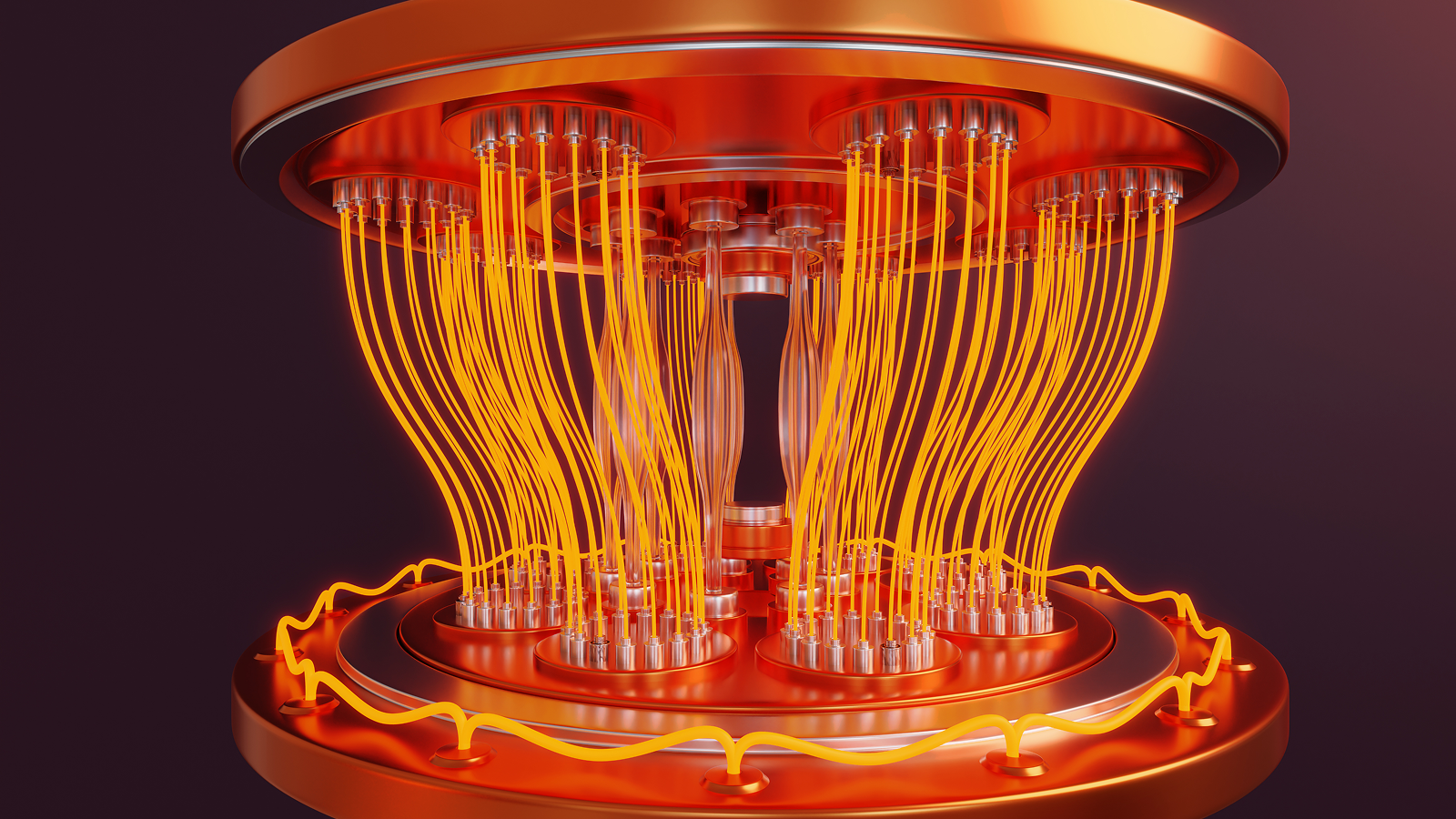
Researchers have unveiled a novel approach for interconnected quantum computing chips that could enable massive-scale processing and cooperation between distant qubits. In a study published on June 15 in the journal APL Quantum, scientists introduced Quantum Phononic Links (QPLs), an innovative method leveraging phonons as quasiparticles to facilitate long-distance quantum communication.
Unlike conventional techniques like surface acoustic waves, QPLs utilize phonons to convey quantum information without requiring complex designs or additional hardware. The lead author, Maksym Myronov from the University of Warwick in the UK, highlighted the significance of long-range qubit connectivity in quantum computing, stating that their work introduces a new concept where phonons function as a quantum bus, enabling distant qubits to exchange information while remaining compatible with semiconductor technology.
The study proposes semiconductor hole spin qubits as the most promising qubit modality for realizing large-scale quantum processing, as these qubits combine long quantum coherence times with the ability to communicate using electron impulses in control systems. However, hole spin qubits face challenges in forming bonds and sharing quantum information with qubits they don't directly neighbor.
QPLs address these limitations by serving as engineered phononic waveguides and cavities that confine and guide acoustic modes within a compressively strained germanium quantum well. By sending sound-like vibrations through this specialized material, QPLs enable direct coupling between distant qubits separated by less than a micrometer or up to 300 mm apart.
Beyond their potential impact on quantum computing, QPLs offer versatile interfaces for hybrid quantum systems, potentially enabling coherent interconnection between semiconductor spin qubits and other quantum platforms, such as cloud-based quantum computing.
Written by urgent.news from Live Science's reporting — not their text. Machine-written — may contain errors; check the original before relying on it.