Man, 43, drops to 30 kg in just 6 months after replacing rice with potatoes at meals
Summary A 43-year-old man in Guangdong, China, lost 32.5 kg over six months after replacing rice and noodles with fist-sized portions of potatoes. Chen, the man, changed his diet after a health check found high blood pressure, high blood sugar, and fatty liver. His approach was similar to an Australian man’s extreme potato-only experiment, which lasted one year and led to a 50 kg weight loss.…
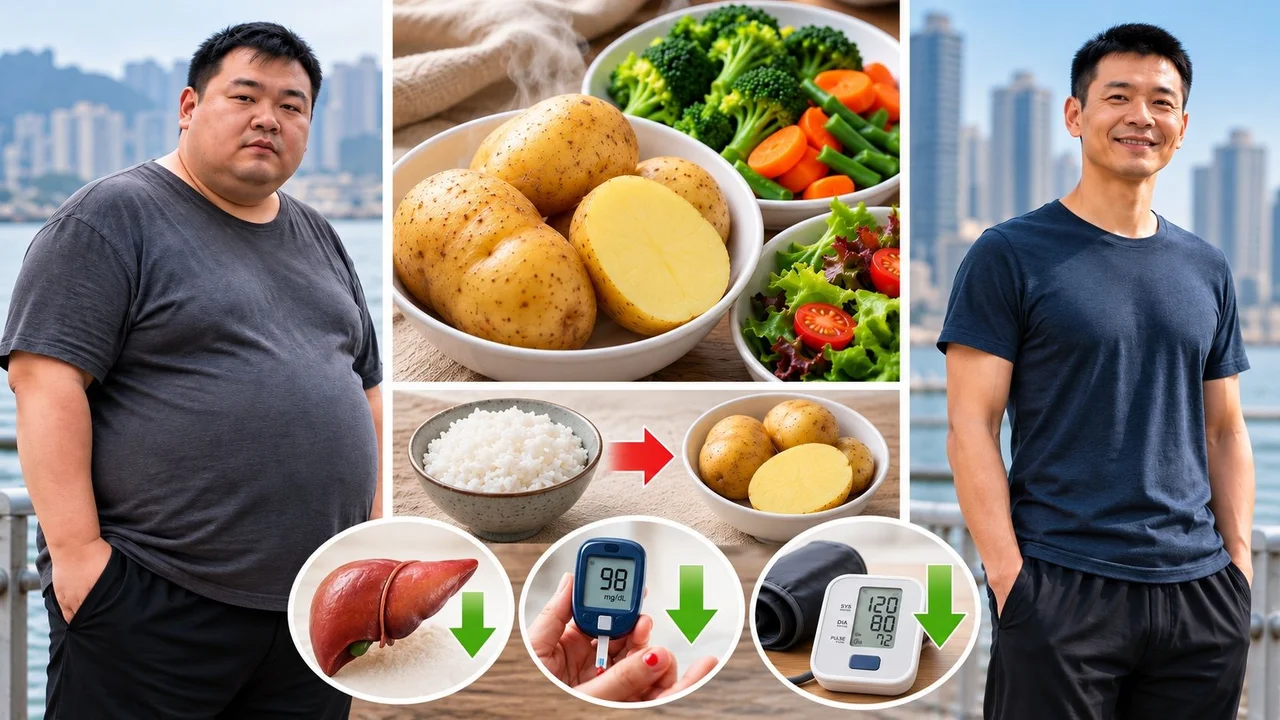
In Shantou, Guangdong, a 43-year-old man named Chen shed 32.5 kg over six months by swapping rice and noodles for potato portions the size of a fist. Chen made this dietary change after a health check revealed high blood pressure, high blood sugar, and a fatty liver. This approach mirrors that of an Australian man, Andrew Flinders Taylor, who lost 50 kg in a year by consuming only potatoes, though Taylor also followed a strict plant-based diet.
Rather than merely adding potatoes to his usual meals, Chen replaced rice and noodles entirely with potatoes. He prepared the potatoes by steaming, boiling, or baking them without oil, as deep-frying and other oil-heavy methods could increase calorie content. Steamed potatoes provide around 77 calories per 100 g, significantly fewer than cooked white rice, which contains about 116 calories per 100 g. The fibre in potatoes aids in feeling full, and their potassium content can help maintain a sodium-potassium balance.
While Chen's story garnered attention in China, it is not the first time potatoes have starred in a weight-loss experiment. In 2016, Australian Andrew Flinders Taylor lost 50 kg by eating only potatoes for a year. Taylor, a father of two, had previously tried various diets, including low-carbohydrate, fasting, and juice diets. He developed his potato-only plan based on scientific research and worked with a doctor and dietitian.
Unlike Chen, Taylor consumed potatoes as his primary food source, with minimal seasoning, and took vitamin B12 and calcium-fortified organic soy milk. He also underwent regular blood tests during the experiment. Taylor's diet was entirely plant-based, excluding meat, dairy, eggs, fats, and oil. After the year-long challenge, Taylor decided to maintain a whole-food, plant-based diet.
Nutrition experts cautioned that potatoes should not be considered a complete food, as they may lead to vitamin deficiencies when consumed alone. White potatoes contain essential amino acids, but eating them exclusively can result in deficiencies. To address this, Taylor added sweet potatoes and fortified soy milk to his diet. Therefore, Chen's weight loss results do not imply that potatoes are a magic solution for weight loss.
Instead, the success depended on portion control, total calorie intake, food choices, and overall health.
The broader lesson from these stories may be less dramatic: replacing a high-calorie staple with a filling, minimally prepared food can help some individuals control their intake. Ensuring adequate protein, vegetables, and other essential nutrients in the diet makes this approach more sensible and sustainable.
Written by urgent.news from The Independent Singapore's reporting — not their text. Machine-written — may contain errors; check the original before relying on it.