Less than two years after massive clean-up, water hyacinth takes over large swathes of Ooty lake
Local bird watchers have noted a drastic reduction in the bird population in the lake due to the unscientific clean-up that led to the destruction of sand banks and reed beds on which the birds had become dependent
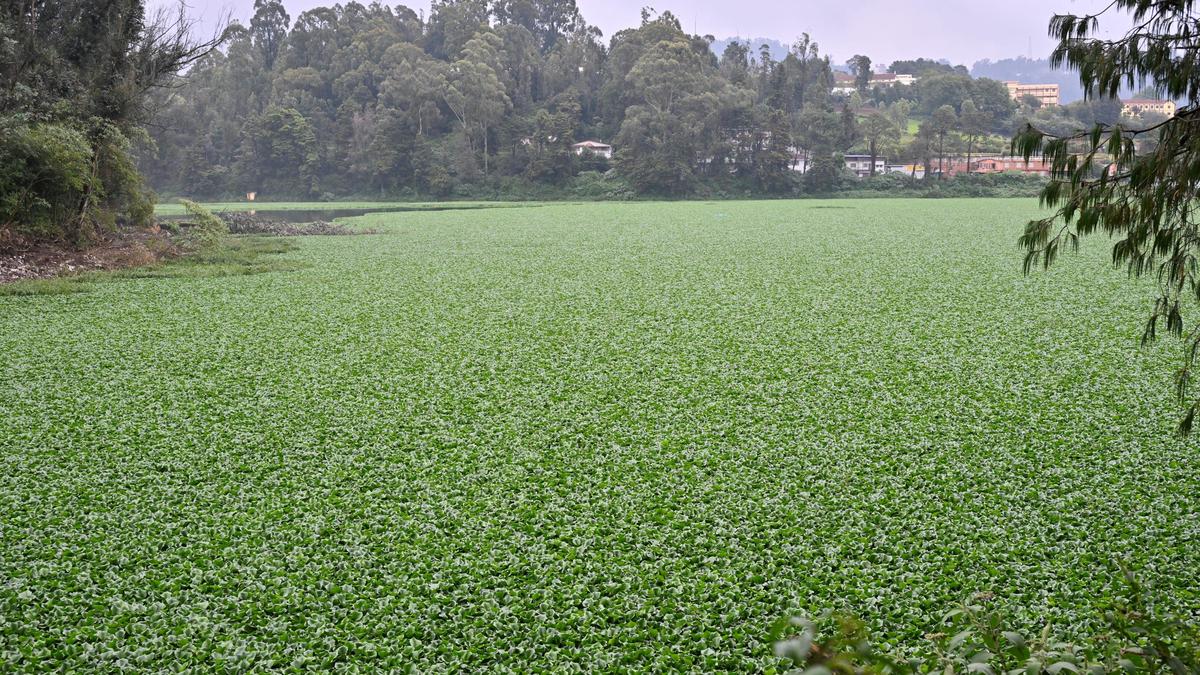
Less than two years after the Ooty lake in the Nilgiris underwent a ₹7.51 crore desilting and cleaning project, pollution in the waterbody persists, resulting in large sections being overrun by water hyacinth, an indicator of eutrophication. The unscientific clean-up also caused a significant decline in the lake's bird population, as the destruction of sand banks and reed beds on which birds relied for food and nesting was not adequately addressed.
Despite the expenditure, pollution levels in the lake remain comparable to previous levels, leading to the spread of water hyacinth across a significant portion of the lake. Conservationists argue that the presence of water hyacinth signals nutrient pollution from uncontrolled runoff, including fertilizers, manure, and untreated sewage.
N. Mohanraj, a local conservationist, lamented that the lake, once teeming with biodiversity due to its high water quality, has now deteriorated, with the proliferation of water hyacinth demonstrating a lack of understanding of the lake ecosystem. The clean-up also eradicated reed beds and sand banks that helped filter toxins, further exacerbating the pollution problem.
Birdwatchers have observed a sharp decline in bird species in the lake, with only 270 birds belonging to 13 species recorded in 2025, down from over 600 species in 2023. Experts blame the district administration and local NGOs for failing to set up a lake protection committee to address the fundamental causes of pollution, such as illegal sewage dumping and agricultural runoff.
Written by urgent.news from The Hindu's reporting — not their text. Machine-written — may contain errors; check the original before relying on it.