Laboratory Will Trace the Remote Past of the Border Between Colombia, Peru and Brazil
Archaeological findings in the Amazon, especially in the triangle of the triple border between Colombia, Peru and Brazil, show evidence of human presence there 13,000 years ago. Now, for the first time, researchers and students from the National University of Colombia (UNAL) Amazonia Campus will be able to analyze archaeological evidence without separating it from […]
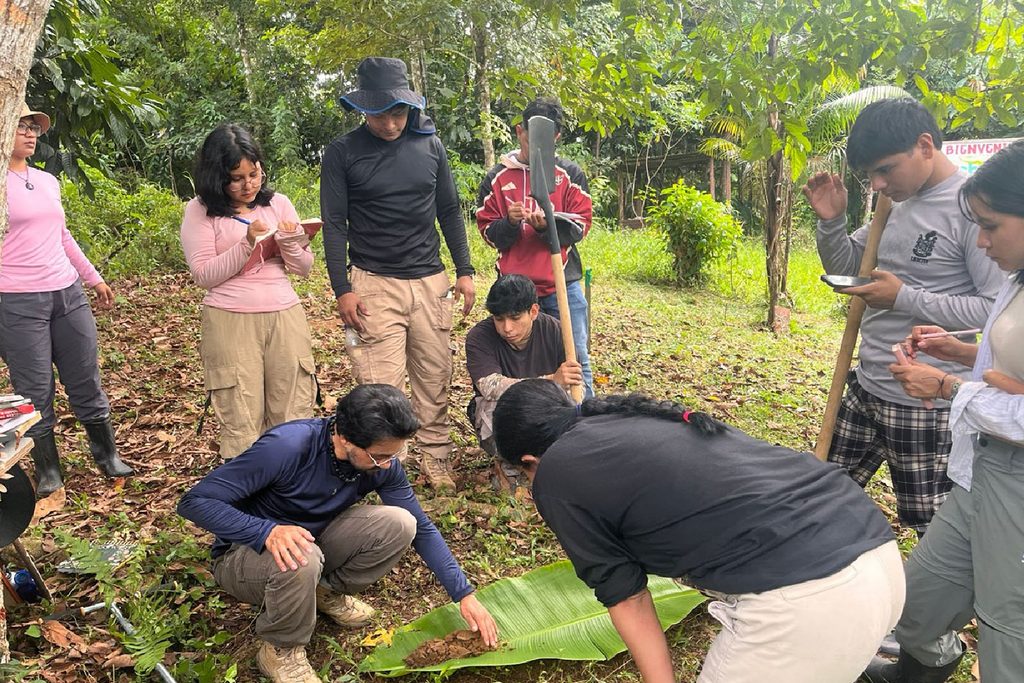
An archaeological laboratory in the Amazon region of South America will soon allow researchers and students from the National University of Colombia's Amazonia Campus to analyze ancient evidence without removing it from its original location and from the communities that hold knowledge about those areas. This new facility, set to open in Leticia, the capital of Colombia's Amazonas department, marks the first of its kind to study the region's millennia-old history within the area itself.
Professor Jeison Lenis Chaparro, an anthropologist and archaeologist leading the project, highlighted the significance of this development. He explained that the laboratory will enable a more localized approach to research, previously constrained by the need to transport artifacts and materials to distant archaeological sites outside the Amazon. "In this vast region of the northwestern Amazon, the Amazonia Campus laboratory is the central hub coordinating research on the past of human groups," he said.
The primary focus of the laboratory will be on studying early human settlements, mobility, and exchanges, as well as the transformations these groups brought about in the Amazonian landscape over thousands of years. By situating the laboratory in Leticia, researchers aim to broaden the scope of their inquiries to encompass the historical and cultural connections between Colombia, Peru, and Brazil, areas that have traditionally been divided by national borders.
The laboratory's approach is rooted in social archaeology, which emphasizes the importance of incorporating the memories and knowledge of indigenous communities. Professor Chaparro emphasized that this perspective is vital for understanding the cultural and spiritual significance of archaeological sites and objects to local populations.
"Social archaeology recognizes the importance of indigenous communities," he explained. "It's not merely about conducting academic projects; it's about supporting local initiatives such as preserving memory processes and recognizing sacred sites."
In addition to its research functions, the laboratory will play a crucial role in training future archaeologists. Students in the Anthropology program at the Amazonia Campus will have the opportunity to gain hands-on experience in archaeological work, from laboratory analysis to fieldwork. This hands-on training will bridge the gap between academic knowledge and practical research conducted directly in the Amazonian environment.
Professor Chaparro stressed that the laboratory serves as a bridge between academic research and community needs. "The laboratory facilitates coordination between academic and scientific developments at the university level and the communities themselves," he stated. "It is the place where scientific questions can be addressed to respond to people's needs and expectations."
The laboratory's impact will extend beyond UNAL's facilities, as the research team begins to plan its first archaeological intervention project with the Mocagua community. This project, developed in collaboration with Abel Santos, an indigenous leader and professor at UNAL's Amazonia Campus, aims to engage the community in the stewardship of reference archaeological pieces and the formation of scientific collaborations with institutions in other countries.
Ultimately, the goal is to establish Leticia as a center for research that connects archaeological materials, academic training, communities, and scientific questions about the region's rich and diverse past.
Written by urgent.news from Colombia One's reporting — not their text. Machine-written — may contain errors; check the original before relying on it.