Internationaler Luftverkehr: Studie: Deutsche Luftdrehkreuze verlieren Verkehre
Immer mehr Flüge von Deutschland nach Fernost und Afrika nutzen Drehkreuze außerhalb Europas. Welche Faktoren die deutschen Flughäfen ins Hintertreffen bringen.
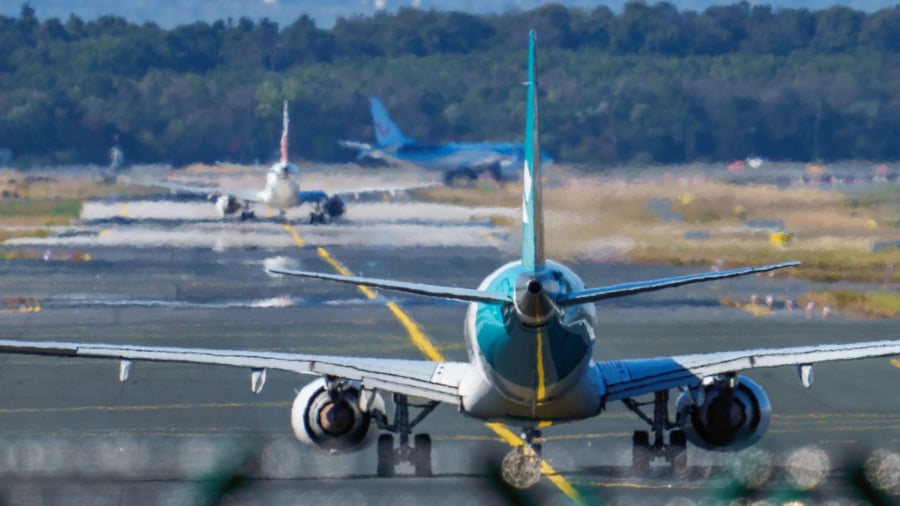
A recent study reveals that German international air traffic is increasingly bypassing the country's own hubs. This trend is driven by higher costs associated with EU environmental regulations, according to an analysis by the German Association of the German Air Transport Industry (BDL) and the German Aerospace Center (DLR). In 2024, approximately 54% of flights to the Far East and Southeast Asia departed from non-EU hubs, particularly the Gulf region and Turkey.
In 2019, this figure was just over 44%, and in 2010, it was around 34%. The study shows that German hubs Munich and Frankfurt have become less significant, with their share of flights to the Far East and Southeast Asia dropping from around 56% in 2010 to about 36% in 2024. Flights to Africa are also increasingly landing at non-European hubs.
The authors attribute this shift to the European Emissions Trading System, which requires European airlines to purchase emission certificates for feeder flights to their home hubs. However, this is not the case for feeder flights to non-European hubs like Dubai. The higher costs for European airlines create a competitive disadvantage.
As BDL CEO Joachim Lang stated, "The report shows a gradual decoupling of Germany from international air traffic. We need lower location costs and a level playing field in climate protection regulations to ensure that all competitors are treated fairly."
Written by urgent.news from Handelsblatt's reporting — not their text. Machine-written — may contain errors; check the original before relying on it.