Eurodrama in currency markets raises U.S. dollar's standing
Data: FactSet; Chart: Courtenay Brown/Axios The euro fell to a 17-month low against the dollar on Monday as political and fiscal worries rattled European markets. Why it matters: Rising borrowing costs and political instability are reviving concerns about strains within the eurozone — and whether the European Central Bank may eventually have to step in. France is grappling with high deficits,…
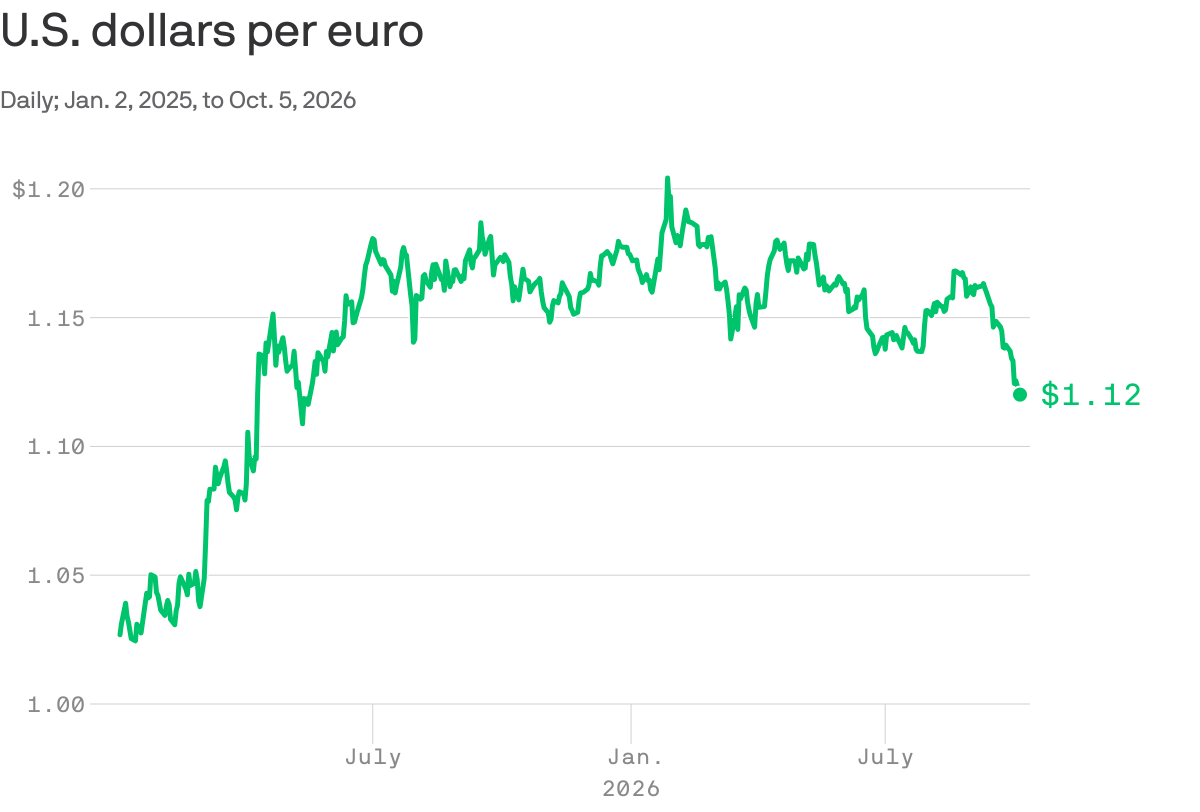
Euro currency plunged to a 17-month low against the U.S. dollar on Monday, as political and fiscal concerns shook European markets, according to FactSet and Courtenay Brown/Axios. Rising borrowing costs and political instability reignited worries about vulnerabilities within the eurozone and the potential need for the European Central Bank to intervene.
France, in particular, is facing high deficits, climbing long-term rates, and political stalemate over how to tackle these issues, as reported by Emily Peck. Spain also saw its prime minister call for a snap election on November 29, which could either bolster Pedro Sánchez's standing or pave the way for a populist right-wing government.
The euro slipped below $1.12, its lowest level since May 2025, and dropped around 4% since September 8. France's increasing borrowing costs echo the eurozone crisis of the early 2010s, although the ECB now possesses more tools to handle market stress. Former ECB board member Lorenzo Bini Smaghi, in an opinion piece for the Financial Times, urged the central bank to halt its quantitative tightening program due to the strain on long-term rates.
He noted that the ECB now has more resources, such as bond-buying tools and programs, to tackle market tensions that could endanger the stability of the euro. However, Bini Smaghi remains puzzled as to why the ECB continues to implement its policy of quantitative tightening, which involves shrinking its balance sheet by not replacing government bonds as they mature.
This move means that a larger portion of the net supply of government bonds must be absorbed by private investors, despite already high long-term rates.
Written by urgent.news from Axios's reporting — not their text. Machine-written — may contain errors; check the original before relying on it.