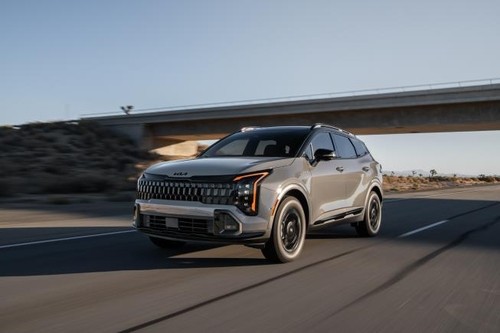
'Dumping' issues: UK to levy tariffs on Chinese EV
The European Union is pressuring Britain to increase tariffs on Chinese electric vehicles (EVs), exposing a challenge for post-Brexit trade. Despite leaving the EU, Britain cannot fully dissociate from its industrial policy. EU officials have urged Prime Minister Andy Burnham to better align British trade policy with the bloc's approach to China.
This is part of a broader European strategy to promote locally produced goods in public procurement and state-supported schemes, including the automotive sector. China's EV exports are surging, with August exports up 33% year-on-year to over 284,000, and year-to-date totals reaching 2.1 million, a 53% increase.
Britain currently maintains standard tariffs on Chinese cars, which has made the UK an attractive market for Chinese manufacturers. Chinese cars made up 14% of British new-car sales in 2025. However, refusing to follow EU rules could lead to higher costs for consumers and manufacturers, as tariffs would ultimately be passed on. Retaining an independent tariff policy also provides Britain with strategic leverage in negotiations with China and other trading partners, as it can use access to its market to negotiate favorable terms.
Nevertheless, Britain's automotive sector is heavily intertwined with the EU, accounting for 60.4% of UK vehicle exports and 61% of British new-car sales. The EU's "Made in Europe" initiative, which favors locally produced goods, could disadvantage British manufacturers if they are excluded. The Society of Motor Manufacturers and Traders estimates that UK-EU automotive trade is around €80 billion ($90.8 billion) annually.
Aligning with Brussels' tariff policy could provide Britain with insurance against fragmentation of the European automotive market and maintain integrated supply chains, but it comes at a cost. Britain would be protecting European producers from Chinese competition while potentially increasing costs for British consumers and reducing its leverage with Beijing.
The real decision for Britain is whether to maintain tariff autonomy for economic or strategic benefits or to deepen integration with the EU's industrial ecosystem.
Written by urgent.news from South China Morning Post's reporting — not their text. Machine-written — may contain errors; check the original before relying on it.
This story
This is one outlet's version. Read the fullest account.