Blue Origin reveals 65-foot solar tower designed to power future bases on the Moon
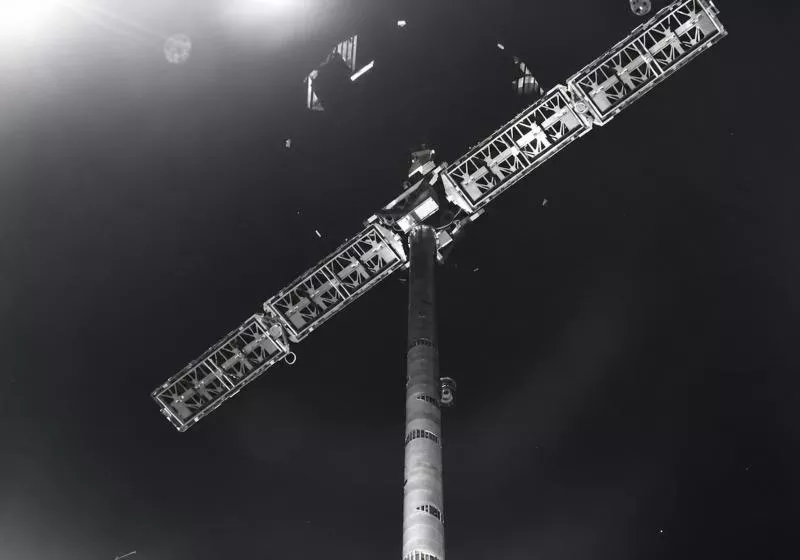
The company calls the system the Power Tower. It is a 20-meter-tall (65 foot) solar array that deploys vertically after landing and is designed to generate more than 10 kilowatts of electricity. Blue Origin said it is intended for Moon Base operations at the lunar south pole, the region NASA... Read Entire Article
Blue Origin unveils 65-foot solar tower to support lunar bases
The aerospace company Blue Origin has introduced a new solar power system, named the Power Tower, aimed at providing electricity to future lunar bases. This innovative design is still in the early stages of development, with an unspecified timeline for its launch to the Moon. The Power Tower represents a growing emphasis on infrastructure necessary for sustained operations on the lunar surface.
The system stands at 20 meters tall, which is equivalent to 65 feet, and is designed to generate more than 10 kilowatts of electricity. Once it lands on the Moon, the tower will deploy vertically, extending its solar panels into position. A central mast rises first, followed by arms that unfold and lower the solar panels into place, addressing the challenge of power generation and distribution across the lunar landscape.
Blue Origin's Power Tower is particularly suited for operations at the lunar south pole, a region of interest for NASA's Artemis program. The tower's design takes into account the challenging conditions present at the lunar south pole, where parts of the region receive sunlight at low angles, and craters, ridges, and other terrain can cause areas to be in shadow. The vertical array allows for solar panels to be placed above surface-level obstacles, while also potentially reducing the ground footprint of the power system.
The modular architecture of the Power Tower enables it to deliver power from the base to other assets that require electricity, such as communications hardware, scientific instruments, computing equipment, and mobility systems. Although a 10-kilowatt tower would not be sufficient to power a large lunar settlement by itself, it could contribute to a larger power network supporting smaller operations or be part of a larger power system.
The Power Tower is believed to be based on earlier work by Honeybee Robotics, a subsidiary of Blue Origin. Honeybee Robotics developed the Lunar Array Mast and Power System (LAMPS), which was tested at NASA's Johnson Space Center in Houston in 2024. Additionally, Honeybee has collaborated with NASA through their Vertical Solar Array Technology project, focusing on solar arrays that can effectively operate in the lunar environment, especially in areas where conventional ground-mounted panels might be obstructed by terrain or experience unfavorable sun angles.
Blue Origin's announcement of the Power Tower aligns with NASA's Moon Base plans, which are set to operate by 2032 under the current timeline. The tower's development reflects the increasing focus on the infrastructure necessary for sustained surface operations on the Moon.
Written by urgent.news from TechSpot's reporting — not their text. Machine-written — may contain errors; check the original before relying on it.