Before the bulldozers arrive: What the state owes workers in the informal economy
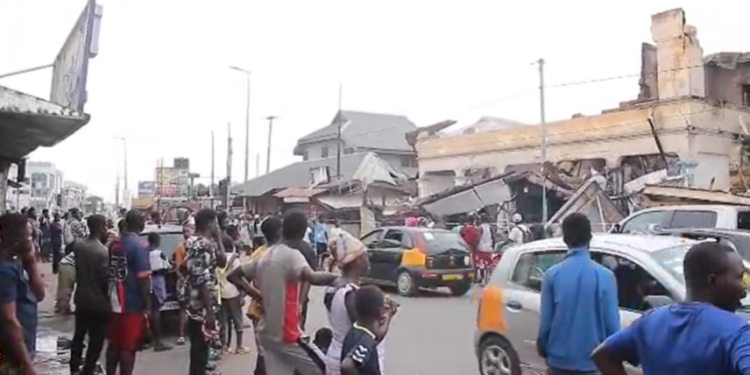
At about 4 am on Friday, October 2, joint forces comprising officers of the Ghana Police Service, Military Police (MP), Fifth Battalion (5BN), and 48 Engineer Regiment, stormed the popular La Pleasure Beach and ordered workers to vacate the premises for a demolition exercise.

On Friday, October 2, at around 4 am, law enforcement officers from the Ghana Police Service, Military Police and the Fifth Battalion, along with the 48 Engineer Regiment, stormed the popular La Pleasure Beach in Accra, ordering workers to vacate the premises for a demolitions exercise. This operation was a follow-up to a similar exercise at Laboma Beach Resort on September 13, as part of the Post-Flood Mitigation Task Force aimed at restoring the Kpeshie Lagoon and mitigating flooding in the city.
The state's actions were supported by the owners of adjoining hotels, who are part of the Social Security and National Insurance Trust (SSNIT), who voiced concerns about security and damage to the coastal ecosystem. While flood control and public asset protection are justified reasons, the pressing question is the manner in which the state treats the people whose livelihoods depend on the land being cleared.
Many affected vendors claimed they were not given prior notice and were forcibly prevented from retrieving their belongings, while others found the notice period insufficient. An MP and the Municipal Chief Executive acknowledged that many people have been rendered jobless, marking one of the most significant concentrations of informal economic activity in the La, Osu and Teshie communities.
The informal economy in Ghana, where approximately 89% of employment is informal, mainly comprises stallholders, food and beverage sellers, casual workers, and small traders. These workers often lack the resources of formal business owners, relying solely on their stall, a day's stock, and the daily income it generates. Losing their workplace can spell disaster for families, as losing a job means losing the means of feeding an entire family.
A 2024 study by Alex Anlesinya and Gerald Joseph Tetteh Nyanyofio focused on the experiences of workers in Ghana's informal economy, specifically the market vendors in Accra. While the study centered on the COVID-19 pandemic, its findings shed light on the vulnerability that accompanies losing an informal workplace. The income generated by these workers is primarily for survival, with work enabling them to provide for food, clothing, shelter, and school fees for their children. Losing a workplace can thus destroy both income and the means of earning it.
Additionally, informal workers generally have little financial cushion, limited savings, restricted credit access, and inadequate social protection. The authors highlight that rising costs during the pandemic eroded existing business capital, making a demolition an even more devastating blow. The research also reveals that work provides more than financial gain, offering autonomy, self-respect, social relationships, and aspirations for their children's education.
Consequently, losing a trading space can undermine not just income but also dignity, social standing, and future prospects.
While the study is exploratory and did not specifically examine demolitions, its findings align with broader research on informality, vulnerability, and decent work conducted by the International Labour Organisation (ILO) and Women in Informal Employment: Globalising and Organising (WIEGO).
Written by urgent.news from MyJoyOnline Ghana's reporting — not their text. Machine-written — may contain errors; check the original before relying on it.