Archaeologists Reconstruct a 2,000-Year-Old Celtic Coin Hoard Scattered by Centuries of Plowing
Learn how 11 silver coins found beneath a former sports field were traced to a single Celtic hoard buried more than 2,000 years ago.
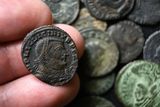
In 2025, archaeologists uncovered 11 ancient Celtic coins in Thuringia, Germany, while excavating a new fire station on a former sports field. These coins, dating back to the 1st century B.C.E., were scattered across a narrow strip of earth, likely due to centuries of plowing. The Thuringian State Office for Heritage Management and Archaeology confirmed the coins formed a single Celtic hoard, the largest of its period found in Thuringia.
The coins, known as Prague-type quinarii, were initially thought to have been stored in an organic container, but none of these remains were found. This hoard is now considered a "closed find," meaning all the coins hidden together have been accounted for. The site also revealed a Roman denarius, an early medieval glass bead, a piece of iron, a folded silver coin from the 1500s, and a Prussian uniform button.
Celtic coinage originated in the early 3rd century B.C.E., influenced by Greek coins. The coins were cast in clay molds and stamped with dies. The exact reason for the coins' burial remains unknown, but their recorded positions have allowed archaeologists to reconstruct the hoard and gain insights into trade routes and Celtic craft centers in the region.
Written by urgent.news from Discover Magazine's reporting — not their text. Machine-written — may contain errors; check the original before relying on it.