A wide-eyed young hamster pauses at the mouth of a wire trap as a conservationist watches on. Christoph Kaula's prize-winning photo tells a small story of hope for one of Europe's rarest mammals
This arresting image highlights how conservationists are fighting to bring the European common hamster back from the brink
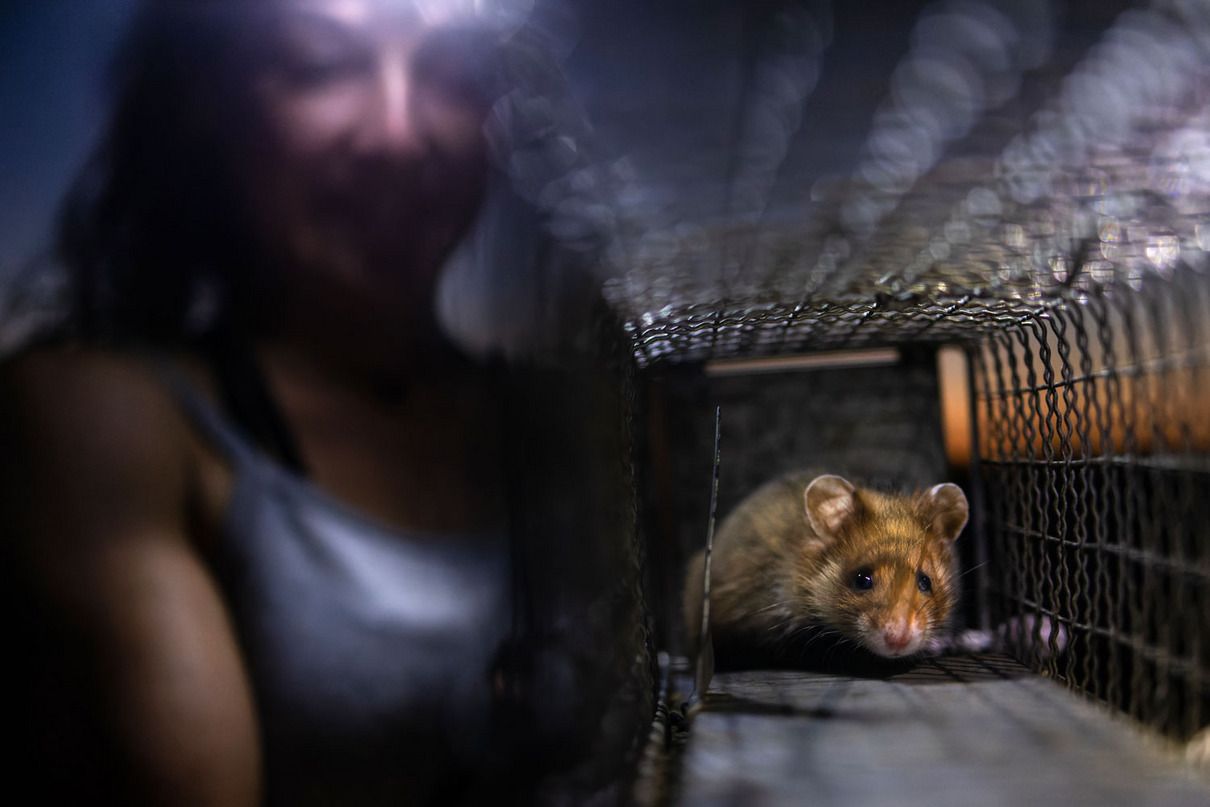
Christoph Kaula's photograph, titled "Managed revival," captures a young European common hamster hesitating at the entrance of a wire trap. The conservationist's lens reveals a small yet significant moment in the efforts to revive this species, which once thrived in German fields but is now one of the continent's most endangered mammals due to intensive agriculture.
This image features in the Rewilding Europe Award, runner-up in the competition. The collapse of the European common hamster population is not just a tragedy for the species itself but also symbolizes the broader decline in biodiversity within farmland environments. However, there is reason to be hopeful. Specialists from the Hamster Conservation Working Group at the Hessian Society for Ornithology and Nature Conservation are employing targeted captive breeding, burrow mapping, and genetic sampling to study the animals' movements.
This information helps identify areas where habitats are reconnecting and where additional conservation efforts are required.
The photograph depicts the hamster frozen in time, with its whiskers forward and eyes focused on the camera, while a researcher behind it smiles. This scene encapsulates both the solitude and power of the moment. Shot with a Canon EOS R5 using an RF 35mm f/1.8 prime lens at ISO4000, the image showcases the camera's capabilities in low light conditions, which is crucial given the hamster's nocturnal habits. The R5's animal eye detection proved invaluable in focusing through the wire mesh.
Compositionally, "Managed revival" is divided into two parts: the soft, anonymous researcher on the left, and the sharp, alert hamster on the right, framed by the trap's tunnel. The warm glow emanating from the trap's back harmonizes with the cool blue tones on the left side, creating a balanced visual contrast. Kaula's decision to keep the human subject out of focus allows the viewer to concentrate on the hamster, emphasizing the species' plight and the collective nature of conservation efforts.
Christoph Kaula emphasizes that the revival of a species is a collaborative endeavor, requiring the efforts of various organizations and individuals. He underscores the importance of raising awareness and effectively communicating the significance of conservation to a broader audience. This photograph serves as a poignant reminder of the ongoing work to bring back one of Europe's rarest mammals and the collective responsibility we share in preserving biodiversity.
Written by urgent.news from Digital Camera World's reporting — not their text. Machine-written — may contain errors; check the original before relying on it.