Why tech companies are racing to put AI data centers in space
Why on earth do people want to put data centers in space? It’s all about power and cooling. The chips that run AI models require a lot of electrical power, and our electrical grid will be seriously stretched to accommodate the wave of new AI data centers now being built or planned. Data centers, in fact, will account for almost half of U.S. electricity demand growth between now and 2030. In…
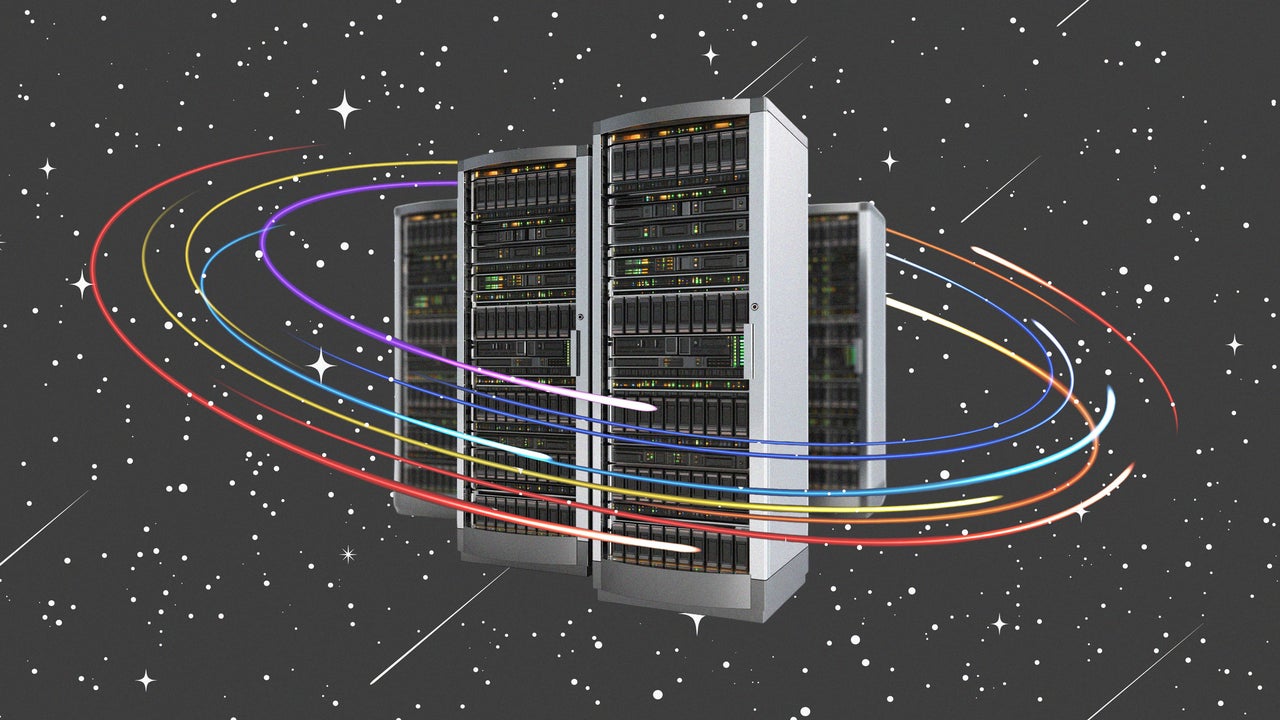
A key reason people are racing to put AI data centers in space is the need for consistent power and efficient cooling. As AI models require substantial electrical power, the global grid faces significant strain in accommodating the surge of new data centers. In fact, data centers are projected to consume nearly half of U.S. electricity growth by 2030.
In space, however, there's abundant solar power available continuously and at higher intensity than on Earth. Solar panels can gather approximately eight times more energy in space compared to the ground, and they have minimal storage needs. Consequently, the data centers wouldn't rely on the strained terrestrial power grid. Furthermore, the output from AI models in these orbital centers could be transmitted back to Earth via laser or radio waves.
This concept gained traction when Jeff Bezos, during a speech in Italy, suggested that data centers would be more effective in space due to the continuous solar power. The idea has since caught the attention of the investment community and several startups. However, critics argue that the economic feasibility remains questionable, particularly concerning cooling systems in space.
While Earth-based data centers utilize air and water for efficient cooling, space presents a vacuum, making traditional methods ineffective. Cooling in space relies on radiation, such as infrared light, which is less efficient compared to conventional cooling techniques.
To test this idea, Google recently launched four Tensor processing units (TPUs) into orbit aboard a solar-powered Planet Labs satellite. These TPUs will orbit Earth and be utilized to run AI workloads in a project called Project Suncatcher. Similarly, SpaceX, led by Elon Musk, has committed to launching purpose-built satellite data centers by late 2027.
Other companies like Starcloud and Nvidia are also developing space-grade computing modules for AI applications. Despite the enthusiasm, industry experts remain skeptical, citing challenges such as the high cost of rocket launches, limited payload capacities, and potential issues with cooling and orbital debris.
Written by urgent.news from Fast Company's reporting — not their text. Machine-written — may contain errors; check the original before relying on it.