Why Pune Metro Is Not Adding Coaches Despite Rising Ridership
Pune: Pune Metro is not planning an immediate increase in the number of trains or coaches on its two operational corridors despite rising ridership, with the administration maintaining that additional rolling stock will be introduced only when passenger demand justifies the investment. The Purple Line (PCMC-Swargate) and Aqua Line (Vanaz-Ramwadi) will continue with their existing fleet…
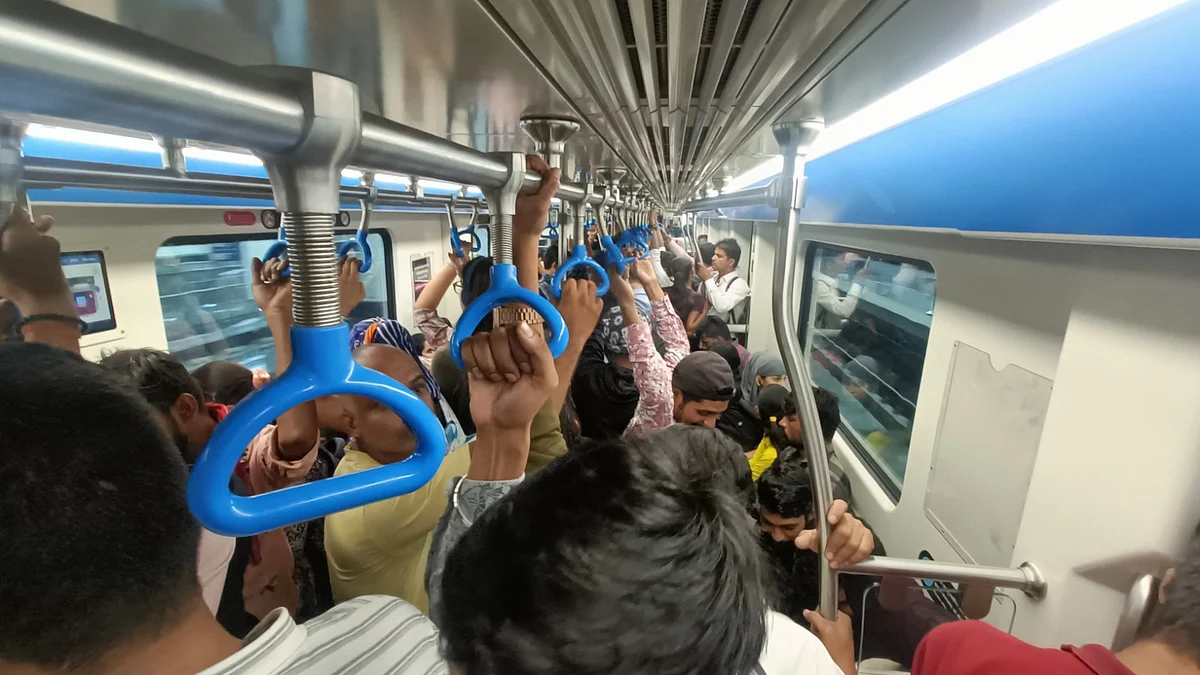
Pune Metro is maintaining its current fleet configuration on the two operational corridors, despite an increase in ridership. The Purple Line (PCMC-Swargate) and Aqua Line (Vanaz-Ramwadi) will continue with their existing train formations, according to Pune Metro's PRO, Dhanraj Gokhale.
The administration plans to introduce additional rolling stock only when passenger demand justifies the investment. Currently, Pune Metro operates 33 trains across the two corridors, with two trains reserved for emergency requirements on each line. The trains are three-coach formations, with a capacity of around 1,000 passengers.
However, the decision to add more coaches or trains is not taken lightly, as it depends on whether the existing services have reached a level where additional capacity is financially and operationally justified.
The Metro officials analyze ridership before considering adding more trains or coaches. Currently, trains operate at six-minute intervals during peak hours and ten-minute intervals during off-peak hours. The administration aims to reduce the time between two trains to around 1.5 to two minutes before adding more coaches or trains. This approach allows the Metro to first ensure that the increased train frequency is justified by higher ridership and demand.
The existing trains are designed in three-coach formations, and future expansion will happen in multiples of three-coach units. Whenever the higher authorities decide to add coaches to the Metro trains, they will be in sets of three, making them six-coach trains instead of five or four. This approach ensures that the increase in capacity is financially viable and operationally feasible.
The Metro's immediate priority remains matching capacity with actual demand. Gokhale stated that the increase in capacity can be seen in the coming two to three years, depending on the Detailed Project Report (DPR), ridership, and approval from higher authorities.
Written by urgent.news from Free Press Journal's reporting — not their text. Machine-written — may contain errors; check the original before relying on it.