What to know about Brazil's election pitting Lula against Flávio Bolsonaro
Polls suggest the election will be a closely run contest between the left-wing incumbent and his right-wing rival.
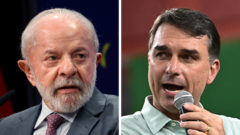
Brazil will hold a general election on Sunday, with incumbent left-wing leader Luiz Inacio Lula da Silva facing off against his son-in-law, Flavio Bolsonaro, a right-wing candidate. Lula narrowly defeated Flavio's father, Jair Bolsonaro, in the 2018 election, but his victory was followed by a coup attempt that saw Jair Bolsonaro convicted and facing a 27-year prison sentence.
Due to health issues, Jair Bolsonaro is currently under house arrest and barred from social media and public statements, yet his image, including deepfake videos, continues to influence the election.
Two candidates, Lula and Flavio Bolsonaro, have gained significant support in recent opinion polls, hovering around 40%. The other 11 candidates have less than 4% each. If no candidate secures 50% of valid votes in the first round on October 4th, the top two contenders will face a runoff on October 25th. Polls suggest this is likely, but with 9% of voters still undecided or planning to spoil their ballot, an outright win cannot be guaranteed.
Lula, the 80-year-old Workers' Party candidate, previously served as president three times, from 2003 to 2010, and was renowned for reducing poverty through the Bolsa Família program. However, his third term was marred by corruption scandals, leading to his conviction and imprisonment from 2018 to 2019, charges later annulled in 2021. Despite his age, Lula remains a prominent figure in Brazilian politics.
Flavio Bolsonaro, 45, is the eldest son of former president Jair Bolsonaro and represents the right-wing Liberal Party. While less confrontational than his father, Flavio aims to continue his father's policies, advocating for tough sentencing and relaxed gun laws. Both candidates are expected to face significant challenges in the upcoming election, particularly in terms of voter turnout and public opinion.
Written by urgent.news from BBC News's reporting — not their text. Machine-written — may contain errors; check the original before relying on it.