UPSC Ethics Simplified | Civic Virtue on Indian roads: What does it say about us?
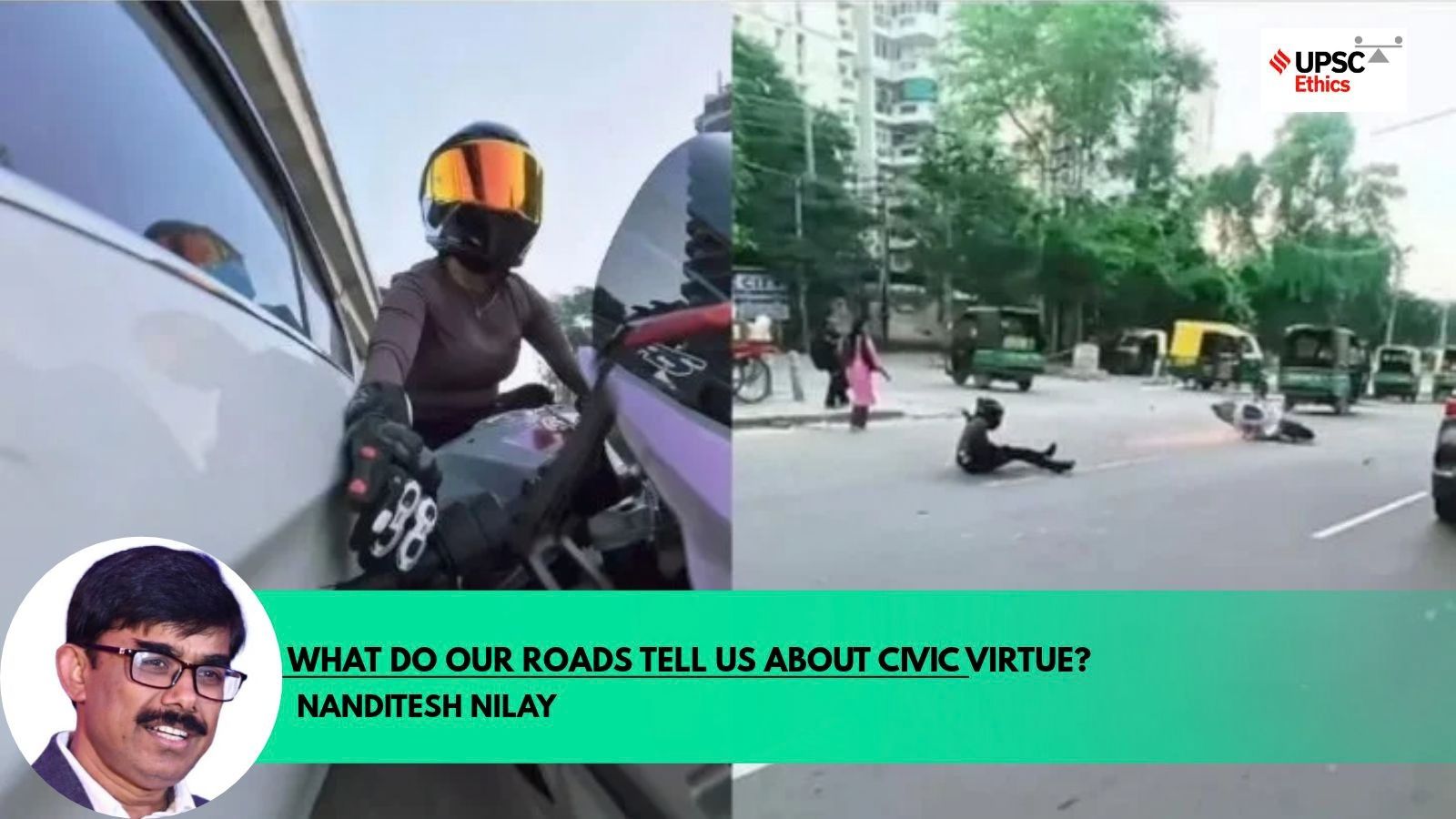
When a road accident occurs, ethical responsibility dictates immediate action: stopping the vehicle, assessing the injured party, and acknowledging one's role in the incident. The recent case in Gurugram, where a woman biker claims she was chased and hit by a car, raises concerns about basic civic duties. The collision, captured on video, led to the filing of multiple charges, including attempt to murder, stalking, and insulting a woman's modesty.
The incident extends beyond basic road safety, prompting an examination of broader ethical questions regarding our conduct in public spaces.
Civic virtues are the qualities that enable individuals to fulfill their responsibilities effectively within a political community. These virtues include concern for the common good, active participation in public life, respect for institutions, opposition to corruption, and responsibility towards fellow citizens. The roots of these virtues stretch back to ancient political philosophy, where their importance and cultivation have been debated extensively.
While the virtues of a good person are universal, the virtues of a good citizen are intimately tied to the responsibilities of living within a political community. Aristotle emphasized the role of habituation in developing these virtues, arguing that moral behavior is strengthened through consistent practice. For example, stopping to help an injured person, controlling one's anger during a traffic dispute, or respecting others' right of way may seem minor acts, but they build character over time.
W.D. Ross proposed the concept of prima facie duties—moral obligations that typically prevail but may be overridden in specific circumstances. These duties include fidelity, reparation, gratitude, justice, beneficence, self-improvement, and non-maleficence. In real-life ethical situations, determining which duty should take precedence often requires moral judgment and practical wisdom, rather than a straightforward formula.
Self-restraint and self-improvement are crucial components of civic virtue. Self-improvement extends beyond acquiring knowledge or professional skills; it involves cultivating virtues, character, and the capacity for self-control. On the road, emotions such as anger, impatience, and a desire for power can significantly impact the safety of others. Ethical conduct requires recognizing these emotions and exercising control over them, particularly when our actions could cause harm to fellow citizens.
The absence of civic virtue in public spaces can lead to environments where power, aggression, or privilege dictate safety and fairness. The Gurugram incident exemplifies this, as the woman biker questions the driver's failure to stop and assist her, even if the collision was unintentional. The police investigation, following the release of video footage, escalated charges, highlighting the broader ethical implications.
Ultimately, the presence or absence of civic virtue shapes the safety, dignity, and fairness of our shared public spaces.
Written by urgent.news from The Indian Express's reporting — not their text. Machine-written — may contain errors; check the original before relying on it.