Two captive-bred great Indian bustards released in Rajasthan national park
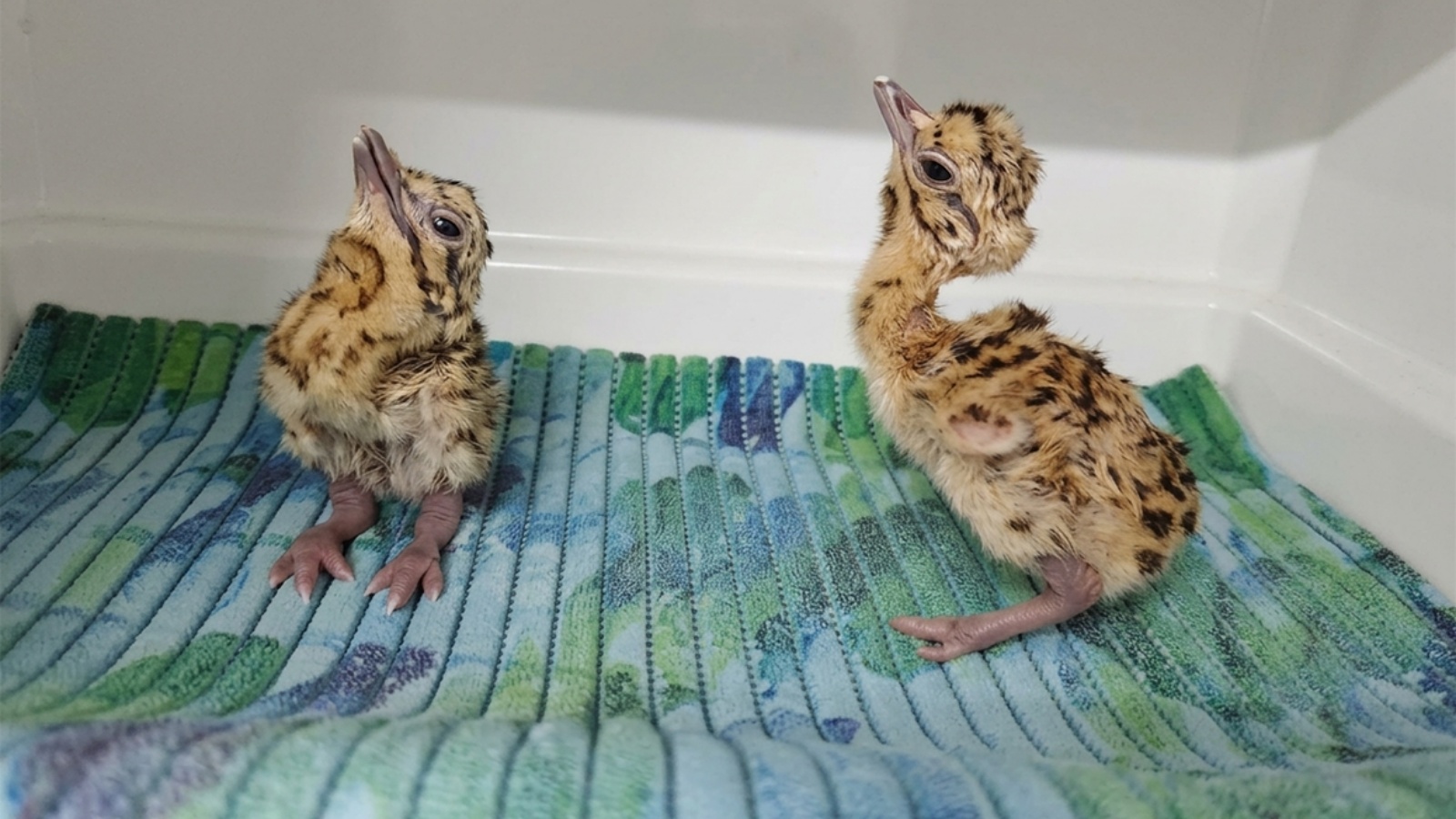
Union Environment Minister Bhupender Yadav and scientists from the Wildlife Institute of India (WII) released two male great Indian bustards (GIB) into Rajasthan's Desert National Park on Sunday morning. This marks the initial step in the rewilding of captive-bred GIBs raised at conservation breeding centers in Ramdevra and Sam, Jaisalmer, as part of Project GIB.
The project aims at the long-term recovery of the critically endangered bird, with only approximately 150 GIBs remaining in the wild. Rajasthan's Forest, Environment, and Climate Change Minister Sanjay Sharma attended the event.
The environment minister shared his thoughts on the release on social media platform X, crediting the hard work of scientists, researchers, and ground staff who dedicated nearly a decade to ensuring the GIB's return to the deserts of Rajasthan. The captive breeding centers were established to create a foundation population of GIBs that could be reintroduced into the wild, a strategy to address the dwindling wild population.
Since 2019, wild-collected eggs have been artificially incubated, and chicks have been hand-reared. These hand-reared birds later mated in captivity, resulting in 24 live chicks in 2025 and 29 in 2026. Currently, there are 98 captive-bred birds in these facilities, with 86 birds maintained for captive reproduction and 11 chosen for release into the wild. Today, two birds were released into the Desert National Park.
The release of captive-bred GIBs is a crucial step in the species recovery program, providing essential scientific insights for refining reintroduction protocols. The environment ministry emphasized the significance of the GIB for grassland conservation and its role as an important stopover for migratory birds traveling along the Central Asian flyway, a vast migratory corridor spanning 30 countries from North to South Asia, connecting the Arctic and Indian Oceans.
In addition to captive breeding, the project includes habitat restoration by the Rajasthan forest department, establishing around 200 square kilometers of fenced grassland enclosures within the Desert National Park. Long-term telemetry studies by WII have identified these enclosures as prime breeding habitats for the species.
Written by urgent.news from The Indian Express's reporting — not their text. Machine-written — may contain errors; check the original before relying on it.