This oversized 35mm camera changed medium format photography forever –and photographers are still obsessed with the Pentax 6x7 almost 60 years later
How Asahi Optical built the camera that took on Hasselblad –and won over portrait photographers
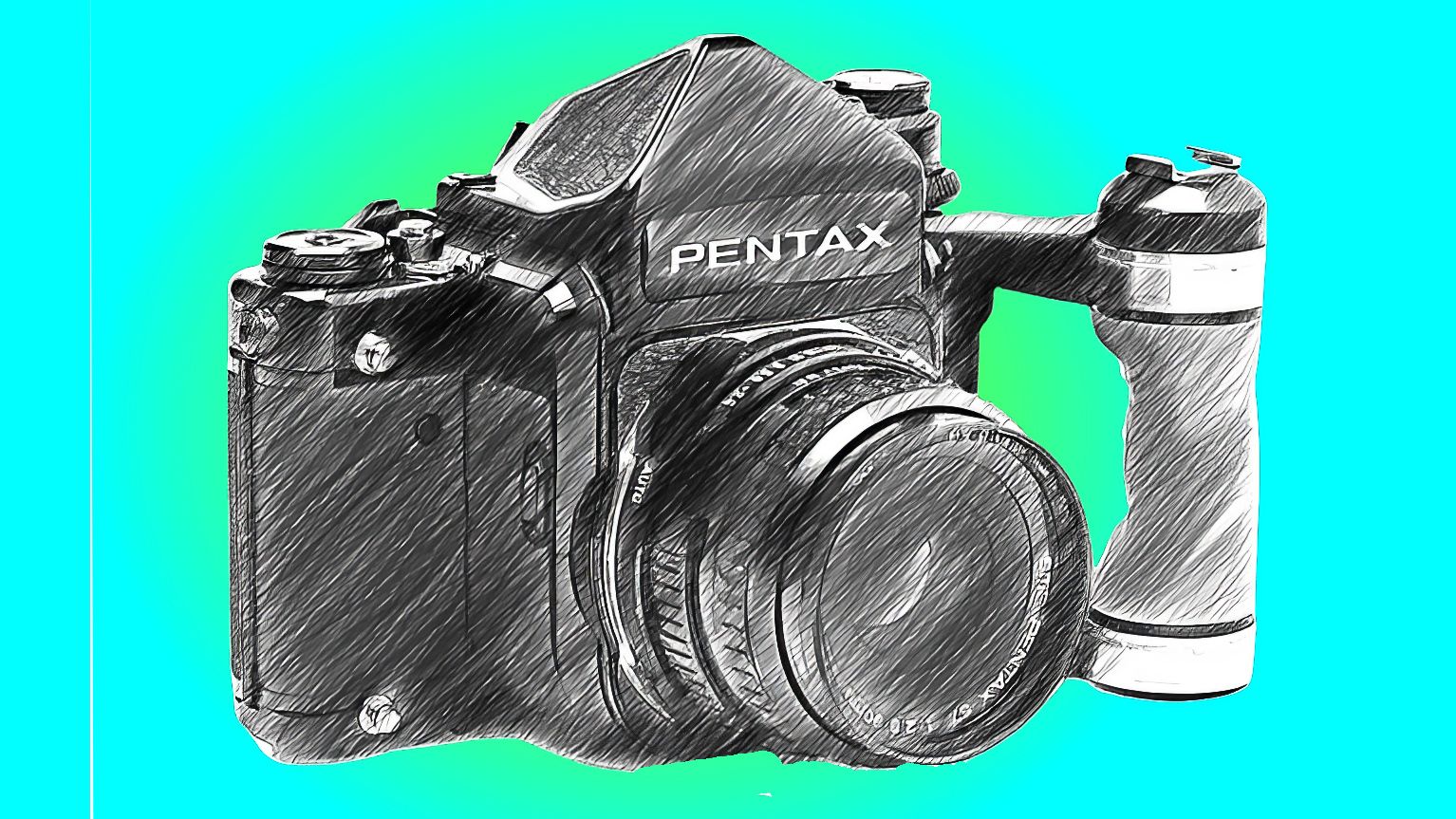
The Pentax 6x7, a revered medium format camera, has maintained its allure almost 60 years after its introduction, captivating photographers with its exceptional image quality and versatility. Developed in the mid-1960s by Asahi Optical (now Pentax), a subsidiary of Ricoh, the camera aimed to replicate the feel of 35mm SLRs while delivering the superior image quality of 120 roll film.
Unlike the square 6x6 format used by competitors, Pentax embraced the 6x7cm format, delivering negatives measuring approximately 56x70mm—around four and a half times the surface area of a 35mm frame. This format boasted a 4:5 image ratio, perfectly suited for the standard 8x10-inch prints. The Pentax 6x7 debuted at the Photokina trade show in 1966 under the initial name Pentax 220, reflecting its compatibility with Kodak's new 220 film.
The camera's design was intentionally reminiscent of an oversized 35mm SLR, featuring a right-hand shutter release, film-wind lever, focal-plane shutter, and interchangeable lenses. Photographers familiar with Pentax Spotmatic, Nikon F, or Canon F-1 cameras could transition to the Pentax 6x7 with ease. Although bulky, the camera balanced comfortably in hand, offering robust reliability.
Utilizing a cloth focal-plane shutter, the Pentax 6x7 could capture 10 exposures on a roll of 120 film or 20 on 220 film (21 with the later 67II). Its cloth shutter and wide maximum apertures facilitated simpler, lower-cost lens designs. The first production Asahi Pentax 6x7 hit the market in 1969, with the final version, the Pentax 67II, remaining in production until 2009, boasting a remarkable 40-year lifespan.
Throughout its evolution, the Pentax 6x7 underwent several refinements. The 6x7MLU model (1976) introduced a mirror lock-up feature to mitigate mirror slap, useful for long exposures and close-up work. In 1989, the electronics received an upgrade, a cosmetic redesign, and the camera was rebranded as the Pentax 67. The final iteration, introduced in 1998, enhanced ergonomics, incorporated an LCD display, and refined metering with an autoexposure prism. The last model was produced until 2009, well into the digital era.
A standout feature of the Pentax 6x7 is its extensive lens lineup, with over 40 lenses developed for the system. Covering focal lengths from a 35mm fisheye to a 1,000mm mirror lens, the camera's standard 105mm f/2.4 lens earned particular acclaim. Its development process aimed to match the quality of Zeiss Planar lenses on Hasselblad cameras, offering fast performance, excellent edge-to-edge sharpness on the large 6x7 negative, and a reasonably compact design.
The Pentax 67II, introduced in 1989, incorporated better ergonomics, an LCD display, and improved metering via an autoexposure prism, reflecting the camera's continuous refinement over its extensive production run.
Written by urgent.news from Digital Camera World's reporting — not their text. Machine-written — may contain errors; check the original before relying on it.