The danger of coalition politics: Joburg should be a warning to South Africa | LGE 2026
Johannesburg has had nine mayors and eight coalition administrations since 2016 as failing infrastructure, mounting debt and service delivery problems have deepened. Ahead of the November 4 Local Government Elections, Joburg provides a case study of what can happen when fragmented election results meet unstable coalition politics
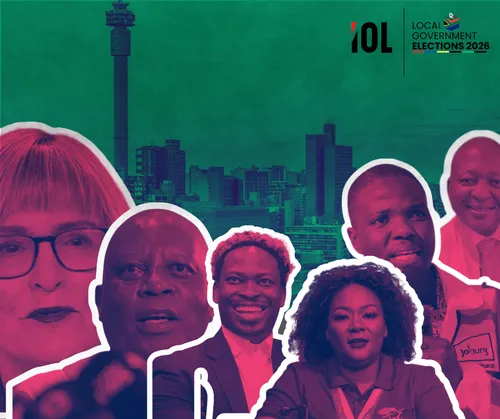
Residents of Johannesburg, facing issues such as faulty traffic lights, dwindling water supplies, crumbling roads, and power blackouts, should brace themselves for a sobering political lesson before the upcoming Local Government Elections on November 4. Over the past decade, Joburg has served as a stark reminder of the perils that arise when no single political party secures a clear majority, and coalition governments struggle to function effectively.
Until 2016, the African National Congress (ANC) held an overwhelming majority in the city. However, following the subsequent local government election, the landscape shifted dramatically. The Democratic Alliance (DA), led by Herman Mashaba, took control with the backing of smaller parties and the Economic Freedom Fighters (EFF). This marked the beginning of an era of coalition governments in Johannesburg.
Since then, Johannesburg has experienced a series of nine mayors and eight coalition administrations. Unfortunately, none of these leaders have managed to serve a full five-year term. The city has become a hotbed of political instability, with coalitions frequently forming, dissolving, and being reconstructed. Mayors have been removed through motions of no confidence, and smaller parties have emerged as the most powerful actors, often wielding significant influence in decision-making processes.
This political fragmentation has had dire consequences for Johannesburg. The city’s infrastructure backlog has reached staggering heights, with an estimated R44 billion needed to address its electricity infrastructure issues alone. In just six months, from July to December 2025, the city recorded 54,132 power outages. The water crisis is equally dire, with Johannesburg Water estimating a R26.6 billion infrastructure renewal backlog.
Unpaid bills to the city have soared from R15 billion in 2014/15 to over R71 billion in 2024/25, and inflation-adjusted infrastructure investment has plummeted by a shocking 50% over a decade, and by a staggering 70% per resident.
While it’s important to note that various factors, including population growth, aging infrastructure, non-payment, illegal connections, corruption, and administrative failures, contribute to these challenges, the presence of coalitions undeniably adds a layer of uncertainty. Political instability, frequent changes in leadership, and inconsistent long-term planning have made it increasingly difficult for Johannesburg to tackle its monumental infrastructure problems effectively.
These challenges underscore a critical lesson for South Africa’s voters: fragmented voting patterns can lead to a lack of political stability and competent governance. In the 2021 elections, the ANC secured 33.6%, the DA obtained 26.5%, and the EFF garnered 16.1% of the votes. No party came close to securing an outright majority, forcing politicians to form coalitions in order to govern.
However, this arrangement has proven to be fraught with difficulties, as politicians often prioritize their survival in the next council meeting over the long-term well-being of the city.
The recurring failure to construct a durable political alternative has left voters questioning who should bear the brunt of these political failures at the ballot box. South Africa has witnessed a dramatic increase in the number of hung councils, from 27 in 2016 to a staggering 66 in 2021. As political support continues to fragment, the likelihood of coalition governments becoming more prevalent in major cities across the country is also on the rise.
Jobburg’s experience is not merely a local issue but a warning sign for other major metropolitan areas in South Africa. As voters prepare to cast their ballots in the upcoming elections, it is imperative that they carefully consider the implications of fragmented voting patterns. While coalitions may provide more parties with a seat at the table and be seen as a sign of a maturing democracy, the true danger lies in the chaos that ensues when political instability reigns and the city outside the council chamber deteriorates.
As the election approaches, Joburg residents must confront the uncomfortable reality that their political choices have far-reaching consequences. The city’s deterioration is a clear indication of the dangers of coalitions failing to deliver the stability, competent leadership, and long-term planning that South Africa’s major cities urgently need. Before other cities follow Johannesburg’s path, voters must take a hard look at the lessons learned in Joburg and consider the long-term implications of their choices.
Written by urgent.news from IOL's reporting — not their text. Machine-written — may contain errors; check the original before relying on it.
This story
This is one outlet's version. Read the fullest account.
- Before South Africa brings back the death penalty, it must answer the hard questions iol.co.za
- Look up, South Africa: Wounded, yes, but still breathing dailymaverick.co.za
- South Africa, Mozambique face prolonged dry spells due to El Niño sabcnews.com
- Zimbabweans struggle to rebuild after fleeing xenophobia in South Africa aljazeera.com