Taipei’s dilemma over history deepens with Xi-Trump praise of WWII Flying Tigers
Taipei’s dilemma over its history during World War II appeared to deepen as Beijing and Washington looked to the Flying Tigers as a source of connection and goodwill during last month’s Xi–Trump summit. US President Donald Trump’s description of China as an American ally during the war has raised concerns in Taiwan that what could have been a valuable historical connection with the United States…
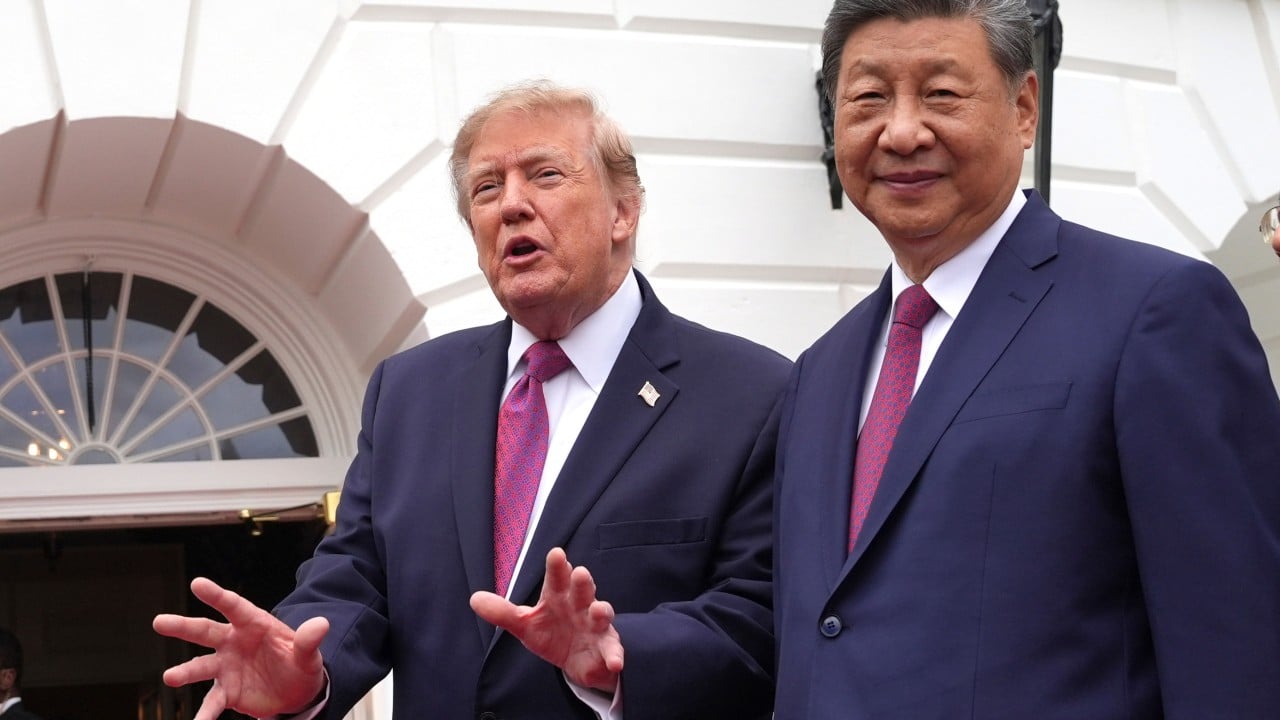
Taipei is grappling with a complex historical issue as major world powers invoke the wartime alliance between China and the United States. During recent meetings between Chinese President Xi Jinping and US President Donald Trump, both leaders repeatedly praised China's role as an ally during World War II, specifically highlighting the Flying Tigers – American pilots who helped defend China against Japanese aggression.
This prompted concerns in Taiwan, as the reference may have inadvertently bolstered Beijing's claims to the ROC's wartime legacy.
Chinese and US officials repeatedly invoked the Sino-US alliance during Xi's visit to Washington, with Trump even describing China as an American ally during the war. The White House later confirmed that Xi and Trump acknowledged the historical connection between the US and China as wartime allies. This has created a dilemma for Taiwan's ruling Democratic Progressive Party (DPP), which has been emphasizing a distinct Taiwanese identity separate from the pre-1949 history of the Republic of China (ROC) – Taiwan's official name.
Some argue that the ROC's wartime role has inadvertently provided Beijing with an opportunity to claim a shared historical connection. The KMT, which ruled the ROC during the war and fled to Taiwan in 1949, accused the DPP of invoking pre-1949 history only when politically advantageous. However, DPP officials maintain that the "China" that fought alongside the US was indeed the ROC, and that diplomatic language between major powers may be deliberately vague.
The controversy highlights a broader struggle between Taipei and Beijing over who inherits the international historical identity of wartime China. Beijing's narrative of wartime cooperation aims to strengthen its claim to Taiwan, while Washington seeks to stabilize Sino-US relations through similar historical references. Critics argue that Taiwan's DPP is inadvertently distancing itself from a valuable historical connection with the US by avoiding explicit references to ROC wartime history.
Beijing maintains that victory in the war belongs to the entire Chinese nation, while acknowledging that the Communist and Nationalist forces fought on different fronts. It also maintains that the establishment of the People's Republic of China in 1949 represented a change of government rather than a change in China's international legal identity. As the dispute continues, the historical issue could become even more consequential if Washington increasingly adopts the same terminology in its diplomatic discourse.
Written by urgent.news from South China Morning Post's reporting — not their text. Machine-written — may contain errors; check the original before relying on it.