Russia strikes Kyiv bridge as Germany’s Merz visits, pledges aid
Russia struck a bridge in Kyiv on Sunday soon after Germany’s chancellor arrived in Ukraine’s capital on a surprise visit to demonstrate European support in the face of an upsurge in attacks. Air raid sirens blared across Kyiv, urging residents to shelter soon after Friedrich Merz arrived under tight security, with warnings of approaching Russian attack drones. Kyiv mayor Vitali Klitschko then…
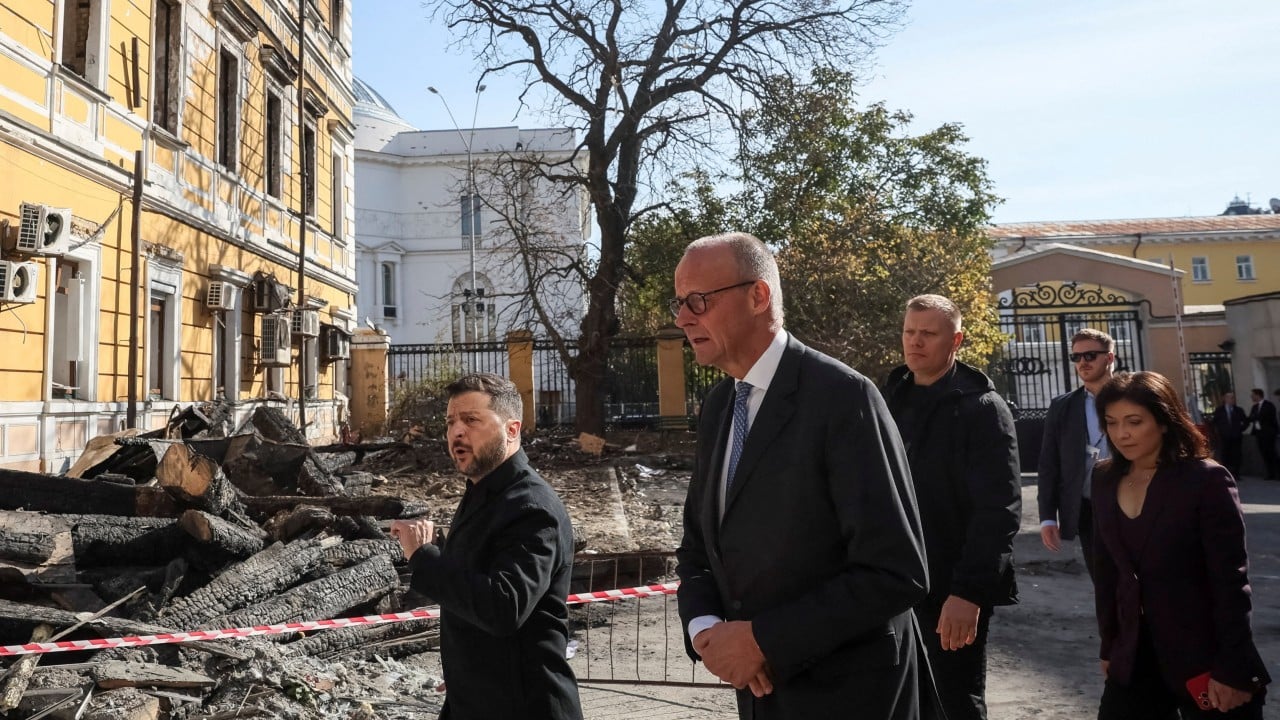
On Sunday, Russia launched an attack on a Kyiv bridge just hours after German Chancellor Friedrich Merz arrived in the Ukrainian capital to bolster European support amid a surge in assaults. Air raid sirens rang out across the city, prompting residents to seek shelter amid warnings of incoming Russian drone attacks. Kyiv Mayor Vitali Klitschko later confirmed that a strike had damaged the Northern Bridge, a key connection between the city's two halves over the Dnipro River.
Images circulating on social media showed a missile impact on the bridge, with a plume of flame rising into the sky.
Klitschko declared that, after largely escaping the extensive destruction near the frontlines in the five-year-long conflict, Kyiv should now prepare for a war scenario due to the recent escalation in attacks. These included strikes on residential areas, petrol stations, schools, rail, and communication infrastructure. German Chancellor Merz expressed Germany's commitment to providing "all our support in the coming weeks," emphasizing that if Russia is not halted, its military might will eventually turn against them.
President Volodymyr Zelensky has repeatedly called for more substantial military assistance from Western allies, such as advanced interceptors to neutralize Russia's new fast-moving jet-powered drones. Merz and Zelensky were scheduled to meet, and sources in Berlin suggested they would agree on a new military support package exceeding US$1 billion.
This package would encompass combat drones, satellite technology to target Russian launch sites, and joint production of anti-jet drones.
German Chancellor Merz stressed the need for unity against Russia within NATO and the European Union, as well as within his own country, where the far-right, Moscow-friendly Alternative for Germany (AfD) party is gaining traction. There are growing concerns across Europe about the potential vulnerability of the alliance if Russia is not contained in Ukraine.
On Saturday, Russia warned foreigners and diplomats to evacuate Kyiv, claiming it would face "massive" new air strikes. Russia's Foreign Ministry asserted that responsibility for any consequences would lie solely with those disregarding this warning. Despite similar warnings in May, Western leaders have continued to visit Ukraine, with the European Union's delegation remaining despite the threats.
EU Ambassador Katarina Mathernova emphasized that no one is leaving, though European embassies always have contingency plans, including for harsh winters. Russia has acknowledged targeting Ukraine's energy sector ahead of winter, with attacks in 2022 causing days of power and heating outages as temperatures dropped to -20 degrees Celsius.
In Kyiv, residents are now considering precautions, with the government suggesting that the vulnerable and disabled might need to leave the city. Chancellor Merz's visit aimed to announce approximately 350 million euros in aid, primarily for generators, transformer stations, and grid repairs.
Written by urgent.news from South China Morning Post's reporting — not their text. Machine-written — may contain errors; check the original before relying on it.